About Those Sparrows

photo-1594356510757-d52c30415a2a

Why should I feel discouraged,
Why should the shadows come,
Why should my heart be lonely,
And long for heaven, heaven and home,
When, when Jesus is my portion,
My constant Friend is He;
Oh, oh-oh, his eye is on the sparrow,
And I know He watched, watched it over me.

His eye is on the sparrow. Such a comforting truth, isn’t it?

The song finds it inspiration from both Psalm 32:8 and Matthew 6:26. (There is likely a bit of Matthew 10:29-31 thrown in there as well). Sparrows aren’t worth much to us but they aren’t forgotten by God. And his eye is upon us just as it is upon the sparrow. That’s comforting…but let’s think a little more about these sparrows.

Five sparrows. Two pennies. That’s not very valuable. And sparrows aren’t very valuable to humans, especially in the first century. They bought them. Ate them. Sacrificed them.

Five sparrows. Two pennies. Bought, crushed, ground into stew, discarded, their life snuffed out just like that. Not forgotten by God. If God “remembered the sparrow”…if his eye was on the sparrow wouldn’t they not be bought and sold like this?

His Eye On the Crushed Sparrow

I was confronted with this question while preaching through Luke recently. What is Jesus doing here? It’s in the context of the Pharisees plotting murder and a trampling crowd. That is the background to these words in Luke 12. 

So place yourself as an observer in the marketplace. You’ve been told that these sparrows have a powerful protector. And you see them sold at a going rate of five for a couple pennies. Then they are crushed, discarded, treated as worthless. What do you think of their powerful protector?

I sure hope he isn’t “watching over me”.

Five sparrows. Two pennies. Not forgotten by God. Discarded into the calloused earth.

Now, what if I told you that God sent His very own Son to this same calloused earth. And he made it obvious that He was His Son…and told people all about Him…and spoke of the truth…and attested to who He was…and through him did miracles, wonders, and signs..

But then…

“this man was handed over to you…” (Acts 2:23a)

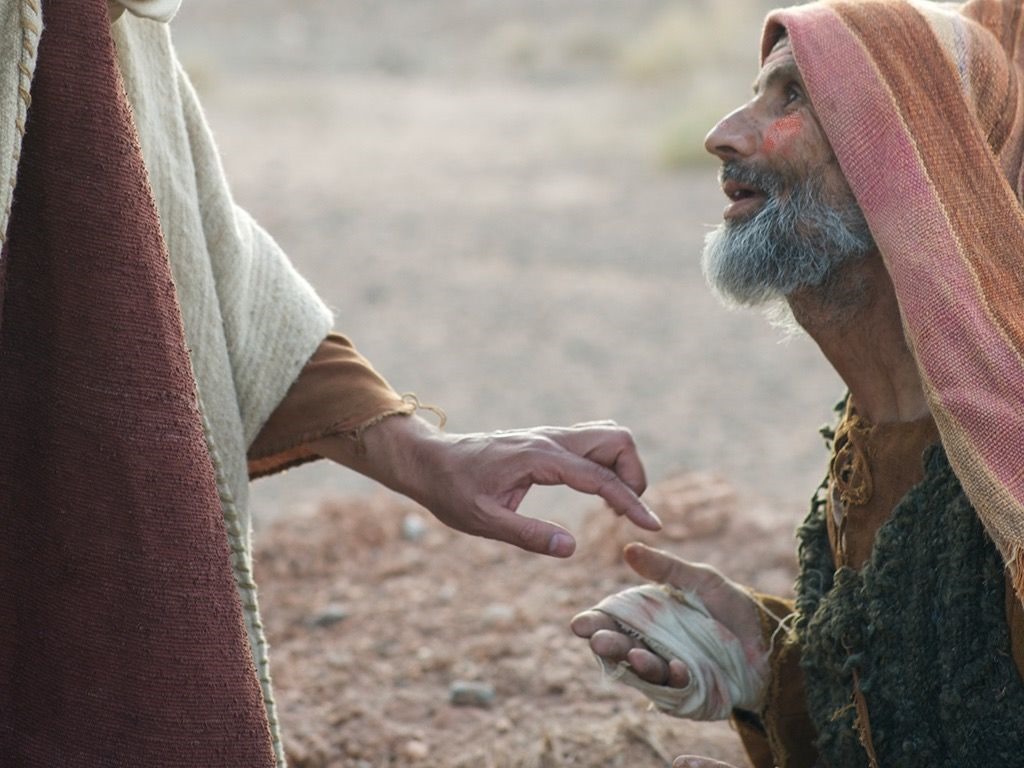
This sparrow was put on the marketplace. Put into the hands of men, mocked, scorned, tossed aside as nothing. And in the hands of wicked men he was “put to death by being nailed to a cross”.

What do you say of His protector? What do you say of His Father?

A casual observer might say, ”where is this man’s father? Where is the one who is supposed to care for him? Where is the one who is supposed to be watching out for him? He’s discarded…he’s tossed aside like a filthy rag…he’s barely recognized as human. What value is this Nazarene?”

Five sparrows. Two pennies. Not forgotten by God.

And what do we make of those who follow this Nazarene? Those who are trampled by the crowds, pursued by religious leaders. Those who are often truth-tellers who get unplugged for trying to shine the light upon the callousness of earth in the hopes of somehow unraveling its now forgotten beauty. People of integrity. Discarded. Persecuted. Slandered. Beaten. Mocked.

The Message From the Discarded Sparrow

This is the message that Jesus is imparting to his disciples with crowds approaching and Pharisees threatening. They will be put into the hands of wickedness. They will fall to the ground. But not apart from God’s care. Not apart from God’s plan.

When you feel discarded by humanity (or you are discarded by humanity) you can easily adopt their assessment. When their eyes are measuring you up and you can see their sum—and they’ve concluded you are worthless, it’s easy to feel less than a penny. But Jesus’ statement of not being forgotten by God is incredibly comforting. Because if His eye is upon you then you have His delight.

Fear not, little flock, for it is your Father’s good pleasure to give you the kingdom. –Luke 12:32

Five sparrows. Two pennies. Not Forgotten by God. Eternal joy.

So don’t fear those who can only kill your body. That is Jesus’ conclusion. They don’t understand discarded sparrows. They don’t view the world rightly. But the Father does. And He has not forgotten you. You will not fall to the ground apart from His care. He is making all things right. You may be discarded by people but you will never be forgotten by God. He will not overlook you.

If you don’t believe me ask that God who was once on that middle cross—mocked, scorned, discarded, of less value than a sparrow in the marketplace. But not forgotten by God. And now sitting at the right hand of the Father and bidding us to come. He’ll tell you a sparrow’s real worth.

Photo source: here

The Relationship Between Mission and Solitude

photo-1499084732479-de2c02d45fcc

And rising very early in the morning, while it was still dark, he departed and went out to a desolate place, and there he prayed. –Mark 1:35

If Mark wanted to tell us that Jesus got up early to pray he could have done it a bit more simply. But instead he gives us a bit of a clunky sentence which is stacked with four verbs: rising, depart, went out, prayed. Mark wants to tell us more than just Jesus’ habit of praying early in the morning.

Rising. I don’t like getting up early. I especially do not like to get up very early as the text says. Jesus was fully human. He needed sleep. The day before this little tidbit was an action packed and likely exhausting day. Communion with the Father is more important than his own need for sleep.

Departed. While on earth, every day that Jesus went to bed he did so with a mass of humanity, within his proximity, that were not healed. That’s a somewhat tough pill to swallow. But there is also some level of comfort in this for our own lives and ministries. There will always be things left undone. And this departing into the wilderness shows us as well that communion with the Father is more important than even others need for healing.

Went out. Jesus did not retreat into a Netflix binge watch. He retread from the crowds into the wilderness. It’s the place of jackals, the very abode where we saw the Spirit drive him and where he was tested by the enemy. The wilderness is a place where we are away from community. That basic human need to be around others. But here as well communion with the Father is more important than even our need for community.

And prayed. This was a non-negotiable for Jesus. I think of all the times in my life when I’ve tabled my time of prayer to attend to my own needs, the needs of others, or even because I feel as if my greatest need is community. All of these things are good—and necessary in their own place. But Jesus models for us the absolute necessity of prayer.

I think James Edwards, in his excellent commentary on Mark says it well:

The work of the Son of God is both an inward and an outward work. Jesus cannot extend himself outward in compassion without first attending to the source of his mission and purpose with the Father; and, conversely, his oneness with the Father compels him outward in mission. The significance of Jesus’ ministry consists not simply in what he does for humanity, but equally in who he is in relation to the Father. Jesus is, according to Mark’s narrative, neither contemplative ascetic nor social activist. He does not promote an agenda but derives a ministry from a relationship with the Father. He is the Son, one in being with the Father; and the Servant, one in purpose with his will.

Edwards, J. R. (2002). The Gospel according to Mark (p. 66). Eerdmans; Apollos.

I think Edwards is correct because as soon as the disciples found Jesus, he immediately returns to the mission of preaching the gospel. Solitude with the Father propels us into mission, but mission cannot survive without that solitude.

If my prayer time doesn’t push me into mission it’s possible that it hasn’t truly been communion with the Father. Likewise, if the exhaustion of the mission doesn’t necessitate being alone with the Father, it is possible that the mission is being driven by the wrong fuel.

If You Want Ministry to Last, Give It Away

photo-1528693404014-b13ebe6e723eI was a youth pastor at the time. And we were growing. Teens were coming to know Jesus almost every week it seemed. Another church in the area asked me to come to help them vision what youth ministry could look like in their context. I was honored to do this and centered my talk around one big principle:

The success of our youth ministry will not be determined by the number of students we have today. It will be determined 10-15 years from now. Are these kids still serving the Lord? Are they reproducing the gospel in their new families, friends, and context? Are they still in church?

I still believe that. But it causes me a bit of consternation when I try to assess John Newton’s ministry at Olney. Was his ministry a success by the metric I used? This is what the pastor who followed Newton said about the church shortly after Newton had left (or even as he was leaving):

When Mr. Newton left…[Olney] swarmed with antinomians; and, when I about a year after became curate of the parish, most of the professors of the gospel joined the dissenters; and I had to attempt raising a new congregation, in opposition to the antinomianism and antichurchism…which prevailed.

The church at Olney went from 2500 down to a paltry number (some estimations have it at 100). What happened?

It should be noted that leaving the Anglican Church does not equate to apostasy. Many of these “dissenters” likely found other evangelical churches within the area. And we do not know for certain what Scott means by antinomianism. But there was a significant shift that happened among Newton’s people. As he was leaving he referred to difficult circumstances that had come upon his ministry.

Thankfully, I’m not called upon to judge the ministry of another. And in the case of Newton it would be difficult because his “ministry” might have included the way in which he was strengthening the gospel foundations of the other congregations within his area. It’s possible that some of those “dissenters” were actually continuing to faithfully apply what Newton taught them. Perhaps, they were being even more consistent than Newton himself to evangelical principles. But clearly something happened where the disciples of Newton were taking a different path.

There was a discussion between William Bull, Thomas Scott (the man who followed Newton), and William Cowper on these matters. Bull believed that familiarity had bred contempt among the people. Newton was too much among them, said Bull:

How often do you speak to [your people] in a week?—“Thrice”—Ay, there it is! Your sermons are an old ballad; your prayers are an old ballad; and you are an old ballad too.—“I would wish to tread in the steps of Mr. N.—You do well to follow his steps in other instances; but in this instance you are wrong, and so was he. Mr. N trod a path which no man but himself could have used so long as he did, and he wore it out long before he went from Olney. Too much familiarity and condescension cost him the estimation of his people. (cited from Demaray, 149)

I don’t necessarily agree with Bull’s assessment that Newton spent too much time with his people. But I do think there is something to be said for Newton’s having trod a path which only he could have walked. It was his personality which often kept the attention of his people. It was his own love for them which bound them to the man. And what seems to have happened, at least with some, is that they were more bound to the man than to the message. This is always a great danger with someone of such a dynamic personality as Newton.

What do we learn from this?

I think this story is connected to another story from the latter part of Newton’s life. Towards the end of his life he was mostly blind, his mind wasn’t nearly as sharp, but he kept wanting to preach. He said, “I cannot stop.  What! Shall the old African blasphemer stop while he can speak?”

But he should have stopped. And the fact that he couldn’t is probably why the fruit of his Olney ministry was not as healthy or far-reaching as it could have been. Don’t hear me wrong, I am still benefiting from one element of his ministry while at Olney a few hundred years later. But I think there was a significant pastoral misstep for Newton here and it likely impacted the flesh and blood and soil of Olney.

I think Zack Eswine is correct when he notes that,

“If we want to use our gifts, we are required to take a step. But in whatever direction we place our foot, we necessarily leave every other direction empty for the footsteps of another.”

And I think Andy Crouch is correct when he considers the purpose of the “sabbath ladder” that God had given the people of Israel:

…the discipline the Lord required of Israel was not to do everything within their power, not to push their own productivity to the limit—to intentionally leave margins that made room for others to participate in the economy of the community…the more territory expands, the more we must embrace the disciplines that make room on the margins for others to also exercise their calling to image bearing. (Crouch, 248)

Newton wasn’t the best at doing this. He held the view, and perhaps rightly so, that the African blasphemer needed to be completely spent for the glory of God. But what he did not factor in was that the African blasphemer should have been making room for others who had been transformed by Jesus. He wasn’t vital to the cause of Christ. None of us are. I think Newton understood this. Everything in his writing indicates that he was a man who longed for humility and to put to death Mr. Self. But it’s clear that this was a struggle for him within ministry. And it cost him a bit.

If we want our ministries to last then we need to be sure that we leave margins for others to exercise their gifts and calling. We shouldn’t allow our light to shine so brightly. One of my goals is that when people think of Calvary of Neosho they don’t think of me first—or even that much at all. I want them to think of many of our people. “That is Mr. Newton’s church” was not a healthy thing. And whenever the church in which we labor becomes “our” church—then we’re harming the soil instead of cultivating it.

Photo source: here

You Need Doctrine and Life to Sail Properly

photo-1452065656801-6c60b6e7cbc5“My son, when you go to school today, watch out for wild elephants.”

That’s not a sentence I’ve uttered to either of my children. Wild elephants aren’t really a threat in Southwest MO. The things we warn our children—or followers about are the things which we perceive to be potential threats. Wild elephants don’t rank very high on that list.

Fear can be a very good motivator. I think collegiate athletes would have better 40 yard dash times if they let a snake loose at the starting line. Ideological fears can be just as motivating, though they might not improve 40 time. Knowing fear to be a motivator there is a decent market for “single greatest threat to the gospel” literature.

Warnings aren’t necessarily bad things. In fact, the Bible has many warnings. Rather ironically, sometimes the real danger, though, is when we engage in fear-mongering. Or we distract from a real danger by over-emphasizing a potential or perceived danger. This was the case in Isaiah 8. False teachers often use fear to gain a hearing. (Consider the situation in Philippians).

A few weeks ago I found myself reading Evangelicalism Divided. In that book Iain Murray focuses on some of the changes which took place within Anglicanism (as well as the wider evangelical world) from the 1950s to the early 2000s. He makes a thorough argument about the dangers of allowing false-teaching to creep into the church. I appreciated this paragraph:

The idea that Christianity stands chiefly in danger from the forces of materialism, or from secular philosophy, or from pagan religions, is not the teaching of the New Testament. The greatest danger comes rather from temptations within and from those who, using the name of Christ, are instruments of Satan to lead men to believe a lie and to worship what in reality belongs to the demonic (2 Thess. 2:3-9; Revelation 13:11)…No one can rightly believe this without seeing the seriousness of error. Wrong belief is as dangerous as unbelief. (Murray, 259)

I don’t disagree with Murray’s warning. But it got me to thinking and scouring the Scriptures to look for the warnings. False teaching is something which we are warned about. Doctrine does matter. But what I found is that a majority of warnings aren’t about right belief but about right living.

Certainly obedience and doctrine are connected. But it’s false to assume that good doctrine will lead to right living. Jesus predominately warned against covetousness, greed, hypocrisy and the like. Paul did warn against the danger of false teachers but he also warned against biting and devouring. Likewise, the prophets and the Torah warn against failing to obey more frequently than failing to believe correctly.

1 Timothy 4:16 is telling. “Watch your life and doctrine closely. Persevere in them, because if you do, you will save both yourself and your hearers.” Life AND doctrine. If we focus our eyes upon our doctrine and yet neglect to live in a manner worthy of the gospel, we bring great harm to our souls and endanger those of whom we are leading. The same is true if we focus upon right living but we neglect right teaching.

As I reflected upon this oversight in Murray’s book I couldn’t help but think about my tribe (or maybe it is former tribe at this point). Those of us who were part of the Young, Restless, and Reformed movement but a heavy focus upon doctrine and preaching. But we shared in Murray’s oversight. It was almost assumed in our circles that right living would follow on the tails of right believing. But it didn’t, and it doesn’t. We’ve experience a good deal of shipwreck because of this oversight.

As many are picking up the pieces from the shipwreck this oversight wrought, and we are engaging in this thing called deconstruction, it would do us well not to neglect sound doctrine. We are right in this moment to emphasize the important of living in a way that is consistent with the gospel of Jesus. We are right to pursue issues of justice and mercy. But as we gather on this boat and sail into the sunset we’ll find ourselves soon dashed upon the rocks again with new holes in the boat. You need both doctrine and life to sail properly.

Sail away.

Photo source: here