Coherence Isn’t Wisdom: What AI Is Exposing About How We Think

zfbw14fwg0hgwna9pnqlOne of the greatest concerns I have with generative AI (like ChatGPT) isn’t with AI as much as it’s a concern with how WE use it. Or really, it’s a concern with how we tend to think, and how AI in those hands is a dangerous way to further deformation.

As finite sinful human beings, we aren’t truth maximizers by default. We’re coherence-maximizers. That’s different. A truth maximizer is going to say “What is actually true, even if it costs me?” But a coherence-maker is going to ask, “How can everything I believe fit together without contradiction or discomfort?” We do that because it makes us feel safe.

We’re wired to protect our sense of who we are and where we belong.

An example from football

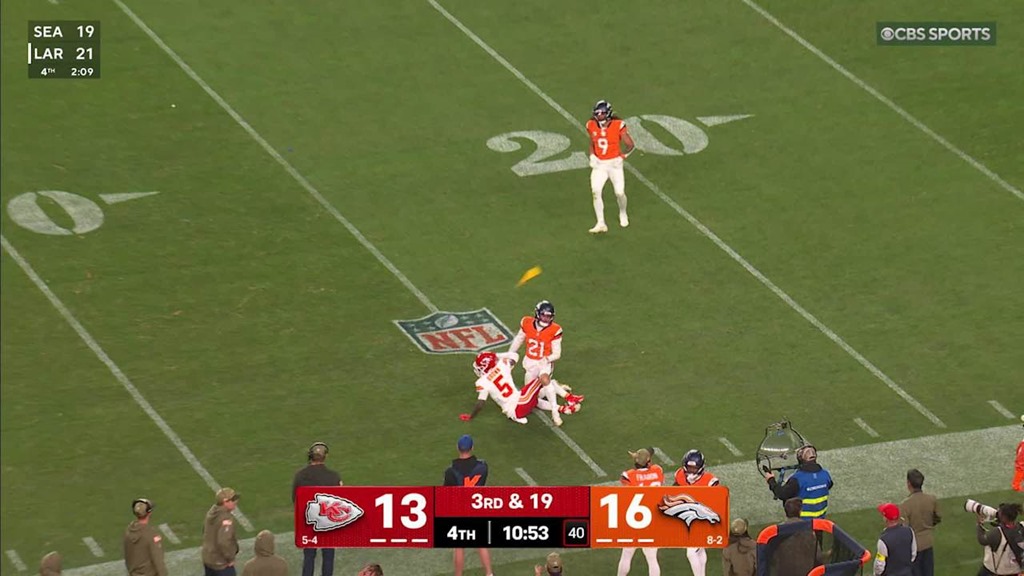
Ever been to a party watching a football game when a close call happens? A flag is thrown, and immediately the room splits. One side cheers, the other groans.

Everyone is certain they are reacting to the facts. No on thinks they are being emotional or biased. We’re all convinced the replay will settle it. But when it comes on in slow motion, with multiple angle, somehow nothing actually changes.

One side says, “See? That was clearly pass interference!”
The other says, “That happens on every play. They were both swatting at each other!”

Same footage. Same evidence. But different conclusions. What happening isn’t that one side has better eyes. It’s that each side is protecting a story. A story about their team, about fairness, about themselves as reasonable people. The evidence doesn’t decide the story. The story decides how the evidence is read.

A Chiefs fan couldn’t say, “Yeah, it seems like the referees are slanted for us in this game.” And a Broncos fan can’t say, “Yeah, the refs are being really fair in this game. We’ve been awful about penalties.” Again, we’re wired to protect our sense of who we are and where we belong. That’s why you and I look for coherence instead of uncomfortable truth.

An experiment

This shows up everywhere, even (especially?) when we’re talking theology. I want to show you this and how AI fits into it. First, I need you to pick a theological topic that you tend to debate with people about. Maybe it’s one of those really hot-button topics like Calvinism/Arminianism, or you’re inspired by the recent dust up with Kirk Cameron on views of hell. Just pick one that you feel pretty strongly about.

Now I need to ask you to do something that as a content creator I’m never supposed to ask you to do—open a new browser tab and go to whatever AI you use. I am going to ask you to do two different prompts, you’ve got to be certain that you come back here though or else all will be lost and we’ll be doomed!

First prompt:

“I need to defend a belief. Can you help me respond to challenges and explain why my position still makes sense?”

(Replace the word “belief” with whatever your issue is). Go do that and notice what happens.

Welcome back!

When you entered that prompt, I doubt AI pushed back. It probably didn’t push back on your belief or slow you down and ask why it mattered so much to you. It accepted the belief and shifted into advocacy mode. It did what you asked it to do. It organized arguments, anticipated objection, and offered language that made your position sound coherent and reasonable. How’d that make you feel? Was it clarifying? Stabilizing? Even confidence-building?

It gave you what you asked it for. Coherence.

What makes this dangerous, though, is that it can masquerade as truth-seeking. We read, reflect, weigh arguments, and come away thinking we’ve done careful discernment, when in reality the outcome was already set by the way the question was framed. The AI never examined whether the belief should stand; it only helped ensure that it could. It didn’t surface the personal, emotional, or communal stakes that often shape why certain conclusions feel non-negotiable.

AI doesn’t decide what must stand. That’s up to us. But once we make that decision and take it to AI, it becomes remarkably good at helping us feel thoughtful and responsible while quietly reinforcing what we were already committed to protecting. The result is a kind of pseudo-discernment: the appearance of seeking truth without the vulnerability of actually being open to it.

But let’s try a different posture. Second prompt:

“I’ve been thinking about a belief, and I’m realizing there are thoughtful people who see it differently. Can you help me understand why people disagree and what the main considerations are?”

(Replace belief with the same one you used in the first prompt) Now watch what happens?

It responded much differently didn’t it? Instead of organizing arguments or reinforcing a position, it probably widened the frame. It named multiple perspectives, highlighted points of tension, and explained why thoughtful people land in different places. Rather than helping you arrive at a conclusion, it helped you see why conclusions differ. The experience likely felt informative, even-handed, and maybe a little like a lecture, but not especially settling.

The lesson

And that’s what I want you to notice. It wasn’t as comfortable. You might have still read it looking for why these other positions are dumb. But even still you’d have to do that thinking on your own. This super powerful tool wasn’t being wielded in your hand to destroy enemies. And that is unsettling because what if it starts swinging at YOUR head? That’s the nature of truth, though.

This posture actually is closer to genuine truth-seeking, but it comes at a cost. It leaves questions open. It resists premature certainty. It invites you to sit with tension rather than resolve it quickly. AI didn’t tell you what must stand; it helped you understand why standing is contested. In contrast to the first prompt, this one doesn’t masquerade as discernment. But because it’s less comforting and less decisive, it’s also the posture we’re less likely to choose unless we’re intentionally resisting our default pull toward coherence.

It looks like learning. And if we’re honest we don’t really like learning. We’d rather have a more powerful tool on our side to shout, “See, that really was pass interference. Go Chiefs!!!”

When the Name You Lived Under Slips Away

Sunrise by the Beach with CampfireThe other day someone referred to me as Pastor Mike. It’s not too strange since I was “Pastor Mike” for 20 years of my life. And that’s how most people know me. But now I’m not pastoring anywhere. (Well, not vocationally anyways…but that’s a different post). Does that still make me “Pastor Mike”?

I’ve never been one to get hung up on titles. In fact, I was once rebuked by a well-meaning lady for allowing people to just call me Mike. It was, she said, “disrespectful to my office”.

I also had someone refer to me the other day as “Hannah’s dad”. I can’t tell you how much that warmed my heart. That’s my higher calling and I’m glad for it to be recognized.

Now, I share all of this to get us to John 21. It’s when Jesus restores Peter. Yes, we can read this story as Jesus restoring someone who failed by denying Him. And that’s a good application. Yet, there’s something in this passage really for any of us who are in a place that is different than what we thought our story might be. Even if you haven’t exactly “failed”.

All of us have names we live under: mom, teacher, coach, entreprenuer, caregiver, pastor. And all of us eventually face a season where one of those names slips away. Kids grow up. Jobs end. Dreams sometimes die. Relationships change.

John 21 is Jesus meeting a man who lost his name. “Peter” was the name for a ROCK. It means bold leader. The people’s champion. The guy who you’d have expected to be on a cross right next to Jesus.

But when the pressure came, he buckled.

Peter’s dead. He died when the rooster crowed.

Ask that fisherman on the boat, who isn’t catching anything, what his name is and he couldn’t tell you. Is he Simon? Is he Peter? He’s just a guy who catches fish. Some no-named dude out on the lake trying to make ends meet.

Then Jesus enters, once again, into his story. And notice the words….

“Simon, son of John….”

Not Peter. I suppose if we wanted to be all prideful and hung up on titles we might place ourselves in Peter’s spot and feel wounded for him. Like this is somehow a slap in the face. A reminder that things didn’t go quite like he thought they would.

Or….

Or we could see them with the tenderness that is there. This is the same langauge that Jesus used all the way back in John 1:42. That’s when he first called him. That’s before he was “Peter”.

You see what Jesus is doing here is reaching into that deepest part of Simon Peter’s being. He’s going back to that little boy heart. And he’s asking the most important question that can ever be asked. “Do you love me?”

This is how I hear his question.

It’s like he’s saying, “I’m not asking Pastor Mike that question.” I’m asking Little Mikey. The “you” before you even started on this journey. Before you were married. Before you became a dad. Before you even thought about ministry. The you that was there broken, confused, hanging onto the last little bit of warmth in that shower, and crying out “God save me”.

Do you love me?

“Simon, son of John” isn’t a demotion. It’s a recommissioning.

This is where grace always meets us. It’s not at the top of our résumés, it’s not as PETER, but at the core of who we are.

I find it interesting that Jesus never changes back to Peter here in John 21. Even when he says “feed my sheep”. It’s almost like he’s saying, “You’ll tend to my lambs as Simon”. The call was never to a title. It was never to a platform. It was never even to a particular role. It was to love Jesus and love people.

That hasn’t changed. Not for Peter. Not for me. Not for you.

Maybe you’re not “Coach” anymore. Maybe you’re not “Mom” in the same way you once were. Maybe you’re not “Pastor.” Maybe you’re not “CEO.”

The truth is, I may never be “Pastor Mike” again. And I don’t have to be. That’s never been what it’s about anyways. But I will always be “Mike, son of Jeff”. That’s the one Jesus called by name and loved before I had anything to offer anyone. And it’s the one who, quite graciously, still is called to “feed sheep”. It just looks different than I thought it would.

And it’s wonderful.

Maybe you’ve lost a name too. Maybe the kids are grown. The company closed. The marriage ended. Or the dream died.

Hear this: Jesus still knows your name. Not the one on your business card or the one printed on the church bulletin. The real one. The one He spoke before you had a resume to protect or a reputation to defend.

And’s He’s still asking the same question, “Do you love me?”

If the answer is yes, even a trembling and tear-streaked yes, then the story isn’t over. It’s only just begun.

Which Deathbed is More Christian?

ChatGPT Image Oct 10, 2025, 09_37_51 AM

Let’s picture two death bed scenes.

The first person smiles and says, “I’m so ready to leave this broken world and broken body behind. None of this really matters now–heaven is my true home.

The second one isn’t miserable exactly, but they are also not exactly happy. It’s bittersweet. You can tell that she doesn’t really want to go. With tears in her eyes, she scratches out her concern, “I’m going to miss out on picking my blueberries this summer.”

Now be honest, you’re at the bedside of each of these people, does one of them sound more Christian to you? Does one sound less so?

I think at first glance we might be prone to think that the second one might be a little too attached to this world. The first one we may assume is ready to meet Jesus. What if I told you, I think there might be cause for both hope or concern in BOTH the statements.

Let’s actually begin with our second person. Now it’s very possible that ol’ Miss Jenkins is a little too attached to her blueberries. She may very well be saying, “I’d rather pick blueberries than walk the streets of heaven with Jesus.” If that’s what she’s saying…well, that’s obviously problematic.

But she might just really like picking blueberries. And she might very well be glorifying God through her love of this. In the early church there was a dude named Irenaeus who was doing battle with some goobers that were teaching that “real” life is disembodied, spiritual, and detached from the material world.

That might not exactly trigger your HERESY button because the reality is Gnosticism (which Irenaeus was fighting) is alive and well. We tend to think that ordinary pleasures are distractions at best and evils at worst. The Gnostics thought our human body and the physical world were obstacles to divine life.

But Irenaeus and the early church pushed back. That’s why he said something close to “The glory of God is a man fully alive”. His point is that humanity as embodied creatures isn’t a mistake. And God is glorified not when humans escape creation, but when they live fully as God intended (that means body and soul in communion with Him).

In other words, Miss Jenkins may very well be glorifying God by enjoying picking those blueberries. If what she is expressing is a simple, embodied delight of being in God’s world, where she’s enjoying the sun on her skin, that squishy feeling of blueberries running through her wrinkled fingers, the taste, the smell, all of it just poring out life…if that’s what she means, then her mourning the loss of picking blueberries isn’t somehow “less” Christian. It might be Christianity fully alive. And we should weep with her, while at the same time holding out hope that she’s going to a place where the blueberries are going to be positively awesome.

Which is why we might say that Maude (our first person) may not be exactly in the super biblical position we had her in at first. She might fundamentally be a Gnostic that’ll be quite shocked to see the new heavens and new earth filled with beautiful blueberries and bodies and banquets.

To shrug at death and say, “none of this matters” isn’t faith. It’s forgetfulness. It’s missing out on the reality of an embodied faith. That is what Christianity has historically argued for. That’s why things like a BODILY resurrection matters to us.

But I suspect that what Maude was really trying to say is that her bones ache, and the morphine is making her into someone she doesn’t recognize, and that she’s ready to be with Jesus and get the party started. And she’ll save a seat at that banquet for her loved ones.

Christian hope holds two truths together. First, an ache to be with Jesus and a longing for the day when every tear is wiped away and every body is made new. But also, secondly, a love for the goodness still woven into God’s world and that truly hates death because it IS the enemy that takes away your summer blueberry pickin’.

With My Lentil Money

Jesus_overturns_tables
“Don’t forget to bring home lentils,” she said, smoothing her shawl over her hair. “And if you see any linen cheaper than last week, ask the merchant.”

I’m only half-listening to her, I confess. I’m busy gathering my scales and weights for another riveting day at the temple. I hope you detected my sarcasm. Truth be told, I’m exhausted at having to get up earlier than everyone else so I can get my prime spot near the outer colonnade.

I grab my scale, my bag of Tryian shekels, the little stool that’s giving me back troubles, and the board I’ll use as a table. I sling my money chest over my shoulder, tuck a few flat cakes and olives in my belt, and tie up my outer robe for the climb. I acknowledge her request, but secretly wonder, “Do I even have room for bringing lentils home?” I scurry out the door.

Most days blend into the next, the clink of coins and coo of doves dulling into background noise. But something in the air felt off that morning. Like the kind of silence that comes before a storm. Or at least I think it did. You know how you can retell a story and the details change –how memory bends to meaning over time.

I think I remember a stillness.

But it probably wasn’t any different than any other day. Me, third from the left, tucked under the cracked arch near the east colonnade. Sleep in my eyes from having to get up early to beat the rush, day after day after day. But if I wait too long all the good spots are gone and I’m stuck behind the olive seller with that annoying voice and sticky fingers.

I set out my weights. Test the balance scale—making sure it leans in my favor. I do that little stretch you do in the morning when your body is older than your mind is. And I try to harden myself against the grumbling of the pilgrims complaining about exchange rates. But if Adonai shines on me today, I can make enough off their unpreparedness to bring home those lentils and silver to spare.

The Court of Gentiles is where the real movement happens. Locals know how to prepare, but the foreigners? Not a chance. They show up wide-eyed and confused, clutching onto Roman coins as if that’ll get them anywhere. They are completely ignorant of the temple tax rules. And that’s where I step in to help them. Easy profit for me.

I have what they need—Tryian shekels. It has to be pure silver, no emperor’s face. They need doves and lambs—ones without blemish. They come to worship, but they don’t’ know the language, the customs, or what we require for them to have access. That’s where I come in. I carry a bag. I help them get access—they help me bring home lentils for the wife.

We’ve got a well-oiled machine going here. A one-stop-shop for worship. Coin, animal, receipt, prayer. Done. That’s the way we do things around here. And it works quite well. Everyone profits.

Let’s get back to the moment where that eerie stillness seems to have entered. It started, or at least that’s what I think, when this poor man came forward. His clothes were dusty, eyes sunken, and one sandal dragging behind the other like he was about to give up on life. This was probably some last-ditch effort to draw the favor of the Most High. He held out two lepta, trembling between his fingers. Barely enough for bread, let alone a sacrifice.

“Just a dove,” he said. “For my son.”

I glanced at the coin, then at him. “You’re short.”

He tried to explain. I could barely understand him. And honestly, even if I had compassion on him there isn’t much I could do. Rules are rules. Prices are prices. Long journey. Thieves on the road. Illness. I’ve heard them all. If you cave to one person you have to lower standards for others.

I shook my head and waved him off. With business booming, there isn’t time to argue with beggars. A line of paying customers was behind him.

One of those potential customers was a man with these dark penetrating eyes. He looked furious. I was dreading him coming to my table. I prepared myself for the daily tongue lashing, trying to focus on the customer in front of me. When I looked up again, the man was gone. “Adonai has shined upon me,” I muttered under my breath.

And I went back to work.

I was weighing out coins for a man from Alexandria when the shouting started.

At first, I thought it was the animal boys—sometimes lambs break loose, or someone gets a little too noisy with their haggling. But then I heard the crashing, the animals shrieking, and the merchants yelling.

And there he was. The same man. With those same eyes. But now in His hand was a corded whip—rough, quickly made, but purposeful. Not wild. Not flailing. He didn’t lash out at random. He drove them—the animals, the sellers, the herders, the merchants. Doves burst from cages. Lambs scattered. Coins skittered across the pavement like startled beetles.

He overturned one table after another. He shouted. Something about His Father’s house. And sharply rebuking us for turning it into a market.

I didn’t catch all the words, but I knew he was heading for me. A smarter man would have started grabbing his things and packing up before he got to me. But I was just standing there like a fool, holding someone’s half-filled coin pouch, and watching our whole business get upended.

And then we locked eyes.

This wasn’t rage. It wasn’t malice. Something cleaner. Like a fire without smoke.

And that’s when his hands grabbed hold of my table. Just like all the others in our row, he flipped it. Coins went everywhere.

And now I’m here, stunned, wondering what do I do with these hands that flipped my table. What kind of hands are they? I feel anger rising up within me. How dare this man? Who does he think he is? Does he not care about my livelihood?

But there’s something about them. A sharp mercy. These aren’t the hands that are accustomed to flipping tables. They are softer. These aren’t the fists of a zealot—prone to combat. They are calloused but the type of calloused hands that build things, not tear them down. Hands that could wipe a tear just as easy as craft a whip.

What do you do with hands like that? When they tear down what you thought was sacred—but maybe wasn’t? When they don’t strike you in anger, but still leave you exposed? What do you do when those hands are right, and you’ve been wrong so long you don’t know how to come back? I don’t know if I should rebuild what He destroyed… or follow Him wherever He’s going next.

I don’t even know if I still have the coins for the lentils. They went everywhere—some into the crowds, some into the cracks in the stone. I did see one roll away, spinning with intention, toward a mangled old sandal, and clunking up against the dusty toes of the man I’d previously rejected.

I watched him as he bent down, picked it up, looked at it for a second, then tucked it into his belt and walked toward the inner courts.

Access granted.

And with my lentil money.