Read This! 12.11.18

Set God-sized & Human-sized Expectations For Your Church

This is a helpful paradigm, I think.

Do You Know Your Pastor’s Job?

I appreciate this.

How to Forge a Friendship

I have to confess, there are many times when I haven’t been a good friend.

25 Interesting Things You Never Knew About VeggieTales

Unless you read Vischer’s biography. What I found the coolest were the easter eggs that I didn’t know existed.

Routine Bible Reading Can Change Your Life

Amen!

Two Common Mistakes Preachers Make

I think that first one was more common 20 years ago. The second one is more common with younger preachers.

Most Americans Find Fulfillment in Family, Not Faith

This doesn’t surprise me.

Children Abusing Children

Heartbreaking.

Mark Dever discusses implementing meaningful membership:

A Humbling and Yet Freeing Truth for Pastoral Ministry

One of my favorite memes to view are the “You Had One Job” fails. But in reality many of the mistakes probably happen because the person doesn’t have one job but many jobs. Distraction, business, or a lack of focus is likely the culprit in most of these fails. I think of this with pastoral ministry sometimes. In reality we have one job; namely, point others to Jesus. Everything else either flows from this, is periphery to that, or is a distraction from this.

I have been reading The Sacred Wilderness of Pastoral Ministry lately and it’s been really impacting me. I had read it a few years ago and it was good. Now that I’m in a lead pastorate it’s balm to my soul—and also punching me in the teeth. David Rohrer, the author of that book, uses John the Baptist as a model for the essence of pastoral ministry. We’ve got one job to do—point to Jesus. But he also notes that this prophetic calling will at times be a double-edged sword:

People often respond to our preaching by either treating us like we are the Messiah or blaming us for thinking that we are the Messiah. When the Word hits its mark, people feel it and choose either to embrace it or to start an argument with us in an attempt to avoid it. Yet irrespective of the nature of their response to the Word, we need to greet their reaction with the same message. We need to continue to point to God and give witness to the truth that we have been sent to proclaim. (Rohrer, 111)

This is incredibly difficult to practice (at least it is for me). But it also incredibly freeing. I have one job to do and it’s the same job regardless the response. Rohrer goes on to outline two wrong responses the pastor can have to this truth. First, we can avoid the truth. “I avoid the conflict because I know I don’t have the power to resolve it”. (122) We pastors like to, and are often told to, spend our time on the things which we can actually control. But perhaps it’s the opposite—or at least different. We spend our time pointing. Whether that leads to mess or health. Maybe less time should be spent on trying to fix and manage and clean up things for the glory of God and more time spent on bare proclamation which often creates more of a mess.

The second temptation isn’t to avoid the truth but to grab a sword and take up the posture of the warrior. We become confrontational and all about the conflict. We now pursue winning (for God’s sake, of course). Rohrer has some wise words for the warrior within us:

When we pastors have thought through the theology behind what we want to do in ministry and have come to the conclusion that a particular program or ministry is the right way to accomplish God’s purposes in the world, we tend to be a bit dogmatic and rigid about our conclusions. We may have good reason to dwell in this place of certainty about our conclusions. We might be able to frame a perfect biblical justification for our choices. We might, in short, be ‘right’. Yet when proving ourselves right becomes the primary objective of our conflict, we have crossed the line into narcissism and demonstrated our lack of trust in the ultimate victory of God. (Rohrer, 125)

To focus on our one job doesn’t necessarily make life easier, it just makes it clearer. And when we neglect this one job we end up missing out on seeing God work. As I’ve interacted with Rohrer’s work it has been both convicting and freeing. My eyes have been, frankly, opened to all of the ministry that I’ve done in the flesh and by my own hands. But my heart has been freed to release “my ministry” into the hands of God.

I’m just a pointer. You might not like me because you don’t particular care for Who I’m pointing at. Or you might want to give me accolades for pointing to the right One. But in the end, I’m a pointer. Nothing more. Nothing less.

Photo source: here

10 Chapters Which Shaped Me: Sibbes

I have read many books in my three plus decades of life. My favorite is still The Monster at the End of This Book. It’s pretty hard to top that classic. I’m certain that in some way every book I’ve read has shaped me. But not all of them have been incredibly memorable. I can still remember the main gist of most of the books I’ve read, but that isn’t true of chapters. Yet there are some chapters which have absolutely shaped and changed me. To this end, I agree with John Piper’s statement: “Books don’t change people, paragraphs do — sometimes sentences.”

What I’m going to do over the next few weeks, likely on Friday, is share with you ten chapters which have shaped me. Obviously what has shaped me more than anything are the words of Scripture. But what I intend to do here are share ten chapters which are from borrowed lights. It’s my hope that this will inspire you to pick up these books and at least read these life-shaping chapters.

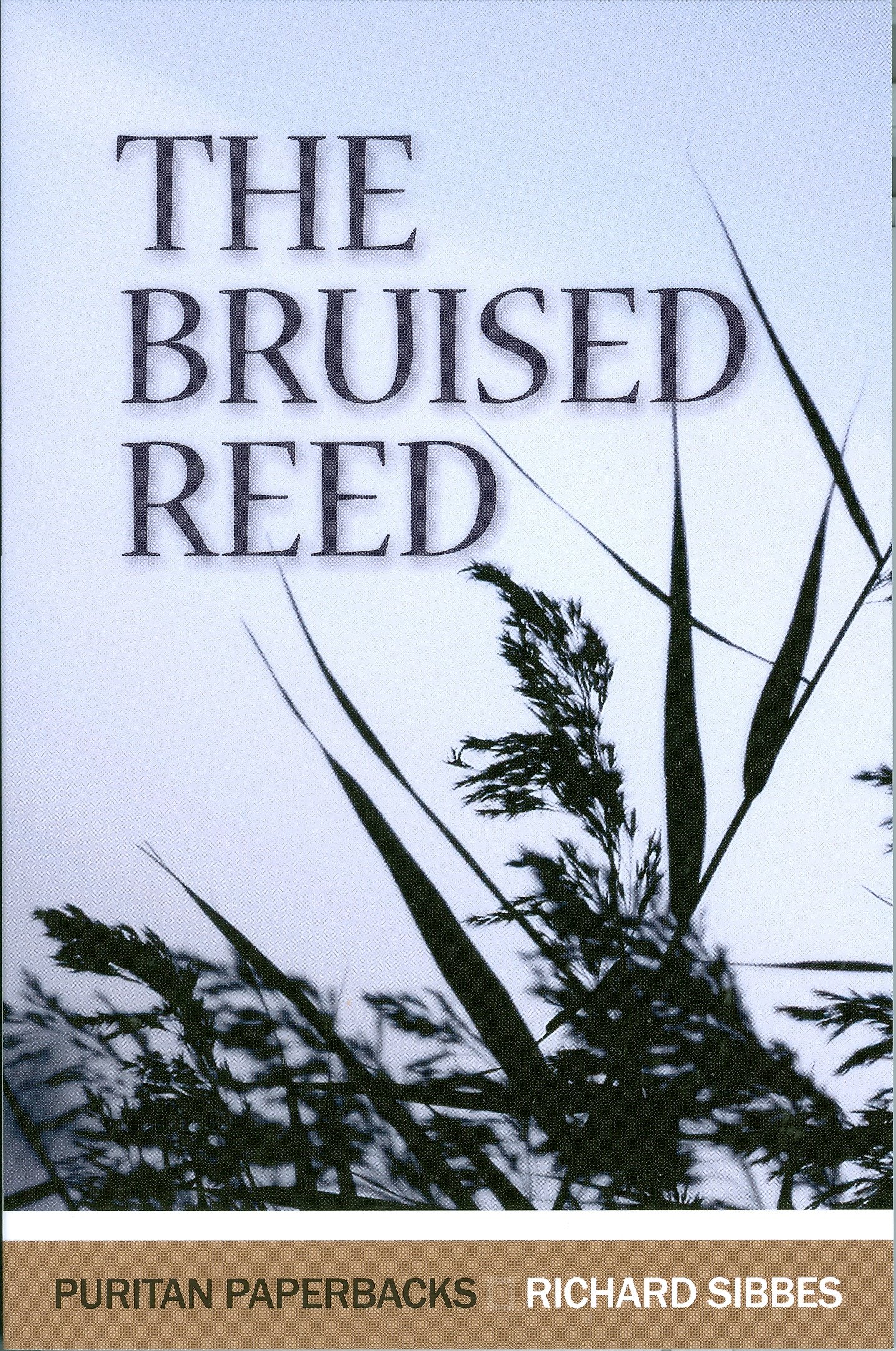
Chapter 5 of The Bruised Reed by Richard Sibbes

One of the top five books that I’ve read has to be Sibbes’ The Bruised Reed. It’s beaten me up as well as been a balm to my soul. The most influential chapter for me has definitely been his fifth chapter. The Bruised Reed is an exposition of Matthew 12:18-20. Sibbes writes in a time when the Church of England is being fractured and many faithful preachers of Jesus are leaving Anglicanism because they are frustrated with the slow reform. Some of the preachers, like Sibbes, stayed with the hopes of seeing reformation happen from within.

Just as it happened during the writing of 1 John, so also during the time of Sibbes, this inner turmoil and conflict caused many believers to wonder whether or not they were actually saved. When some well respected Christian leaders were dropping the gauntlet and claiming the Church of England as apostate, that left many who stayed to be a bit dejected. Add to this the introduction of the practical syllogism and you have many of Sibbes’ audience questioning whether they truly have an interest in the blessings of Christ. The Bruised Reed is written to give assurance.

I first read The Bruised Reed back in 2008 when Tim Brister led a Puritan reading challenge. It became immediately life shaping. This was a period in my life when the Lord was beginning to really mellow me out as a theologian. In 2008 when I commented after reading this chapter I wrote, “After reading this chapter, if I were a web designer I would craft a picture of my rear and Richard Sibbes kicking it.” I was a cage-staged Calvinist back around this time but the Lord used works like this chapter to give me much needed balance.

I think it was the first paragraph in this chapter which really shaped my ministry:

Preachers need to take heed therefore how they deal with young believers. Let them be careful not to pitch matters too high, making things necessary evidences of grace which agree not to the experience of many a good Christian, and laying salvation and damnation upon things that are not fit to bear so great a weight. In this way men are needlessly cast down and may not soon be raised up again by themselves or others. The ambassadors of so gentle a Saviour should not be overbearing, setting up themselves in the hearts of people where Christ alone should sit as in his own temple. Too much respect to man was one of the inlets of popery. `Let a man so account of us, as of the ministers of Christ’ (1 Cor. 4:1), neither more nor less, just so much. How careful was Paul in cases of conscience not to lay a snare upon any weak conscience. (Sibbes, 26)

This hit me like a ton of bricks. I had been guilty of doing the very thing Sibbes warned against. I think in my own insecurity I was pitching matters far too high. I wasn’t reflecting the gentleness of Christ. And so the Lord used this to redirect the way I was doing ministry. I would recommend this chapter for anyone who is in ministry. In fact this is required reading anytime I’m doing training for pastoral ministry.

You can pick up the book pretty inexpensively.

Read This! 12.06.18

“You Don’t Go to Church You ARE the Church”…But Are You?

This is a breath of fresh air.

Why Most Established Churches Need Revitalization

Here are a few areas which one wouldn’t think would cause much trouble to update.

Are You Attracted to Your Wife or Objectifying Her?

Wow, I can’t believe some of the kickback on this and the previous article.

5 Ways to Respond When People Don’t Like You

It might be shocking for a pastor to discover that not everyone likes them. Or, I guess, some pastors might be shocked to find out that anyone likes them.

30 Words Invented by Shakespeare

This is truly amazing.

Pastoral Covetousness

This was a needed read.

6 Thoughts for Introverted Pastors (or Leaders)

I’m an introverted pastor, so I appreciated this.

The Ebb and Flow of Christian Happiness

Good reminder.

Overparenting isn’t a good thing: