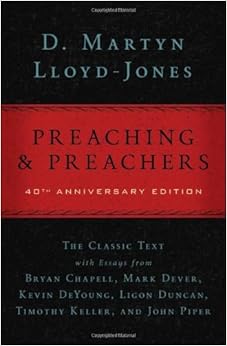
Reading Through Preaching and Preachers Chapter Eight

It’s been a couple of weeks since we’ve looked at Preaching and Preachers. I hope some of you are still following along. I know I’m benefiting from the exercise and hope you are as well. In chapter seven MLJ made the argument that the pew should not dictate the pulpit, in chapter eight he qualifies that a bit by reminding the preacher that he does need to “assess the condition of those in the pew” (156).

Lloyd-Jones begins by reminding the preacher that he is called to preach to the particular congregation that God has called him to preach to. Though you might be reading a bunch of Puritans your congregation does not live in the 16th or 17th century. The faithful preacher will consider his audience. But the preacher must accurately assess the congregation.

The Doctor goes to great lengths here to encourage preachers to never assume that those “who think they are Christians, and who are members of the Church, are therefore of necessity Christians.” (159) Such an assumption is detrimental to their souls. Don’t be fooled though by those who “have accepted the teaching of the Scriptures intellectually” but have “never come under the power of the Word”. (162) Lloyd-Jones spends a bit of time arguing that those who find preaching boring and those who are able to sit under preaching without stirring are likely not converted.

The argument is also made in this chapter that folks should be in the church as often as possible. This should be not only for their own benefit but also because numbers matter. Filling the house would be a great encouragement to those who are visiting. If they come to an empty house it might keep them from hearing the word, a packed house creates excitement.

There is also something to be said for the building in which a church meets. The great need of today is to restore authority to the pulpit, says Lloyd-Jones. One way to do this is to structure the building in such a way that the Word is central. The preacher should also be elevated above the congregation—”preaching down to them always” (174). Consideration should be made of the pew but so as to keep the authority of the preacher.

Tweet Note:

The preacher must be careful to make a true assessment of people’s condition. And his authority needs restored.

Quotables:

The chief fault of the young preacher is to preach to the people as we would like them to be, instead of as they are. (157)

There is something essentially wrong with a man who calls himself a Christian and who can listen to a truly evangelistic sermon without coming under conviction again, without feeling something of his own unworthiness, and rejoicing when he hears the Gospel remedy being presented. (163)

If our preaching is always expository and for edification and teaching it will produce church members who are hard and cold, and often harsh and self-satisfied. (165)

If the preacher always knows exactly what is going to happen, in my view he should not be in a pulpit at all. (166)

…a number of people seem to go to a place of worship and to a service in order to go home! (168)

The greatest need in the Church today is to restore this authority to the pulpit. (170)

Questions:

  • Does your preaching tend to be more evangelistic or edifying? How have you attempted to strike a balance?
  • Should Christians attend every service the church has? Should we be having more services or less?
  • How is your church structured to show the authority of the pastor? Do you agree with Lloyd-Jones that we should be concerned with the preacher’s authority? What dangers might there be in this?
  • Is it your experience that expository and edifying preaching produces those who are cold, harsh, and self-satisfied?
Today in Blogworld 04.29.16

The Daunting Significance of Making Disciples at Home

Love the simplicity of this.

Why Aren’t Baptists…Baptizing?

I appreciate Greear’s thoughts here.

The Minecraft Generation

Like I did as a child, my son usually bounces back from game to game, but Minecraft has remained a fixture for the last 2-3 years.

7 Sins of Selfish Leaders

Things to avoid. And also a helpful alternative.

This is a baby goat learning to jump, it’s as amazing as it sounds:

Today in Blogworld 04.28.16

15 Songs That Brought People Out of Comas

Though it could be argued that some of these have also induced comas, I still find this fascinating.

T4G 2016

All of the resources from T4G 2016 are now online.

Something Rotten in the Local Church

Great reminders of these potential temptations.

Can Your Theology Handle the Book of Lamentations?

Erik Raymond continues to produce quality stuff.

For your enjoyment, here are a few kids impersonating The Donald:

6 Books For Grads

Graduation season is upon us.

This is also what I call the season for lying to young adults while giving them teddy bears and trite phrases. This is why a couple years ago I wrote Six Lies Grads Will Be Told. But this year I want to go a different route. I’d like to offer six books, in no particular order, which I believe would be helpful for a graduate.

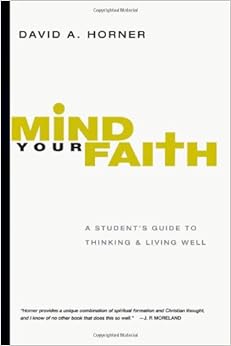
1. Mind Your Faith by David Horner. This is one of the best books on helping college students learn how to think. It won’t necessarily equip them with all of the answers. Nor will it give shallow zingers to trap your professor. Rather this book will assist students in learning how to actually think for themselves and use their God-given minds. This is absolutely vital for keeping the faith in college.

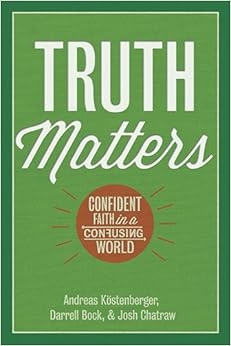
2. Truth Matters by Andreas Kostenberger. Mind You Faith is a bit more academic than Truth Matters. Kostenberger’s book is written a bit more popular level but it accomplishes much of what Horner’s book does. He tackles some of the big objections to the faith and gives a student a few helpful answers to chew on as his/her faith is challenged.

3. Knowing God by JI Packer. If you want to spot a counterfeit you can either spend all your time trying to study the different variations of truth or you can dig in deep and study the real thing. Packer’s book will help students know the real God. It’s weighty theology but it’s also written on a popular level. Great for kids who have grown up in church and I’d even recommend it to those who haven’t been given much theological education.

4. Pleasures Evermore by Sam Storms. If you’ve tasted and seen that the Lord is good then the philosophy of the world is seen for the emptiness it truly is. Storms’ book will help the grad to feast upon the riches of Christ. His main point in this book is that they key to holiness is falling in love. Loving Jesus is a great deterrent to biting into the apple of deceit.

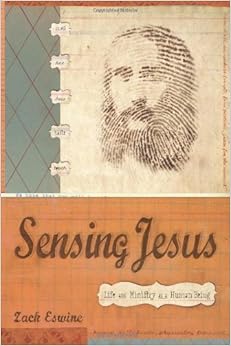
5. Sensing Jesus by Zack Eswine. This book is technically for those who are in ministry but I believe it speaks to everyone. And lets face it, if your grad is a follower of Jesus going into a secular school he is going into the school of hard knocks when it comes to ministry. This book will help your grad to remain grounded. I’d actually consider giving this to your grad and suggesting they not read it until at least their sophomore year after they’ve been pummeled a bit.

6. The Call by Os Guinness. This book is great for students trying to figure out what they want to do in life. It’d also be a helpful book to give to someone who is foregoing college and immediately going into the work force. Guinness is heavy on proclaiming the gospel but also grounds it in the real world. If students really process what Guinness is saying they’ll be equipped for doing ministry everywhere they go.