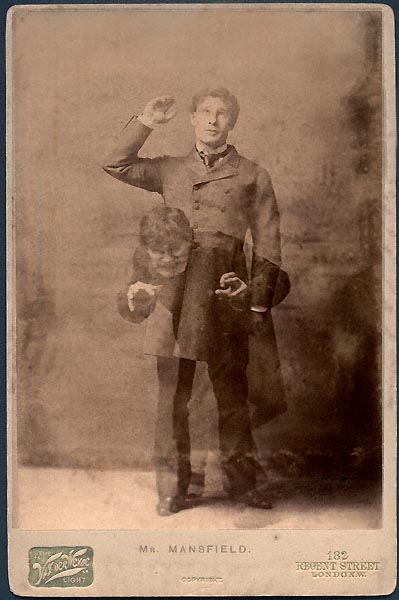
How to Become a Heretic

Heretics usually fall into the role.

Seldom does a man wake up in the morning, grab a cup of coffee, read the morning newspaper, put on his clothes, and then stare himself in the mirror and say “Today, I shall become a heretic”. Heretics usually start by staring in the mirror and saying, “Today, I shall be a difference maker”.

Consider Sabellius. Sabellius became what is now known as a modalist. He was deeply concerned with maintaining the biblical truth that God is one. He also wanted to maintain the biblical truth that Christ was fully God. These two truths seemed to Sabellius to be neglected. And so he re-emphasized those truths but whilst doing so neglected another important truth; namely, that God is three distinct Persons.

Tertullian responded to the modalists by clearly showing how Scripture presents “one substance consisting in three persons”. But Sabellius was unmoved in his position. He would eventually be condemned as a heretic in 220 AD.

His story is not unique. In fact most who find themselves outside of orthodoxy follow a similar pattern. You can see this same trajectory even in our own day. So if you want to fall into the roll of becoming a heretic here is how it will likely happen:

Step One: Have a desire to be an epic difference maker.

Step Two: Find a truthful doctrine that is being neglected or under emphasized

Step Three: Make your ministry about restoring this precious doctrine.

Step Four: Begin emphasizing this truth to the expense of other equally true doctrines

Step Five: When people begin to question your overemphasis and/or your negating of other truths consider this the price of being an epic difference maker.

Step Six: Continue undeterred. Begin fighting the other that your opponents are emphasizing as if it is actually the error which caused your new found truth to have been underemphasized. (Ex: The reason the Oneness of God was being deemphasized was because of the Trinitarian formula). Find ways, then, to minimize the other truth—or even show that it is an error.

Step Seven: Emphasize your truth and now totally deny the other truth. Congratulations you are now a heretic that has denied a key doctrine of Scripture. 

—

There is another step along the way that is almost always present in the life of heretics; namely, personal sin which corresponds to the newly discovered teaching. The words of Aldous Huxley, sadly, can at times fit professing Christians who begin tampering with sound doctrine:

I had motives for not wanting the world to have meaning…The liberation we desired was simultaneously liberation from a certain political and economic system and liberation from a certain system of morality. We objected to the morality because it interfered with our sexual freedom.

I’ve seen far too many people fall down this slippery slope. I’m convinced it begins on step one. What I see driving more modern heretics than anything else is our penchant for celebrity. With blogging and social media one can move through the seven steps much more quickly than previously. Therefore, it is all the more necessary that we heed the word of 1 Timothy 4:16. “Keep a close watch on yourself and on the teaching. Persist in this, for by so doing you will save both yourself and your hearers.”

You could be the next heretic.

As soon as you start shaking your head and saying, “nah, not me” your moving away from the heart of 1 Timothy 4:16 and onto the path of falling. Diligently watch your life and your teaching. This is non-negotiable.

—

Photo source: here

Post updated from here

Today in Blogworld 05.03.16

Love & Bragging

I appreciate this reflection on bragging as the antithesis to love.

Thoughts on the Rise and Fall of Pastors

I’m so tired of articles like this. Not because of the article itself but because it is necessary. The prayer in this one is absolutely wonderful.

Pastors End-Times Theology

Interesting. But I’m actually not terribly surprised I meet many pastors who are either historic pre-mill or amill.

What Does It Mean For an Overseer to Be “Above Reproach” and “Well Thought of By Outsiders”?

This one made me think. And maybe I’m reading between the lines a bit too much, because I’m wondering if there is more underneath here than meets the eye.

How old would you want to be?

How My Preaching Had Gotten Off Balance

A couple of years after becoming a Christian I was introduced to a dynamic speaker who was passionate and I believe biblically faithful. He was one of those guys who could go into a college and convince about 80% of the students that they weren’t actually saved. He would focus a good deal on the tests of 1 John. And he would preach in such a way that it was assumed only about 5 people present actually knew Christ.

His messages were powerful and they often rocked my soul. It was natural, then, that I’d pick up a few of his quirks and I’d also emphasize the things he was emphasizing. We’d go through 1 John and I’d ask things like, “Are you REALLY saved?” And I would do it in such a way that I thought most should answer, “No, I’m not really saved—but I need to be”.

Now, I’m not saying that this guy is doing it all wrong. Undoubtedly there are those within our congregations who are unconverted still. This man has been used by God to awaken entire campuses to their need for Christ. And for the most part I do not regret most of the sermons I preached early on. We did see many students converted. So I’m not trying to necessarily say, “Don’t preach this way”. Rather I’m trying to say there is another tone you need to add to your preaching repertoire.

You see, I started to discover that something was slightly askew in my preaching. Something was off balance. And I realized this because students who absolutely loved the Lord would still wrestle mightily with assurance. The ones who needed to hear the “are you really saved” wouldn’t and the ones who needed to have their faith nurtured would instead have their faith rocked. Many weren’t able to grow beyond that initial question of whether or not they were actually converted.

How the Puritans Differed

Then I discovered the Puritans. One sentence in Richard Sibbes’ The Bruised Reed rebuked me deeply. Sibbes said this,

“Preachers need to take heed therefore how they deal with young believers. Let them be careful not to pitch matters too high, making things necessary evidences of grace which agree not to the experience of many a good Christian, and laying salvation and damnation upon things that are not fit to bear so great a weight.” (Sibbes, 26)

I had been doing exactly what Sibbes warned against. As I continued studying the Puritans I realized the way they preached on assurance and such was almost the total opposite of the way that I was doing it. Rather than looking for evidences that you are not converted the Puritans would look for sparks of grace and they would work to fan that into flame. Sinclair Ferguson summarizes their position well when he says,”In the case of weak and doubting persons, our response is not a priori to deny that they have real faith but to seek to discern the seed of faith and nourish it according to the principles of Scripture.” (Ferguson, 193)

Not only did I see this in the Puritans but my eyes were opened to the way the writers of Scripture treated weak believers. Consider the Corinthians. These guys were messed up. Preach the 1 John tests to these dudes and most of them are probably going to fail miserably. They aren’t rightly loving their neighbors. They aren’t being very holy. All they really have for them is a little bit of right doctrine. But notice what Paul does. He doesn’t turn them inward to look at themselves and their failings. Instead he thanks God for the sparks of grace that he sees, turns their eyes toward Christ, and nurtures them accordingly.

The same is true of 1 John. He is writing this letter not “so that you may fail” but “so that you might know”. He wants them to see the sparks of grace that they have and for them to hold on to Jesus. I’m convinced the tone of the Scriptures is more like the Puritans on assurance than the way I was formerly doing it.

I’m still growing in this area in my preaching. Much to my shame, I still find myself at times preaching in such a way that could trample weak faith. But I’m growing in looking for weak faith and nurturing it instead of questioning it. There are texts for us to preach whose aim it is to rattle the sleeping. But I’m convinced that what people need to hear more than anything is not ways to question our faith but a million ways to look to Christ and His sufficiency.

Weak faith should be nurtured into growth not shaken down and denied.

—

Photo source: here

Today in Blogworld 05.02.16

Love is a Risk Worth Taking

This is a wonderful reminder.

The Depressed Homemakers Greatest Need

Men of homemakers, let’s listen to this: “a homemaker has only one possible source of gratitude — her husband.”

Should Christians Cremate Their Loved Ones?

This is one of those issues where many believers don’t put much thought.

I’m not sure that was what he was going for: