Why Does Mark Tell Us About John’s Dress and Diet?

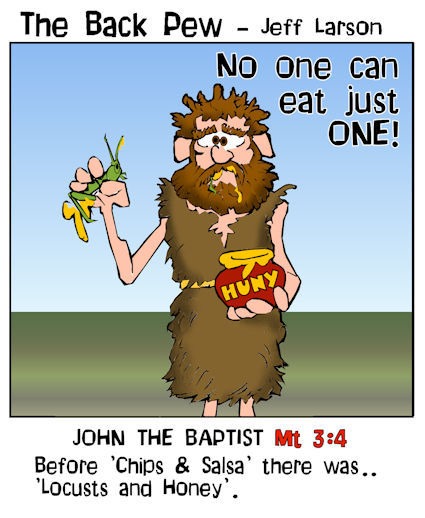
file“Now John was clothed with camel’s hair and wore a leather belt around his waist and ate locusts and wild honey.

–Mark 1:6
Mark tells the story of Jesus in a little over 11,000 words. That’s 7-8000 less words than Matthew and Luke. He is concise, intentional, and action-packed. This begs the question, why stop and tell us about the clothing and diet of John the Baptist?

Why Even Tell Us About John?

Doesn’t it seem a tad strange that Mark begins by saying, “this is the gospel of Jesus Christ…” then he proceeds to tell us about some guy named John? What is he doing here? There is no birth narrative. We don’t know where Jesus came from…but we know that he came on the scene at the same time as some strange dude baptizing people out in the wilderness? What is Mark doing by starting his gospel account out in the wilderness?

The wilderness was an empty, abandoned, wasteland. It was symbolic of the wandering Israelites—a place that was spiritually bankrupt. You don’t want to go to the wilderness. But Mark wants us to start there. Why?

Mark starts in the wilderness because it will be out of this emptiness that great hope is found. The wilderness is the place where our nakedness and vulnerability is fully exposed. It’s the place where we are stripped of our own efforts and resources and are forced to rely solely upon God. It is because of the pruning of the wilderness that it became a place of hope and new beginnings. The wilderness is also the place where Israel will find God’s love for them and rekindle their love for God. This is why around the time of Jesus there were many desert dwellers waiting upon God for salvation.

Mark tells us about John the Baptizer as a bridge to the prophetic hope of the Old Testament. He quotes from Exodus, Isaiah, and Malachi to place John as the fulfillment of this out of the wilderness time of renewal—where a prophet like Elijah would prepare the way for the Lord Himself. That’s why John appears at the beginning of Mark’s gospel.

Why Mention His Diet and Dress?

If John is in the gospel account to serve as a bridge to the Old Testament, it would do us well to walk across that bridge and make the connections that Mark is intending. Consider this one:

8 They replied, “He had a garment of hair and had a leather belt around his waist.” The king said, “That was Elijah the Tishbite.” 2 Kings 1:8

“Garment of hair” and “leather belt” are not the typical garb for prophets. Yes, Zechariah 13:4 speaks of “wearing a hairy cloak” in order to look like a prophet but there was no dress code. This isn’t to point to prophets its to point to a prophet; namely, Elijah. The leather belt certainly is pointing to Elijah.

Malachi 4:5 says, “Behold I will send you Elijah the prophet before the coming of the great and dreadful day of the Lord.” If you have a guy that is out in the desert that looks like Elijah, is calling to repentance, and speaking of the coming of a Mighty One, wouldn’t your mind immediately go to places like Malachi 4:5? John’s garb is meant to call to mind the prophet Elijah.

But why tell us about the locusts and wild honey?

There has been a fair amount of ink spilled trying to figure out which type of locust John was eating, whether it was actually an approved diet, and if maybe it wasn’t locusts but rather a manna-like substance. I also read some postulate that it was a type of bean he was eating instead of a locust. But these prove fanciful. I don’t think we can definitely say which locust—but our guy was eating bugs.

There are also questions about what is meant by wild honey. The word itself could refer to the cultivated honey that you would get from bees, a type of tree sap, or even nectar from a date. Personally, I’m most convinced by it being a type of tree sap. But, that’s not significant to the interpretation of the passage.

Peter Leithart has an incredibly interesting take on this passage. He connects the locusts with the “demonically-dominated nations” and that John’s eating of the locusts is a way of showing the incorporation of these nations into the people of God. His suggestion is similar to others who have seen John’s diet as a prophetic gesture.

I think they are correct to see in John’s diet a type of prophetic gesture, but I’m not convinced of their specific suggestions. In my mind I think Mark is mentioning this to firmly entrench John into the wilderness. He mentions his diet because John was one who was living off the land. Locusts and wild-honey is what would have been readily available in the wilderness. It’s not necessarily ascetic, it’s simply to place him fully within the wilderness. And that is necessary to show John as the fulfillment of the Exodus, Malachi, and Isaiah forerunner to the Messiah. 

Conclusion

Mark isn’t finished with the wilderness at the mention of John. He will have Jesus in the wilderness for his temptation. This too is intentional. God, through Mark, wants us to see that Jesus enters into the wilderness in order to redeem it. He enters into the place of our greatest shame, emptiness, brokenness, and he redeems it. This is why Mark is so adamant about having us see John as in the wilderness. It’s his way of tying us back to all of the hope of the Old Testament and eventually showing us how Jesus is the Great Rescuer.

Pointing to the diet and dress of John the Baptist seems like such an insignificant detail, but for Mark it fills out the landscape. It’s an important detail in showing John as the Elijah who was to come. But all of his work there is to ultimately point us to Jesus.

Photo source: here

Why Does Mark Give Credit to Isaiah For Malachi’s Work?

photo-1472905981516-5ac09f35b7f4

“As it is written in Isaiah the prophet…”

You expect immediately after this statement a quote from a prophet named Isaiah. But you don’t get that. The verses immediately after are from another prophet; namely, Malachi.

“Behold, I send my messengers before your face, who will prepare your way…”

He then proceeds to actually quote Isaiah:

“the voice of one crying in the wilderness: Prepare the way of the Lord, make his paths straight…”

Why does Mark ignore Malachi and give all the credit to Isaiah? Can we really claim an inerrant Bible if we’ve got a gospel writer misattributing a source? That’s basic level scholarship. As I set about answering these questions we will also learn a little about textual variants.

My Bible Doesn’t Say “Isaiah the Prophet”

Some of my readers will grab their trusted KJV to check these verses and you won’t find “Isaiah the prophet” It will simply read “As it is written in the prophets…” No problem, then. Some may even go so far as to argue that this is part of the modern translations—they bring more confusion than help. The only problem is that it’s quite likely that “Isaiah the prophet” is the original. How do we know this?

Have you ever heard the phrase “textual variant”? It’s what happens when the many biblical manuscripts we possess conflict with one another. In this instance there are some manuscripts which read “as it is written in the prophets” and others have “as it is written in Isaiah the prophet”. Only one of these (or I suppose neither is a possibility) is original. What is inspired is what Mark actually wrote. So how can we figure that out. At times it is difficult, but the general rule of thumb is that “the reading that best explains the origin of the other readings is probably original.”

Those who have given their lives to figuring these things out have given us five specific rules (or maybe strong suggestions—because sometimes we break those rules):

  1. Prefer the shorter reading because scribes don’t add words
  2. Prefer the more difficult reading because nobody changes something to make it more difficult
  3. Prefer the reading that is most similar to the author’s typical vocabulary.
  4. Prefer the reading that accords best with the context and author’s theology.
  5. If dealing with parallel passages prefer the one that is less harmonious because a scribe wouldn’t change something to create less harmony between the texts.

There are also rules for weighing external evidence. We typically prefer the older manuscripts, the ones that have the most widely separated geographical areas, and the greater number of texts types which support that reading. Scholars differ on which text types to prefer, but the basic rules still apply here.

So what do we do with Mark 1:1-2? There are two possibilities with this text. Some manuscripts read “as it is written in Isaiah the prophet” (reading one). Other manuscripts read “as it is written in the prophets” (reading two). Which one is original?

First consider the external evidence. For reading one the evidence is both early and widespread. Evidence for the second reading is limited to only one text family (the Byzantine—that which was solely used for the KJV). The external evidence would cause us to lean towards accepting the first reading.

Now consider the internal evidence. The shorter reading is the second one. But which is more difficult? The first one is obviously more difficult. Consider that which is cited in Mark 1:2. It is not only Isaiah the prophet but also Malachi 3 and a little influence from Exodus. So by changing the text to “as it is written in the prophets” this little problem was solved. There would be little reason for a scribe to change the wording to “Isaiah the prophet” since this would create a difficulty and not alleviate one.

By weighing the external evidence and considering the internal evidence we can be almost absolutely certain that “as it is written in Isaiah the prophet” is the original.

So Does This Mean Mark Made an Error?

If I was writing a term paper and misquoted as Mark did here I would likely lose points for making such an error. So how can we say that the Bible is inerrant if it has within it an error of attribution?

If we were to weigh Mark by our standards of scholarship, Mark made an error. But inerrancy respects not only authorial intent of a passage but also the literary conventions under which that author wrote. It was typical for an author in Mark’s day to merge together quotes and then give credit to the more well known.

If that sits poorly with you think about the last time you watched a football game. Did you call foul whenever a quarterback threw a pass at the line of scrimmage instead of five yards behind it? Of course not. But you did get up in arms when a defender grabbed your quarterback’s facemask and pulled him to the ground. You expect a 15-yard penalty for that infraction.

Rewind 100 years and your expectation of penalties would have been reversed. One hundred years ago a QB couldn’t throw the ball unless he was five yards behind the line of scrimmage, and a defender could pull down a runner doing whatever it took—including grabbing the facemask (that wouldn’t exist for a couple more decades).

We only balk at Mark’s “infraction” because we have been trained in a different set of rules for attribution. But for Mark he wasn’t breaking a single rule. He was doing what you did in that day. This was how you wrote.

Sorry, Malachi. You should have written a longer book, then Mark might have given you props instead of Isaiah.

I have taught on this material for so long and so many times that I do not know what is mine and what belongs to others. I can tell you that I was heavily influenced by Dr. Plummer’s 40 Questions About Interpreting the Bible. And, yes, I realize the irony of kind of botching any attribution here on an article on the different rules of citing. Let’s just say I’m going old school.

Photo source: here

Assessing Why Our MBC Motion Failed

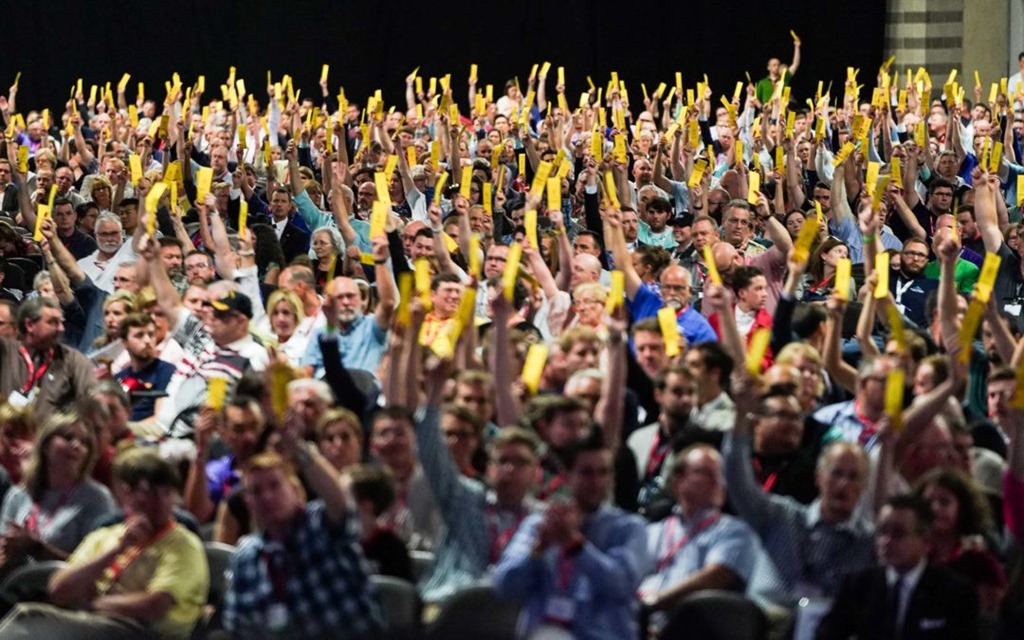
thumb-g42aae4905_640Last week I did something I never thought I would do. I came to microphone 3 at the Missouri Baptist Convention and I spoke. Not once, but twice. And, yes, I remain shocked and deeply grieved that 507 Missouri Baptists voted against our motion.

I’m deeply grieved for us, and I’m grieved for what this communicated to survivors. I really do not want to believe that 507 Missouri Baptists intended to communicate, “we don’t care about sexual abuse reform” but this is what was communicated. And I feel partially responsible. I feel as if I dropped the ball. Today I want to share why and help other states to learn from our mistakes.

Why Did the Motion Fail?

I do believe there was a bit of an unknown campaign of information prior to the meeting. And I do believe there are likely some who, for whatever reason, truly do not want sexual abuse reform. I don’t think anything we did could have changed those votes. But I believe some (maybe enough to have given us a majority) voted as they did because of a lack of information. And that’s my fault. Here is what we learned, and I’m sharing this in the hopes that other states will learn from our mistakes and hopefully we’ll see motions similar to our pass on a state level.

1. Scott Gordon’s speech before the motion should have been informational.

Honestly, we did not expect significant opposition. We had consulted with leaders within MBC, we had consulted with parliamentarians, and many others. We did not hear opposition from our leadership. There was not opposition from the committee on order of business. So we were shocked to see the vote go as it did. And because of this we weren’t prepared. Scott’s time should have been given to information. It should have been sharing why this motion was necessary and why it was different from the motion at Nashville. (That’s not to blame Scott. He did a great job. It’s to say that we didn’t have the right game plan because we didn’t read the room correctly.)

2. I was not prepared to speak for the motion.

This was a combination of ignorance and fear on my part. You don’t need to know all of my history but speaking at things like this are absolutely terrifying for me. It causes my anxiety to go through the roof. Scott was prepared—he is better at making these motions and I figured others would happily speak for the motion. But when there was nobody else to speak for it, I knew I had to go to the microphone and speak—just from the heart, completely unprepared. I didn’t do horrible, but I could have done much better.

I’m not sure if it would have swayed votes—but I would have at least done my best. Survivors didn’t get my best and for that I’m saddened. This is what I wish I would have said:

Fellow Missouri Baptists, we heard last night our executive director say that we have to “do whatever it takes” in order to rid ourselves of the scourge of sexual abuse. That is, in part, what we hope to accomplish in this motion. This is not the same as the motion in Nashville. This was patterned after the motion made in 2019 that established the racial reconciliation task force. It was intentionally not patterned after the Gaines motion. We have a bit different structure and we are at a different place in the state of Missouri. This is not a call for a third-party investigation.

One of our aims in this motion is to raise awareness and to highlight some of the really good work which Missouri Baptists have done. Passing a motion like this would give us an opportunity to get the great work of Missouri Baptist Children’s Home in front of our churches. It would help us to be more intentional about promoting things such as the Caring Well Initiative. It would help us to ask good assessment questions. And, yes, it would encourage us to ask questions of our past. How could we have done better? How can we do better in the future?

We believe that these questions needs to be asked on the local, association, state, and national level. Survivors deserve our diligence. The gospel and mission of Christ demands that we stand with the vulnerable. This is part of our mission. Let us do the right thing and ask the right questions. Let us be bold enough in Jesus to repent where needed and pursue change. And let us also believe the gospel enough to celebrate where the Spirit of God has moved in our hearts and our churches when we have done the right thing. Let us do the right thing, even now, so we can celebrate more and grieve less.

3. Messengers assumed this was the same as the motion in Nashville.

There was some language that was similar to the motion made in Nashville. That language was in regards to looking at our past. We borrowed that language because I believe we need to realize that when we are talking about sexual abuse reform we aren’t just talking about getting rid of abusers—we’re also talking about reforming all that which is complicit. That is where much of the hard work is to be done, because it is here where we experience the most significant opposition.

But this motion was not the same as the one passed in Nashville. We should have done a better job of explaining what this motion was NOT, as well as what the motion was. I don’t believe we did that—and we were shocked when the discussion ended so quickly. I think many Missouri Baptists thought it was a “liberal motion”. We weren’t able to get in front of that.

4. We didn’t show why it was necessary

I think some voted against the motion because they saw it as unnecessary. They believed that there was an investigation going on at the national level and so it would not be necessary to also have something similar on the state level.

We must make the point that reform is needed on every single level. Why? Because we are Baptists. This means that each level is autonomous. If this is the case then questions of reform need to be asked on every level. We want to make sure that in our local churches our structures are healthy for survivors of abuse as well as being clearly un-welcoming to predators. The same is true on an associational, state, and national level.

Advice For Those Yet to Meet

My advice here is simple. First, expect opposition. Expect misinformation. Expect motions like this one to be politicized and tied to a battle over liberalism and conservatism. You aren’t going to sway those giving the misinformation but you can at least labor to make sure that the room is voting against what your motion is actually hoping to accomplish. Major on information. Educate on why this is necessary for your state convention but also show why this is different than what took place in Nashville. Have multiple people prepared to speak. Know your Robert’s Rules of Order.

Looking Forward

I believe there will be some good questions asked from our executive board within the MBC. I am going to, hopefully, continue having these conversations with leadership. I think they will do some of what the motion was asking for even without a task force.

But there is some difficulty of doing this. For one, I would not support the executive board forming a task force similar to what we were calling for. The messengers spoke against this. We need to do the will of the messengers. Secondly, self-investigations never communicate well to survivors. It was far better to have an informal “task force” doing the labor. We need people from the outside to see things we aren’t seeing from within the system.

I plan on working as hard as I can on this issue in 2022. We are going to be sure we are asking these questions on the local level as well. And I hope to bring a similar motion again at the MBC in 2022. I’m hoping in the in-between time we will have many other state conventions pass motions similar to ours.

This was too important for me to not have been more prepared. Real people were harmed by our dropping the ball in some of these areas. It will not happen again.

Photo source: here

Our Motion for the Missouri Baptist Convention On Sexual Abuse

2018-annual-meeting-1080x675It’s no secret that Southern Baptists have been in the news lately for all the wrong reasons. I would love for us to be in the news for our great work of Disaster Relief, other mercy ministries, or the work of our children’s homes. But these have been overshadowed, and rightly so, by the darkness of some of our institutions. It would be wrong for us to not labor to shine the light into every dark corner.

The gospel calls us to walk into the light. We believe that Jesus is strong enough to conquer and cover our every weakness. This includes ways in which we’ve blown it as a gathering of like-minded churches. We want to walk in the light for the sake of Christ and for the sake of every image-bearer. We want to labor to be the hands and feet of Jesus who provide healing to survivors. In any place where we’ve done harm we want to repent. And we want to always pursue growth in these areas. It is to this end that we offer this motion at the Missouri Baptist Convention. 

I’ve formed a group with a few other like-minded pastors throughout the state of Missouri. We’ve been working on this motion and will be, Lord willing, bringing it to the floor during our Missouri Baptist Convention Annual Meeting. It’s not perfect. It’s not saying all the things we want to say. It’s a beginning step (though there is already great work being done by our MBCH). But we do believe this will be something which our state leaders can get behind and lead Missouri Baptist churches in being healthier in this area. This is the motion—it could still see a couple minor tweaks before brought to the floor but this will be the gist:

I move that the newly elected President of the Missouri Baptist Convention appoint a task force to examine the issue of sexual abuse for the purpose of developing and recommending a plan to the Missouri Baptist Convention to facilitate the ministries of MBC churches and the MBC entities. The task force shall examine the Convention’s history relating to sexual abuse prevention and caring for sexual abuse survivors and whether there are any patterns of intimidation of victims or advocates or resistance to sexual abuse reform initiatives.

Furthermore, this task force should recommend avenues for education and better understanding of this issue for the Convention and develop a plan with concrete action steps for more faithful ministry regarding sexual abuse prevention and survivor care in the Convention going forward.

This task force shall be comprised of nine individuals who are active members of MBC churches, including but not limited to at least one individual from each of the following categories: Sexual Abuse Survivor–if willing to serve, MBC Executive Director, MBC Executive Board Member, Metropolitan Area Pastor, Rural Area Pastor, and a Female Layperson.

This task force must provide an initial report to the messengers gathered for the 2022 MBC Annual Meeting with a view to a final report to the messengers gathered for the 2023 MBC Annual Meeting.

If you are a Missouri Baptist we would appreciate your vote on this important motion.