What If Prayer Makes Anxiety Worse?

There is a mandatory question that the nurse at my doctors office always has to ask me. “Have you had feelings of hopelessness or despair in the last two weeks”? When she asked this question to me yesterday I was relieved that she said two weeks ago and not three. Had she said three weeks I’d have had to say, “yes”.

My doctor knows of my bouts of anxiety and depression but apparently my nurse doesn’t. She does, however, know that I’m a minister. And she rather absent-mindedly informed me yesterday that because I’m a minister if I ever answer yes to that question I just need to pray more. I told her it was probably a bit more complicated than that.

But she’s actually not alone in suggesting “more prayer” as a remedy to depression. A recent study shows that prayer is helpful to the anxious only if their view is that God is gracious and loving. But what happens when our view of God becomes so askew that we don’t believe he is gracious and loving?

I’m reading through John Bunyan’s classic Grace Abounding to the Chief of Sinners. Bunyan recalls a time of great anguish of soul. He feared that he had committed the unpardonable sin and that there was no hope of redemption for him. Here is what he says about his prayer life during that time:

I found it a hard work now to pray to God, because despair was swallowing me up; I tought I was as with a tempest driven away from God; for always when I cried to God for mercy, this would come in, ‘Tis too late, I am lost, God hath let me fall; not to my correction, but condemnation; my sin is unpardonable; and I know, concerning Esau, how that after he had sold his birthright, he would have received the blessing, but was rejected.

The more Bunyan prayed the worse things got for him emotionally (and mentally).

Prayer is difficult in these times. It’s difficult because when I approach the Lord I’m not approaching a throne of grace. I’m coming before Him to get yelled at again and reminded of all the terrible things I’ve done—or worse yet—that at the very core of my being I’m deeply unacceptable to the Lord.

So what do I do? Do I just give up praying? If it isn’t helpful unless my view of God is gracious and loving—and if prayer only further distorts my view of God and self—then what in the world am I gaining by praying?

It is here that I disagree with the findings of that study. It is worded as if God only exists in our conception. But God transcends my depressive thoughts.

Sure it stinks when I come before him with a heart that is barely believing, a heart that can’t grab hold of 1 John 1:9 and believe it for myself. But God is bigger than my moments of unbelief. This is, in part, what I think 1 John 3:20 is teaching. Even if our hearts condemn us we take comfort in the fact that God is greater than our hearts. The gospel goes deeper than even our hearts.

This is why I still pray…or try to pray…in the midst of darkness. Because eventually the gospel wins out and God breaks through. It happened with Bunyan and it happens with me.

Prayer is helpful even when our thoughts of God are jacked up simply because the gospel is true. When we cry out to God—even with hearts tinged with unbelief, depressive thoughts, and the whole lot—he answers. It may not make me feel better in the moment in which I pray. But God hears and God answers.

That’s why you keep praying…even if prayer might make anxiety worse. We don’t pray because that’ll quickly fix our emotions. We pray because we’re desperate and it’s the only reflex we know.

God hears.

—

This post is a rework of a previous post.

Photo source: here
Read This 10.03.17

How to Survive the Busy Season of Ministry

A few tips for the pastor’s wife during those busy seasons.

Why Study Theology? Because You Already Have It

Amen!

Today’s Teens Are Always in the Hallway

This is such an interesting perspective. It definitely is different working with teens now than it was ten years ago.

Don’t Sacrifice Truth on the Altar of Community

Such an important point to remember.

Burnout Begins with Bad Theology

David is right. And his book on burnout is phenomenal.

Pastor as Overseer of Worship Music

We cannot afford to outsource this. It doesn’t mean that we don’t trust staff or the other pastors God has called to this important ministry. But it does mean that we, lead pastors, have to oversee this as well.

The Dying Art of Disagreement

A great article in the NY Times.

A Proper Study of History Should Increase Your Balance

This is one of the reasons I’m such a church history nerd.

I’m not going to cry about this….I’m not going to cry about this…

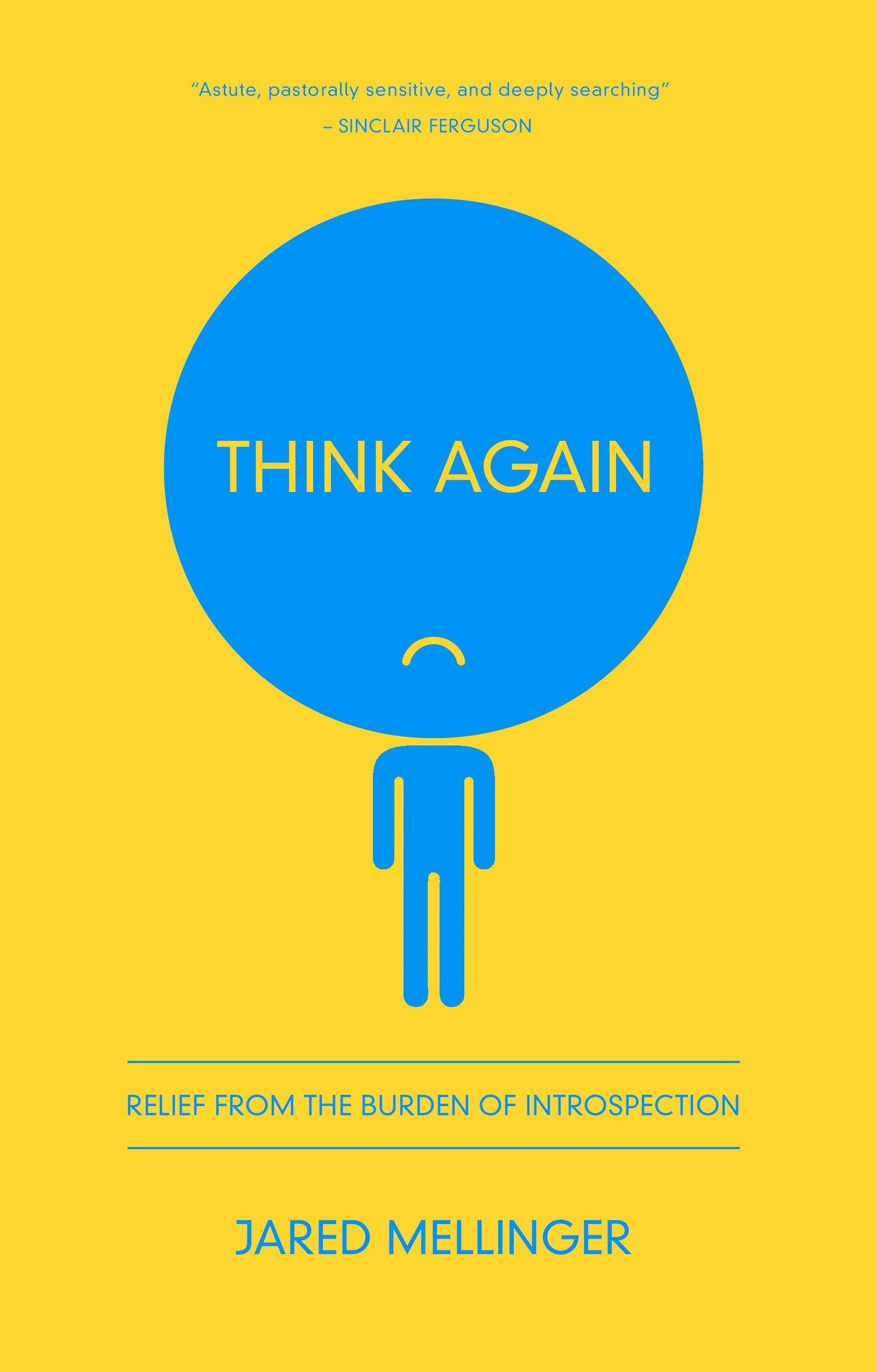
Review of Think Again by Jared Mellinger

It was the start of my eighth grade basketball season and I had been practicing very well. A week or so before our first game the head coach informed me that I was trending towards being the new starting point guard. He began rotating me in with the starting team. And as he did I played absolutely terrible. Turnover after turnover. Bad shot after bad shot. I was playing like a third-stringer. The conversations about me starting ended.

What happened? A major part of the issue was that once the coach told me that I might be starting I made one of the biggest mistakes an athlete can make—I got stuck in my own head. I thought about passes instead of passing. I was crippled by introspection.

Fast forward a couple decades (wow, really? 20 years ago?) and I have some of those same tendencies. Now, though, it doesn’t impact my ability to play basketball. Now the stakes are much higher. My habit of morbid introspection has a tendency to negatively impact my relationships. At times it even cripples my ability to lead.

This is why when I saw a New Growth Press ad for Think Again I immediately requested a review. I’ve known for quite sometime that this is a problem area in my life. I figured this book might be helpful. Though I must confess I wondered how a book—which tends to make me introspective—would guide me out of introspection.

The author, Jared Mellinger, does a fine job of pointing to Christ throughout the book. In fact the whole of the book can be summed up in one simple statement: “The more we are captivated by Christ, the less we are caught up in self” (10). Several chapters are spent on defending that thesis and showing the danger of introspection.

I’m happy that Mellinger did not throw out introspection altogether. While some of the books from the Reformed side of things can tend to exalt the life of the mind in such a way that feeds morbid introspection, there are also numerous books which ignore the importance of loving God with our minds. Some perspectives would have us never analyze ourselves. I believe Mellinger strikes a helpful balance. He devotes an entire chapter to the benefits of healthy introspection. He also does us a service by showing the ways in which we can cross the line from healthy to unhealthy introspection.

The reader will not only learn how to engage in healthy self-evaluation but is also given tools to parse the difference between real and false guilt. We often run from healthy introspection because we are not secure enough in the gospel. Or we engage in unhealthy introspection because we have eyes fixated on our performance instead of the finished work of Christ. Dealing with actual guilt and dismissing false guilt helps us engage in healthy introspection. We examine ourselves so that we can see Christ in us as well as reflect upon His provision for our failings.

I finished the book a couple of months ago, but held off on a review because I wanted to see how everything I had read would actually impact me. Would I see a new way of thinking? Would my introspective tendencies get healthier?

The only problem with my strategy of waiting is that you cannot just read a book and expect to change. You have to actually apply the tips therein. And really this isn’t a book filled with trips and tricks. It is more a book of an overall philosophy of thinking about introspection. One could say it is a theology of introspection. As such it is a helpful addition to your library and would be a great help to anyone who has gotten introspection all wrong.

It’s not incredibly fair to fault a book for a chapter it did not include, so I want to offer this critique with caution. I might be asking for a talisman instead of a realistic thing that a book could offer. Having said that, I do believe a chapter for those in the thick of darkness and depression might have been helpful. I would have liked something memorable to help me whenever I find myself trapped in my own mind. How do I get out?

But then again, I think there are answers to those questions smattered throughout the book. There is enough here for me to chew on and apply to my daily life. The overall point that looking to Christ instead of self is the answer to introspection is helpful. And it is written in a very helpful and practical way. I do not want to give the impression that this book is merely theoretical or chock-full of theological musings but no practical guidance. I think the book would be very helpful to anyone struggling with morbid introspection.

The answer to my battle with morbid-introspection is found in Christ. That much I learned from Mellinger. It isn’t found in reading a book on introspection. But this book is a great tool in pointing to Jesus and retraining the mind to think outside of ourselves. I would heartily recommend it for anyone.

–

You can purchase it here.

Read This! 09.26.17

5 Truths to Remember When You Move

This is helpful.

5 Ways to Murder Your Marriage

That’d do it.

On Getting ‘Un-Dragoned’ by the Light of Christ

I love this illustration from Narnia.

Seven Deadly Statements of Church Members

This is the important part of the article: “…healthier church members should and must speak up when they hear other members making such destructive statements.”

Setting the Tone in Your Home

I think this is true. I know that I have an important role in this as well, but what Melissa says here is true.

What Christians Should Know About Cremation

I think I’ve done more memorial services than funerals.

Bible Contradictions Explained

Here are four ways that the gospels “disagree”

Great Reality Inspires Great Writing

I would love to hear the audio of Piper speaking to the group of writers. This is so good.

Glad this little girl won AGT: