Does 2 Corinthians 6:14 mean A Christian Shouldn’t Date an Unbeliever?

Do not be unequally yoked with unbelievers. For what partnership has righteousness with lawlessness? Or what fellowship has light with darkness? –2 Corinthians 6:14

As a youth pastor this was a pretty common verse I pulled out of my repertoire. The logic was pretty sound. We should not be dating except for the purpose of marriage. When you marry someone you are united to them. You should not, according to 2 Corinthians 6:14, be married to an unbeliever (provided that you are a believer at the time of your marriage). Therefore, 2 Corinthians 6:14 teaches that you should not date unbelievers.

But is that really what Paul is teaching in this passage? A few questions. First, who are the unbelievers? Secondly, what does it mean to be “unequally yoked” with them? We can come to those answers by considering the context.

Looking at the context of 2 Corinthians it is clear that a discussion about marriage and dating is far from his mind. In fact what appears to be an odd change in topic in 6:14-7-1 is so abrupt some have come to the conclusion this text isn’t in the original. But if you read this passage simply for what it’s saying it is not so abrupt.

In 6:13, Paul calls on the Corinthians to “open wide your hearts”. The other side of that is to “not be unequally yoked with unbelievers”. As an example, if someone hated my wife and I remained there best friend, you would be right to question my dedication to my wife. How can the Corinthians “open wide their heart” to Paul while at the same time be in close partnership with the false teachers who gave him so much trouble? They couldn’t. It wouldn’t be a fruit of their repentance to continue being best buds with these false teachers.

So the “unbelievers” in the most immediate context are the false teachers giving Paul so much trouble. How then would the Corinthians be unequally yoked to the false teachers? I appreciate the wording of Scott Hafemann:

…to be ‘yoked together’ is not a technical term referring specifically to a legal or culturally binding act (like getting married or joining the army, though such events may indeed represent such an act). Rather, it is a metaphor referring to any kind of joint participation, formal or informal, that significantly forms one’s own identity. To be ‘yoked together’ is to take on the identity of those who are joined together for a common goal or task. It is to be someone’s ‘ally’.

So the nearest application is to say that Paul is calling the Corinthians to separate from the unbelievers who are seeking to divide the church from within. Don’t be the ally of those who are calling themselves “brother” or “sister” but are rending the church asunder. His fundamental concern then isn’t with our relationship with those “outside” but with those “within”.

I write this because I think there is a way in which many of us more conservative-minded Christians can think we are obeying this passage all the while ignoring it’s nearest application. I appreciate these words from JC Ryle:

To argue with our unconverted relatives, to “avoid” all our old friends, to withdraw entirely from mixed society, to live an exclusive life, to give up every act of courtesy and civility in order that we may devote ourselves to the direct work of Christ–all this may seem very right, and may satisfy our consciences and save us trouble. But I venture a doubt whether it is not often a selfish, lazy, self-pleasing line of conduct, and whether the true cross and true line of duty may not be to deny ourselves, and adopt a very different course of action.

What Ryle is saying is that taking this passage (and 2 Corinthians 6:17) to mean that we need to avoid mixing with the world might not be a mark of holiness but one of laziness. This passage isn’t a call to not rub shoulder and be deeply involved in the lives of unbelievers. It’s instead a call to take holiness seriously within the church. It’s a call of the separation of church discipline far more than it’s a call of isolating from the lost world for the sake of not being marred by the filth of sin.

But is it applicable to say that Christians shouldn’t date an unbeliever? Personally, I believe you can make some very good arguments from Scripture that it isn’t wise to do such a thing. Given what marriage means and what our union with Christ means I’m not sure why a believer would want to unite with someone who is not united to Christ. But I don’t believe you can use 2 Corinthians 6:14 as a command to not date an unbeliever.

Don’t read me wrong. It’s not wise for a Christian to date (and especially marry) someone with such divergent goals. You are asking for heart break. It will also greatly hinder your ability to engage in kingdom causes. And I do believe a far application of 2 Corinthians 6:14 would be for believers to strongly consider the way in which we enter into union with unbelievers. But let’s not think we’ve fully obeyed 2 Corinthians 6:14 just because we don’t smoke, chew, curse, or go with girls who do.

Photo source: here

Read This! 05.15.18

Do Not Quench The Spirit

This passage has had several interpretations. I always appreciate the work of Sam Storms.

5 Ways Pastors Can Prepare Their Churches for Suffering

I always figure if they can make it through my sermons they can do anything.

Richard Sibbes and the Centrality of the Heart

Dever wrote a helpful bio of Sibbes, so I’m always intrigued when he reflects on Sibbes.

7 Ways to Increase Intimacy in Your Marriage

My anniversary is today! I’ve been trying to practice these things for fourteen years now. Praying I get many more anniversaries.

A Letter to My Brothers

I really took this to heart.

4 Myths about Responding to Spousal Abuse

Very helpful.

To the Young Christian Who Hasn’t Committed to a Church

Amen.

Listening is Not Compromising

This is a very important word from Mary Duren.

This one is for my wife:

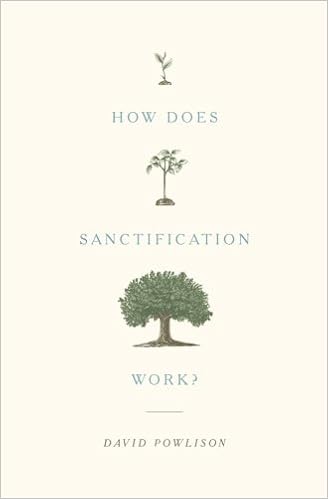
Review of How Does Sanctification Work? by David Powlison

I think there might be more cures for hiccups than there are Baptist churches. If you’ve ever had hiccups while around a bunch of people you know this. Everybody has a different solution for curing the hiccups. This is likely because at some point in time one of these crazy suggestions actually worked for someone. As for me, I swear by taking a drink of water while someone pulls down on your ear lobes. Works every time.

Except when it doesn’t.

Sanctification is a bit like this. What some people swear by as a certain way to experience growth in Christ just simply doesn’t work for somebody else, at least not in quite the same way. It was a bit of a fad a couple years ago to subscribe preaching the gospel to yourself as the talisman for sanctification. If you simply recite your justification and remind yourself of the precious truths of the gospel, then sanctification is going to happen.

This is one of the reasons How Does Sanctification Work? was written by experienced counselor David Powlison. Powlison argues that “the process of the Christian life is greatly enriched by considering multiple mundane examples, both in Scripture and in our lives.” The process of sanctification is multi-faceted and not something which is easily traced. As Powlison says:

In the long run, a single truth harped on will disappoint even its devotees. In another season of life, facing a different struggle, they too will need the other kinds of help. What once sizzled becomes boring, a repetitive pat answer that no longer delivers. (Powlison, 43)

It is true that God uses focusing on the indicatives of the gospel to change us. Thinking through what Christ has done on our behalf can be incredibly helpful for rooting out worldly thinking which stunts our growth in Christ. But this is not the only means that God uses to help us grow. What Powlison outlines are five factors in our sanctification. Underneath everything is the work of God on our behalf. This is the foundational factor. Another key factor is truth coming to bear upon our lives. This happens through not only the word but also two other factors in our growth; namely, wise counsel and suffering. The last factor in our sanctification is the individual. All of these work together to bring about sanctification.

This is the gist of Powlison’s book. Truthfully it’s a book unlike anything I’ve ever read. It really only has one major point and it makes that point in a variety of ways. That point is that sanctification is messy and varied but it’s something that God will ultimately accomplish in us as he meets us where we are. The title of the book is a question. How does sanctification work? After reading the book I’m not sure I have a definitive answer. And I think that’s Powlison’s point.

I found this book to be incredibly helpful in giving voices and stories to something I have been thinking for awhile. A couple years ago I wrote an article attempting to make a point similar to Powlison’s point in this book (here). So Powlison’s point isn’t a new concept to me but he says things in a way that I found immensely helpful. This statement might be the most helpful to me:

Ministry “unbalances’ truth for the sake of relevance; theology ‘rebalances’ truth for the sake of comprehensiveness. Put another way, because you can only say one thing at a time, a timely word must be a selective word focusing on the need of the moment. (Powlison, 33)

This helps me in thinking through counseling and meeting people where they are. We cannot say everything. And just like with hiccups what works for me might not work for somebody else. I shouldn’t be surprised or offended if that life changing Scripture doesn’t have the same impact on someone else. Sanctification works different for everyone.

I’ve thought a healthy doctrine of sanctification and discussion on our union with Christ are helpful points for this stage in the history of our gospel-centered movement. I think this little book by Powlison is a helpful corrective. It should be read and used to get conversations started. It models for us what sanctification looks like. It’s format is messy. And I love it. Because the whole thing models the messiness of sanctification. I’m not really sure how this book has impacted and shaped me but I know it has. Sounds a bit like God’s work in sanctification, eh?

You can purchase the book here

A Concern With Paige Patterson’s Apology

I really don’t want to write this. It is going to be seen as dog piling or as harboring bitterness and unforgiveness. I pray if those charges are leveled that they don’t have truth in them. I pray that my motives here are completely pure.

Yesterday Paige Patterson issued an apology to God’s people. And it’s not sitting well with me. And, honestly, I feel it puts into a precarious position the women who signed the letter to trustees and have expressed concerns about Patterson. Allow me to explain why and propose a way forward.

Worldly Sorrow vs. Godly Sorrow

In 2 Corinthians 7, Paul mentions worldly sorrow and godly sorrow. Worldly sorrow is almost exclusively horizontal. It is concerned with the consequences more than the actual offense at hand. It’s like the old preacher who heard a man praying that God would clean all the cobwebs out of his life. The preacher wisely prayed, “Lord, kill the spider”. Worldly sorrow doesn’t go at the root of things, it doesn’t want to go after the spider. Worldly sorrow desires to tame sin and manage it rather than pursuing root causes. It wants sin managed whereas godly sorrow wants sin destroyed.

Another mark of worldly sorrow is that its apologies ends up putting the issue on the other person. It puts the consequences of your sin on the other person. I call these half-apologies. “I’m sorry that you were offended. I didn’t mean for anyone to be wounded by what I said. I’m so sorry that your feelings are hurt”. Do you see what that does? The real problem here isn’t the offense it is that someone has been offended. If the person had not been offended or called you on your sin, then we wouldn’t be having this conversation. There isn’t really heart change taking place with worldly sorrow. It’s just sadness that you got caught. Present actions and apologies are just cobweb cleaning.

Now, I do not know Paige Patterson’s heart. I do not know the level of sincerity to his apology. I don’t want to make this about making sure you say all of the right words. You could give a terrible sounding apology but real heart change is taking place. It might look like a person is engaging in cobweb management but in reality they truly are broken, repentant, and pursuing change. This is why we talk about the fruit of repentance.

This is why I’m saying here, “I’ve still got concerns with this apology” and not “I refuse to forgive you”. The problem that I have is that I’m really not certain what Patterson is apologizing for. All I’m seeing in this apology is, “I’m sorry that I misspoke and that I’ve caused people to be offended and hurt by my statements”. To me that doesn’t get to the real root of the issues and concerns that people have. It doesn’t address firing a student for applauding an article in which Ed Stetzer recommended Patterson step down. Does he really ever say in this apology, “I was wrong. You are right to be offended by what I said. It was inappropriate”? All I see is, “I wasn’t thoughtful and wish I had said things better”. That’s not really the issue, is it?

But here is my real concern…

The Narcissistic Cycle of Abuse

In 1979 Lenore Walker developed the narcissistic cycles of abuse. The cycle begins when the narcissist feels threatened. Eventually this reaches a boiling point and the person lashes out in some form of abuse. At some point the one abused defensively fights back. At this point the abuser plays the role of the victim. This causes the abusive person to again feel empowered. Rinse and repeat.

Do you see where we are right now? He has offered a half-apology. And what happens if women who have been wounded by his statements do not accept this apology? What if they say, “I’m sorry, this really isn’t the issue”? They will be viewed as piling on and harboring bitterness. Patterson will then be positioned to be in the place of the victim. “I’ve apologized. Now let’s move on.”

Shortly after Patterson’s article many mega-church pastors and leaders within the SBC tweeted their thankfulness for Patterson’s words. Frankly, I’m saddened by his words. I’m grateful that these could be positive steps in the right direction. But I’m also a bit concerned that we are just perpetuating a cycle of abuse and manipulation. I’m concerned that rather than dealing with the core issues here this apology is a way of silencing critics. I pray that I am wrong and that what we see are positive steps in actually dealing with gender issues we have in the SBC. And that we really see repentance from Patterson for authoritarian abuses of power.

The Way Forward

In 2 Corinthians 7, Paul speaks of the result of godly sorrow. Paul says of the Corinthians, “…see what earnestness this godly grief has produced in you, but also what eagerness to clear yourselves, what indignation, what fear, what longing, what zeal, what punishment!” Godly sorrow kills the spider. It pursues reconciliation, indignation for personal sin, it pursues lasting change.

What I would love to see from Patterson is an actual confession of real sin. “54 years ago my counsel was wrong”. Or “It was a silly illustration to try to make a play on words to teach on the Hebrew word for build. Yet, I must confess the way that I spoke of that young woman was objectifying. I was wrong. I should never have spoken that way. But I’m also grieved because I believe what Jesus said about our words coming out of the overflow of the heart. I’m grieved that I still have places in my heart where objectification of women is present.”

Perhaps relinquishing power would be a good idea. Maybe giving that young man his job back and acknowledging error there. I would just love to see something which breaks that cycle. His last line, though, makes me think this isn’t going to take place:

I sincerely pray that somehow this apology will show my heart and may strengthen you in the love and graciousness of Christ. 

I hope I’m not reading too much between the lines, here but notice where the focus is? It’s not on those who have been offended. It really sounds like he is saying, “I really hope this apology works”. It sounds like a husband who has ticked off his wife but doesn’t want to address the real issue. So he just apologizes in a way that he hopes will make her happy enough that she’ll stop being mad at him. That is what this sounds like.

Wouldn’t it be better to say something like, “I pray that God grants healing to those I have hurt, and that I might be an instrument in healing going forward.”

The way forward would be to actually acknowledge real tangible wrongs and to do things to remedy those. The way forward is not to offer an apology, wait for pushback, play the victim, return to power.

I will say it again. I’m not trying to dog pile on Patterson. I really don’t know the man. He has not direct influence or bearing on my life and ministry. I would gain nothing by seeing him step down. I want to say “I have no dog in this fight”, but I do. I want to see the SBC centered on the gospel. I want to see women within our convention honored and protected. I want to be part of the change there. But I have no direct relationship with Patterson which is motivating me to write this. But I do believe, for the sake of his soul we cannot simply sweep this stuff under the rug, allow him to remain in power, and move on. the cycle needs to be broken. For the good of the SBC and for the good of Paige Patterson.

Praying the cycle breaks…