Taste and See

Growing up I never ate Chinese food.  Maybe because I came from a town of 600 and my only exposure to all things Chinese came from Rambo and Chuck Norris.  I had always assumed it was only noodles, egg rolls, and little baby kittens.  So, I think the first time I ate Chinese food was in college.  But once I had my first bite of cashew chicken I was hooked.  And my love for Chinese food has expanded and grown over the last 10 years.  I couldn’t imagine turning down such joy. 

Scripture encourages us to “taste and see that the Lord is good”.  I have, and He has proven to be far more glorious than cashew chicken.  With that as a background consider this from the pen of John Newton:

For how can we but be staggered, when we hear people speaking the language of assurance—that they know their acceptance with God through Christ, and have not the least doubt of their interest in all the promises—while at the same time we see them under the influence of unsanctified tempers, of a proud, passionate, worldly, selfish, or churlish behavior?

In other words, how can it be consistent that someone can claim to be in a right relationship with a holy God and yet have lives filled with unholy behavior.  How can you taste and see that the Lord is good and yet turn back to living ungodly lives?  Is it not unsettling that a person (myself included) would feast on steak and then chase it down with a glass of sawdust? 

To this Newton speaks of the full effects of faith (You can read the whole letter, here).  Faith causes us to want more and more of God.  This is why Newton is able to say:

Whoever is possessed of true faith, will not confine his inquiries to the single point of his acceptance with God, or be satisfied with the distant hope of heaven hereafter. He will be likewise solicitous how he may glorify God in the world, and enjoy such foretastes of heaven as are attainable while he is yet upon earth.

Newton is saying here that once you have tasted that the Lord is good you are not satisfied with a mere taste or settling for the hope of a great banquet meal in the distant future.  Just like me with my first taste of cashew chicken.  I went back to Chinese restaurants and I even branched out and tried all sorts of other dishes. 

You haven’t really tasted that the Lord is good if you never come back to feast…

SBC and Reformed? Why does it matter?

I must be missing something. 

There is a discussion on Les Puryear’s blog, and now at SBC Voices about whether or not you can be Reformed and Baptist.  This discussion really is not about Calvinism.  It is more about “Reformed” polity and other distinctives of Reformed theology. 

Allow me to tie a few things together, and then I will explain why I am confused.

1. The Southern Baptist Convention as a denomination began as a missions endeavor.  The hope was for like-minded churches to pool their resources to be more effective in missions. 

2. “Like-minded” is more about issues related to the gospel itself, the practice of baptism, and regenerate church membership.  It had little to do with other issues of polity.

3. Because of this belief the desire was to keep local churches autonomous.  That means that local churches are able to maintain their own polity, etc. so long as they held onto the gospel, the biblical practice of baptism, and regenerate church membership.  (Perhaps some will accuse me of rewriting history here—but I think it may be a decent summary). 

Summary: Southern Baptist Convention=like-minded autonomous churches pooling their resources to spread the gospel to the nations. 

This is why I don’t understand much of this whole discussion.  Can you be a Reformed Baptist?  At the end of the day this whole thing comes down to semantics.  What does it really mean to be Reformed?  What does it really mean to be Baptist?  I just do not understand why this matters. 

Obviously I believe that polity matters.  But I never thought the intention of the Southern Baptist Convention was to make certain that all of the churches held to a certain polity.  Puryear mentions 8 characteristics of being reformed and seems to say that only one is acceptable within the SBC.  I could be wrong but I just don’t think that historically these 8 things really matter as far as pooling together resources (except #6 of course). 

In my mind what the Great Commission Resurgence means is that we as a convention get back to what we original set out to do.  Find like-minded brothers and sisters in Christ, pool our resources, and take the gospel to the nations. 

And when the SBC becomes a bureaucracy or an agency to police tertiary doctrine/practice it is no wonder that young pastors are jumping ship.  Many aren’t leaving the historical SBC, they are just leaving what the SBC has become. 

But I’m probably missing something…

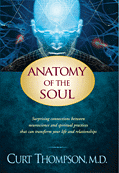
Review of Anatomy of the Soul by Curt Thompson

Author: Curt Thompson

Pages: 286pgs

Publisher: Salt River/Tyndale

Price: 10.19

Genre: Psychology/Science, Faith

Quick Summary:

I received this complimentary book from Tyndale House to review…

This book is a suggestion for promoting personal change and improving your relationships. And the author believes this will happen through a greater understanding of neuroscience and attachment. By blending these findings with Christianity Curt Thompson believes that significant change will happen.

Each chapter in this book serves to teach the reader how to rewire the brain in such a way that it alters your brain patterns and in turn will provide the redemption and change that you seek. This is not distanced from the Christian faith. Thompson freely acknowledges that Christ is the only Redeemer and these are simply tools that God uses to bring about our full redemption. The book is filled with stories and practical exercises to help the reader implant the suggestions in this book into their everyday life.

What I Liked:

I am no expert in psychiatry and neuroscience. I want to say that I learned quite a bit, and I am sure I did, but I want to be cautious in saying that because I have little other references to compare this to. This was an enjoyable read and it did open my eyes to a few things to consider. I think there are insights in this book that given the proper foundation could be quite helpful.

This really was a fun read.  Very interesting book.

What I Disliked:

Sometimes this book was so bogged down with technical terms that I felt I needed to take an anatomy and physiology class to get anywhere. I am not sure that most people will be willing to sift through that difficulty. But this may just be my own ignorance showing. But that is not my major concern with this book.

My major concern with this book is the theology and use of Scripture that undergirds it. This is often the problem with full integrationist in psychology. There are a few times that it seems the author tips his hand—Christ and the Scriptures are not fully sufficient for life and godliness. I may be reading this the wrong way but on page 10 I think there may be a clue to the author’s denial of the full sufficiency of Christ:

This book, then, won’t prove anything. But if you hunger and thirst for God, and if you somehow sense that in Jesus you will be closer to having your hunger satisfied and your thirst quenched…” (Italics mine).

It seems that throughout this book the findings of neuroscience is the grid for determining truth and Scripture is just used as a backup. There are more than a few times that Scripture is used out of context and words of neuroscience are interjecting into the passage.

Should You Buy It?

Despite my qualms I actually hesitate to dismiss this book outright. I think there are some really good insights in this book. I think if someone has a decent understanding of psychology and a firm grounding in the Scriptures there may be some helpful things in this book. But for the most part I would not recommend this book. Not because it is outright wrong or evil, but because I think you can spend your time reading better books on soul-care. (Consider those by CCEF, Paul Tripp, Ed Welch, etc.)

Rating: 2.5 out of 5 stars

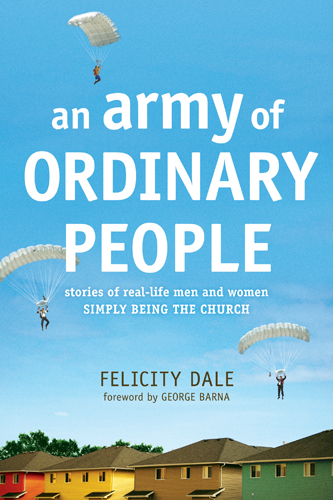
Review of An Army of Ordinary People by Felicity Dale

Author: Felicity Dale
Pages: 304pgs
Publisher: Barna
Price: 10.19
Genre: Church/Church Growth
Quick Summary:
I recently received a complimentary copy of this book from Tyndale House Publishers to review. So here goes…
“No matter where you are in life, you can serve God right there.” This book is a collection of people that have practiced what our author (among others) calls “simple church”. All of the people in this book have been used by God with great results. God can do the same in your life. God uses ordinary people, this book is their story.
What I Liked:
Sounds good doesn’t it? God using ordinary people. That much I like. I also like to hear stories. Biography is one of my favorite sections. These stories are compelling and well-written. This book also made me think. But it also raised the hair on the back of my neck…
What I Disliked:
I am afraid it will take someone far wiser than me to offer a thorough and helpful critique of this “simple/organic church movement”. There are areas in this book where I can shout a hearty amen. I think the people featured in this book often rightly see problems within the church. I agree with many of their assessments. I commend their drive to follow the Spirit and to follow Jesus. I heartily commend their desire to see the gospel go to all the nations. And it is encouraging to see churches planted in many places by many ordinary people. But then, in my opinion, it goes astray.
It seems that they are really quick to throw away the “organized church”. That will receive a hearty amen in our non-authoritarian culture. And I agree that “organized church” has many problems and is rife with many abuses. But is the answer to start your own “unorganized church”? Such a response has its own problems.
Furthermore, this book seems to have a Pentecostal/Charismatic flavor. There are numerous irresponsible uses of “God told me”. How in the world can we question it then?
The final major critique that I have is the overall view of the church. I just do not buy the definition of a local church being “where two or more are gathered in my name”. Especially when this means that someone gets fed up with an “organized” local church and decides to buck the system and start their own “church”. I’m sorry but you cannot call it a church when it is mostly comprised of unbelievers.
I will freely admit that I may be overstating a few things and that someone else could provide a much healthier and helpful critique. But as for me these are the things that caused my theological antennae to raise up.
Should You Buy It?
I cannot in good conscience recommend this to many people. Felicity Dale seems like a great lady. It seems like she loves Jesus. I just disagree with her view of church. What I find in this book seems to be dangerous and an inevitable glory-robbing view of God and church. But I could be wrong.
Rating 2 out of 5 stars