Hardening, Hiding, and the Gospel

“It is a terrible thing to keep a wound of some great sin upon the conscience, for it makes a way for a new breach; because when the conscience once begins to be hardened with some great sin, then there is no stop, but we run on to commit sin with all greediness.”  (Richard Sibbes, The Tender Heart, 35)

What Sibbes is saying here, with his Puritan language, is that we must be quick to root out sin because once it takes root it will only make way for more hardening and more sin. 

Earlier in this text Sibbes gives the example of King David.  When he spiraled out of control with Bathsheba he had to numb a part of his heart.  A smaller sin, like taking a census, David was able to deal with and his conscience was still able to bring about his repentance.  But there are some things that we simply cannot deal with and so we harden ourselves. 

Once this hardening (perhaps you could say hiding) takes place it opens up a door for more and more sin to enter in.  Look at David.  He committed adultery.  He kept it in the dark.  It turned into lying.  Which eventually manifested itself in murder.  And worse yet it shut off a part of David’s heart to the LORD.  When Nathan the prophet came David was so “hardened” to this area in his life that he was not even able to see himself in Nathan’s parable. 

The only solution to this sick spiral is the gospel of Jesus. 

I say the gospel is the only cure because it is the only thing (or should I say Christ is the only One) powerful enough to uproot the cause of the hardening. 

We are unable to face these “big” sins because we all too often attempt to face them on our own.  Just like David and Adam and Eve before him, we attempt to fix our mistakes with our own efforts and our own righteousness. 

But there are certain sins that seem much bigger than our own perceived sense of righteousness.  When the magnitude of the sin outweighs the level of our perceived righteousness we shut down, hide, and try to find covering.  Perhaps if we wait long enough God’s statute of limitations will run out.  So we harden ourselves either until we can gain enough “righteousness” to merit come out of hiding—or we think that God has forgotten about our transgression. 

Hiding in the bushes is never neutral, though.  Something happens.  Part of our humanity has to die to live behind a bush of hiding.  You and I were not made to live in the dark.  And when we do it destroys our humanity.  This is what Sibbes is talking about. 

But the gospel changes things. 

The gospel says that I do not measure my perceived righteousness against the magnitude of my sin.  I measure Christ’s true righteousness against the true magnitude of my sin.  Jesus wins every time.  His righteousness is greater than my sin—no matter how great, no matter how vile.  And whenever this truth goes deep in my heart I don’t have to hide anymore.  I am hidden in Christ. 

Even though he did not fully know how; David got that his only hope was the cleansing and covering of God.  Read Psalm 51.  He realized that if the Lord cleansed him then he would be whiter than snow.  Once God used Nathan to pull David out from hiding David came to realize that his only hope was the Lord’s covering. 

May we learn the same today.  No matter how BIG your sin is, know that Christ’s righteousness is infinitely BIGGER.  Hide Away in the Love of Jesus. 

(This is the best video that I could find of this awesome song by Sovereign Grace Ministries). 
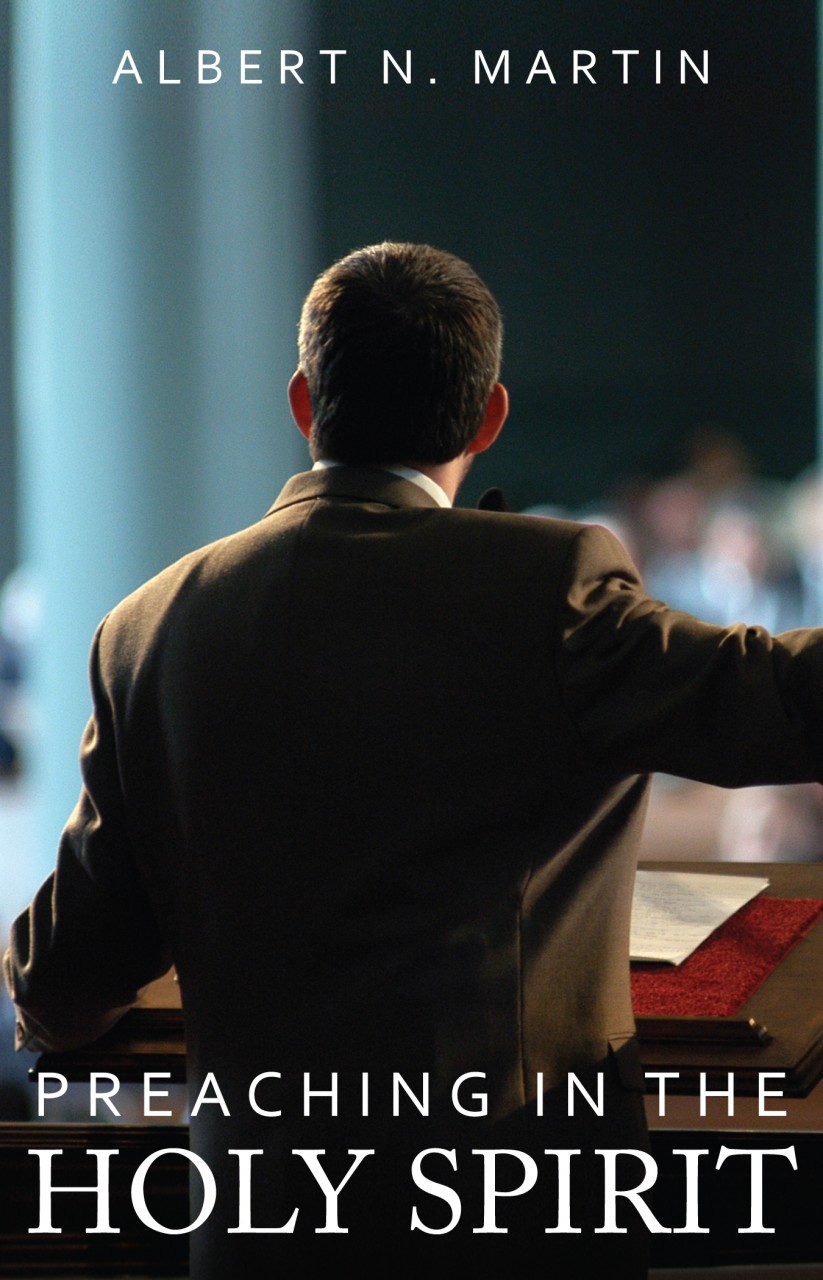
Review of Preaching in the Holy Spirit

I still remember the very first time that I stood behind a pulpit to deliver the message on Sunday morning.  I had prepared for hours upon hours.  Crafting my sermon to be faithful to Jesus, helpful for the congregation, and biblically faithful. 

Finally it was Sunday morning and I drove one hour to fill the pulpit of I Forget the Name Baptist Church.  I believer there were about 25 dear saints there that morning—gracious enough to have a young pastor wannabe preaching the gospel to them.  My knees were knocking as I began the discourse.  The first five minutes were really rough.  And then something happened…

I began moving a little outside the manuscript and speaking from what the Spirit had laid on my heart.  I felt for the rest of the sermon a good deal of freedom and a growing sense of love and unity with these dear believers. 

Towards the end of the sermon if I remember correctly I also had a heightened sense of pride, “I’m really doing it, look at me I’m really preaching…”  Then I started to feel quite shackled again.  My freedom of speech was gone.  Something was missing.  In that brief moment I started trusting in my competency as a preacher.  God was gracious, left me, I fumbled and stumbled, and then once again threw myself on the mercy of the Lord.  I closed the sermon with freedom and what preachers of old would call “unction”. 

What brought about that freedom, heightened sense, growing love, and greater confidence in the Word?  According to Albert N. Martin I was in those moments engaged in Preaching in the Holy Spirit. 

Summary

Preaching in the Holy Spirit is a helpful little booklet published by Reformation Heritage Books.  Its 67 pages are actually the fruit of Martin’s 2 messages at an annual pastor’s conference in October of 2002 on “Preaching in the Spirit”.  For the readers benefit the booklet is broken up into five chapters. 

In the first chapter Martin hopes to chart the course, explaining that this booklet will address the agency and operation of the Holy Spirit (as a sovereign divine Person) with reference to the act of preaching itself.  After this introduction Martin argues in chapter two for the indispensable necessity of the Spirit in preaching.  Here he shows that the Spirit was needed in the ministry of Jesus, the apostles, and all new-covenant ministry. 

The third and fourth chapters are the meat of the booklet.  In these chapters Martin attempts to explain what preaching in the Spirit looks like as well as the experience of diminished preaching, respectively.  He concludes with a passionate plea to “let Christ loose” (66) and to keep preaching in the power of the Holy Spirit. 

Analysis

Do you ever have certain beliefs, passions, or experiences that you never really tell anybody, but finally some brave soul opens up and shares that they too have the same experience?  What a relief to know that you aren’t a total nutjob; at least not in this area. 

I felt that way reading this book. 

What Albert N. Martin describes about the preaching experience—both in the positive and negative—has been my typical experience in preaching for the last ten plus years.  I was deeply encouraged to know that what I am experiencing is not just being amped up on an extra does of caffeine but it is the operation of the Holy Spirit. 

I was also rebuked and helped by Martin.  Not every time I preach do I do so with an enlarged heart, heightened sense, growing confidence in the Word, and great freedom.  And because of this I could sadly identify with Martin’s fourth chapter on a restrained or diminished measure of the Spirit.  It was helpful to know some of the pitfalls that preachers fall into that might cause a diminished measure of the Spirit. 

One of the greatest strengths of the work is Martin’s balanced view of the relationship between Spirit-driven study and Spirit-directed preaching.  Sometimes the Spirit is quenched because of our lack of study, and other times he is grieved because we are more shackled by our manuscript than we are free in Jesus.  Martin encourages intentional study for the sake of freedom in preaching.  Very helpful. 

This book should be a welcome addition into any pastor’s library, if nothing more than simply to paint a picture of what your Sunday morning should look like.  This is not an exhaustive study of the topic.  (For a more thorough treatment I would suggest Arturo Azurdia’s Spirit-Empowered Preaching).  Thought not exhaustive this primer still packs a punch.  There is plenty within these 67 pages that will edify the preacher and cause us to long for more of the Spirit’s work in our preaching. 

You can buy your copy here.

Jesus Has More Power Than My Lack of Bread

The disciples frantically shuffle through all their belongings hoping to find some bread.  “I thought Andrew was bringing the bread”, remarks a beleaguered Thomas.  “No, it was Thaddaeus”, Andrew responds.  Back and forth they go only to find one measly loaf of bread. 

Then their greatest fear is realized.  Jesus says, “Watch out; beware of the leaven of the Pharisees and the leaven of Herod.” 

“GREAT! The Master knows.  Our foolish act of forgetting bread has been exposed.  And now Jesus, speaking in parables like he always does, is rebuking us for being so dense.  We are going to starve out here in the middle of the ocean all because none of us remembered to bring the bread.”

Then Jesus interrupts.  “Fellas, I’m not talking about bread here.  Is this really what you are worried about?  Are you really so dense to get this worked up over bread after I’ve just fed 5,000 and then again 4,000 with only a few loaves of bread?” 

Silly disciples. 

Better yet, silly me.  Just like the disciples I can have my eyes blind to what is really significant to Jesus.  And just like the disciples I can get worked up over my failure to do something, like bring bread, but neglect the much bigger picture. 

Jesus is less concerned about having perfect bread bringing disciples than he is about having disciples that—in the midst of their brokenness and failures—stand in awe of his power to take our lack of bread and transform it into an abundance of bread.

What matters in life and ministry is not that you brought the bread.  What matters in life and ministry is that Jesus has power, He is building His church, and nothing will stand against Him.