Lessons From a Dusty Stack of Papers

I had to do something rather painful last night.  It is something that I am certain that I will have to do again at some point, though I will dread it.  What am I talking about? 

While doing some Fall cleaning I discovered a dusty old stack of papers that needed to be gone through.  This stack of papers was the happy home of old papers I had written in my freshman year of college.  Yesterday, I had to go through them and read some of them. 

Ouch.

At the time I wrote them they were really good.  They were well written treatises explaining the intricacies of the Christian faith (that I had mastered in after only being a believer for a little over a year).  Not only did I explain for all to understand the mysteries of the relationship between free-will and divine sovereignty; but I also had a paper that was certain to destroy every last vestige of popery while simultaneously sticking a dagger in the heart of Anglicanism.  My papers were awesome. 

WERE.

But over the years sitting in that stale file cabinet they acquired a good amount of ignorance.  They were brilliant when written, finely edited, and without an error.  But now they held on their pages a good amount of error; like calling “the Cross” a Catholic sacrament.  Apparently error flowing forth from an arrogant pen takes a few years to ripen. 

As I read these papers I felt a strange sympathy for their author.  It was the same feeling I feel for Michael Scott when I watch the Office.  Part of you really dislikes the guy, but the other part feels sorry for him.  He seems to be so happily confident in his awesomeness, but the rest of the world views him as a complete goon. 

How could someone be so arrogant and yet so painfully unaware of his ignorance? 

And that scares me.  I’m pretty confident that right now I do not have any glaring errors like I did when I was 19.  I can look back and laugh (painfully, laugh) at my ignorant views of the Catholic church, and my weak understanding of the gospel.  I’m deeper now.  I know more.  I have a better grasp on the gospel.  Right?!?!? 

What will I feel when I look back at the stuff I wrote at age 30?  I only hope that where there is regret it’s covered by a deeper experience of grace.  I know that the only thing in what I write will be that which rightly speaks to the eternal and presents Christ as the only boast of this generation.  I want to write in such a way as not to be ashamed.  The only way I can do that is by not writing a ton of “opinions” but remaining as close as I can to the unchanging Word. 

I stand today quite thankful that grace is more amazing than a foolish and arrogant young student.  I’m thankful that those papers were locked up in the file cabinet of a shed in a small town in Indiana and not posted some place for all to read.  Not only for my own sake but also for the sake of the gospel.  I made Jesus look foolish.  I pray for a great reversal.  May I be used to magnify the greatness of Jesus and make myself look foolish. 

And it will probably be best to write humbly…
Am I Growing in Grace?

In my John Newton studies I stumbled upon a gold mine of 18th century Christian writings.  There is a magazine from the UK called The Gospel Magazine, it has been in publication (minus a few years in the late 1700s) since 1766.  Amazingly they have many of their old editions online.  In their May 1766 edition a question is asked, “How can I know that I am growing in grace”. 

As an answer to this question there are a few general observations that I find helpful:

  1. Growth in grace is in general imperceptible to the Christian himself
  2. Sometimes growth in grace is more quick and visible
  3. We may, upon the whole, have some progress in the Christian life, though for the present we may appear to be going backward
  4. We may grow in one respect, though we may not grow in all
  5. We are not to judge of our spiritual growth by the growth of others

I find these general observations helpful.  But also the specific things mentioned as (possible) evidence of growing in grace:

  1. Growth in grace discovers itself in an increase of spiritual light and knowledge
  2. When we are enabled to go more out of ourselves, and depend more upon Christ, we may be said to grow in grace
  3. We are making some advances, when we find a true relish for duties [what we would call spiritual disciplines in our day], and grow more spiritual in them
  4. We make advances in grace, when we are more humble, submissive, and thankful
  5. We grow in grace, when we find our corruptions weaken, and the power of sin more and more subdued in us
  6. When we find less of an earthly and more of an heavenly disposition, we may be said to grow in grace

What do you think of this list?  Do you disagree with any of them?  What would you add?

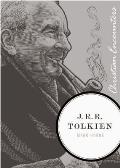
Review of J.R.R. Tolkien (Christian Encounters Series) by Mark Horne

While God calls Christians to proclaim his truth in a variety of ways and situations—some of which are unavoidably confrontational—we can learn from Tolkien that sometimes a mere story can change people’s lives.

Thus ends Mark Horne’s biography of J.R.R. Tolkien.  Throughout this work Horne presents Tolkien as an unassuming Roman Catholic that is strongly governed by his faith but does not attempt to push it down people’s throats.  Instead Tolkien, using his God-given imagination, told stories that created a world of good and evil wherein the readers could make up their own minds about how these stories related to their lives. 

This book is part of Thomas Nelson’s Christian Encounters Series which seems to have the intent of telling the stories of how believers live out the Christian faith in the context of a secular world.  You will not find in this series a biography of a renowned minister, but instead you will read of how Jane Austen’s faith directed her writing, how Galileo’s Catholicism encouraged his discoveries despite his trials brought on by the Catholic church, etc. etc,.  This biography of Tolkien follows the same format. 

Honestly, at the end of this book I do not feel that I have a greater grasp upon how Tolkien’s faith directed his work.  Perhaps, it did not as much as we would have liked.  If so, I have to ask what then is it doing in the Christian Encounters series?  Perhaps, Horne wanted to emphasize the formation of the Lord of the Rings Trilogy (Tolkien’s most famous work).  If so, I have to ask why is this work in the Christian Encounters series?

If made to stand on its own as an introduction to Tolkien and more narrowly how Lord of the Rings came to be, then Horne does a fine enough job in this novel to merit a read.  However, if the intention of this book is to explore how Tolkien’s faith influenced his life, and how his faith relates to Lord of the Rings and Tolkien’s other writing, then I have to be honest and say that I find this biography lacking. 

I have not read other Tolkien biographies so in some sense I feel unqualified to offer a thorough critique of this work.  I can only offer my assessment as someone that is new to the world of Tolkien, but as one that has read a good amount of Christian biographies. 

As a Christian biography I found myself wanting to know more.  What type of Roman Catholic was Tolkien?  How much did his faith influence Lord of the Rings?  We are told that his faith influenced the conversion of C.S. Lewis, but are there more details? 

As a Tolkien biography I have no idea how it stacks up against others.  I would like to read a few more works on Tolkien.  One great benefit to this book is the helpful appendix at the end which highlights and comments on several Tolkien works and biographies.

Honestly, unless I had made a prior commitment to Thomas Nelson to read and review this book in exchange for a free copy, I probably would not have done so.  It was a pleasant read, and it especially shined in exploring Tolkien’s childhood.  Perhaps you would benefit from this book as an introduction to Tolkien.  If so you can purchase it for under 10 bucks. 

Somebody Wants to Tear Apart My Family

If I knew there was a man that lived down the street that hated my family and was hell-bent on our destruction it would, obviously, cause me to be quite unsettled.  It would radically change the way that we lived our lives and our level of comfort. 

One thing that I like to do is pray through the Psalms and occasionally insert my wives name into the I, me, or we sections.  It helps me to pray the Psalms over her.  When I did that this morning to Psalm 17:10-12 it really hit home:

They close their hearts to pity; with their mouths they speak arrogantly. They have now surrounded our steps; they set their eyes to cast us to the ground. He is like a lion eager to tear, as a young lion lurking in ambush.

That is a pretty apt view of my family from the perspective of hell.  This hellish army is indeed like a “lion eager to tear”.  To think that the forces of hell desire to devour my dear son Isaiah, my precious daughter Hannah, and my beloved wife Nikki, drives me to my knees in prayer. 

I know that there is only One that is powerful enough to protect them from this “eager lion”; namely the Greater Lion—the Lion of the Tribe of Judah.  So I pray with David:

“Arise, O LORD! Confront him, subdue him!”

Christ has indeed done just that.  He has conquered and rescued His sheep from this devouring lion.  And now I must pray that the Lord would see fit to draw my children to Himself, so that they too might find refuge in the Greater Lion, and will ultimately “be satisfied with [His] likeness”.