Bush on Obama, Newton on Baptists, and SBC Name Changes

This morning I read through a really interesting piece by Walt Harrington on George Dubya Bush.  The whole thing is worthy of a read, but this particular sentence stuck out to me:

His only remark about Barack Obama was, as I recall it, “No matter who wins, when he hears what I hear every morning, it will change him.”

This reminded me of a comment that John Newton made to John Ryland, Jr., wen the latter found himself in the middle of a very difficult controversy.  Here Newton mentioned the benefit of being a minister in the church of England as opposed to a minister in of an Independent church:

That sovereign power, which the Independents assume over their ministers, appears to me too great to be trusted in such hands.  If a man ranks as member of a Church of Christ, however ignorant, illiterate and illiberal he may be, though he has seen and known nothing beyond the bounds of his parish, though his temper be sour, and his spirit obstinate as a mule, still he thinks himself both qualified and authorized to teach his pastor.  Half a dozen persons of this description are sufficient to make a minister and a whole congregation uneasy through life.  Whatever burden we are supposed to have in the Establishment, we are free from this.  And I would be thankful for it.  (Wise Counsel, 223)

As a Baptist I’m one of those “independents” that Newton mentions.  I do appreciate many of the benefits of democracy and congregational government.  But I also agree with Newton about one of the pitfalls of such a practice. 

George W. Bush has a ton of critics.  I lean to the right politically but there are policies, beliefs, things he said, etc. that I do not agree with.  And I can say the same thing about our current President.  However, what Bush said to Harrington is true—“hearing what he hears every morning” is enough to change a man.  And until I hear what he does every morning I should critique the President with humility, grace, and sobriety.  He knows things and sees things that I do not, nor ever will. 

The same thing goes for the President of the Southern Baptist Convention (and you can add any other organization, including your local church).  Those that are in leadership see things, hear things, study things, consider things, think through things, that those not in his/her position will probably never even consider.  Because of this we should criticize those that God has set over us with great caution. 

None of this is to say that leaders are outside the realm of critique.  Those not in a position of leadership also have the ability to see things that the leader does not.  Therefore, the leaders should also humbly listen to and consider the critiques of the populace.   But the main point stands: leaders hear things that we/you do not, so approach criticism with caution and humility. 
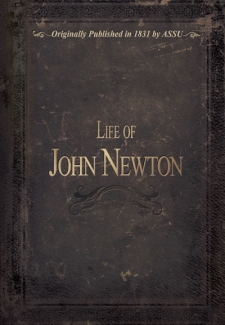
Quick Review of The Life of Newton

Amazing grace how sweet the sound…

You can hear the tune in your head can’t you?  Amazing Grace is perhaps the iconic hymn of America.  It was composed by John Newton to go along with a sermon that he preached to his congregation in Olney.  It was not uncommon for Newton to compose these hymns to give an extra flavor to his preaching ministry.  This was just one of those hymns, but it has endured for years after Newton’s death.  In fact when people think of John Newton they typically think of two things, Amazing Grace and slavery. 

In my own mind, before I really came to study Newton, I conflated those two things and assumed that Newton was converted, stopped the slave trade, and became a follower of Jesus as a hymn writer.  The reality is that Newton was converted years before he became convinced that the slave trade was an evil enterprise.  He, quite hypocritically, continued to engage in the abominable slave trade at the same time that he was beginning to rejoice in his new found freedom in Jesus. 

The Life of John Newton, a reproduction of an 1831 manuscript, details Newton’s early life, conversion, and transformation from a slave trader to a passionate advocate of abolition. 

If one wishes to reduce Newton to these two prominent themes and continue this as his most noted reputation then this book will help to perpetuate that very thing.  Perhaps that is what Newton, himself, would have wanted; as he requested his monument to read: John Newton, Clerk, Once an infidel and libertine, A servant of slaves in Africa, Was, by the rich mercy of our Lord and Saviour, Jesus Christ, preserved, restored, pardoned, And appointed to preach the faith he Had long laboured to destroy, Near 16 years at Olney in Bucks; And ___ years in this church [St. Mary’s in London].  Newton then ends his monument with a little snippet about his wife Mary. 

This little tract does a wonderful job of explaining Newton the infidel, slave in Africa, and saved by Jesus.  It also adds a good deal about Newton the abolitionist.  The part that it is week on is the ministry of Newton in Olney and at St. Mary’s.  His letters are perhaps where we can find the most value from Newton but they are scarcely given a hearing.  Granted, there were a good number of them yet to be published by 1831, but his reputation as a letter writer and ecumenical evangelical should have been well established by 1831. 

Nonetheless, this is a helpful resource and introduction to Newton.  I only hope that the reader is encouraged to continue his or her studies of Newton…trust me there is much we can learn from this great man of God. 

You can buy your copy today for a little over $10 from Amazon.   

—

I’ve mentioned in the past my love for Attic Books.  This is no exception.  I love the way the book feels “old” and has inside some of those sweet pictures that were found in books of days gone by. 

Bringing All Delights Into Our Hearts

This from Thomas Goodwin:

Oh, what sweetness will there be one day in heaven in the fullness of converse and manifestation of these three persons.  It will be, if not all, yet the great discourse that will be had and heard in heaven with your poor souls by the three persons, bringing all the delights They have had in you from eternity down into your hearts, and revealing Them to you to all eternity

NFL 2011 Week 3 Picks

Who Cares?

Carolina 27 over Jacksonville 19
Tennessee 23 over Denver 13
San Francisco 31 over Cincinnati 17  
Arizona 24 over Seattle 16

Upset Special:

Oakland 29 over New York Jets 24
Tampa Bay 23 over Atlanta 21

No-Brainers:

Baltimore 41 over St. Louis 13
Pukesburgh 31 over Indianapolis 3
San Diego 35 over Kansas City 10

Tough Calls: 

New Orleans 31 over Houston 28
New England 33 over Buffalo 27
Philadelphia 24 over New York Giants 17
Minnesota 28 over Detroit 27
Green Bay 41 over Chicago 31
Washington 21 over Dallas 18

THE BROWNS:

Miami 19 over Cleveland 16

Week 3 Fantasy Studs:  (Top Scorers in each position)

QB: Philip Rivers, San Diego
RB: LeSean McCoy, Philadelphia,
WR: AnQuan Boldin, Baltimore
TE: Rob Gronkowski, New England
D/ST: Pukesburgh Steelers
SLEEPER: Josh Morgan, SF