Borrowed Light Bracket Challenge

You want to win a $10 Gift Certificate to Amazon?  Simple.  Win this bracket challenge:

Borrowed Light Bracket

Click the link.  Join the group.  Fill out a bracket (only one bracket).  And start praying. 

This year looks to be pretty “chalk”.  Most people are not picking a ton of upsets.  Will you go against the grain and pick another VCU type of run into the final four this year?  Or will it be only 1 or 2 seeds in the Final Four? 

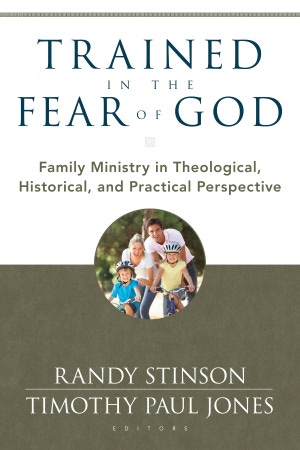
Review of Trained in the Fear of God

There is a classic story (that probably has Jewish roots) about a new bride that is cooking her first big dinner for her husband.  She decides to go with a recipe that has stood the test of time; a roast that was passed down to her by her mother, who in turn had learned it from her mother.  Part of the recipe called for cutting off the ends of the roast.  The husband, is astonished by this.  He asks, “why in the world do you cut off the ends of the roast?  That is the best part!”.  Her reply is simple, “That’s the way my mom always made it”. 

Later on in the week the new bride decides to question her mom about this practice of lopping off the ends of the roast.  The mother’s reply is the same as the daughter’s, “that was always the way my mom made it”.  The two curious ladies decide to ask grandma why she cut off the ends of the roast.  She says, “I always cut off the ends of the roast because that is the only way that I could get it to fit in the pan”. 

The point of the story is that generations upon generations can dutifully follow a tradition without even understanding it.  What is worse when ripped from its original intention the new generation’s following of a practice is not only stupid it is also quite unhelpful and maybe even harmful.  What happened with the grandmother and her roast is that she taught the daughter the practice but never explained why she did it.  The daughter then was not able to contextualize the recipe for her own setting and so she slavishly followed a tradition and handed an unnecessary “must” down to her own daughter.

What is true of a three generations of ladies cooking a roast is just as true of many churches.  There are various practices and strategies that have become a “must” to churches but the historical, theological, and even practical reasons for doing them have not been handed down.   As a result of this oversight churches either neglect to key biblical practices (such as parents discipling their children) or they slavishly follow extrabiblical traditions without really knowing the reason why. 

Summary

Trained in the Fear of God is a book compiled by Timothy Paul Jones and Randy Stinson that aims at providing these historical, theological, and practical reasons for engaging in family-equipping ministry.  Family-equipping ministry is “the process of intentionally and persistently coordinating a congregation’s proclamation and practices so that parents are acknowledged, trained, and held accountable as primary disciple-makers in their children’s lives”.  It’s not a program to be added to your church but a philosophy of doing family ministry that attaches itself to everything the church does. 

This philosophy of ministry is catching on in many churches.  It is the philosophy of youth, student, and family ministry at The Southern Baptist Theological Seminary and is quickly spreading to many other institutions.  It is filling a void that is left in many other approaches to family ministry.  As such many churches are adopting it.  With such a spreading one of the dangers is that family-equipping ministry will just become the latest program and two generations from now it will become the next “lopping off the end of the roast” and its theological, historical, and practical foundations will be neglected. 

Trained in the Fear of God is divided into three sections: Biblical and Theological Framework, Historical Foundations, and Practice.  They are not titled that, but that is essentially the way the book is broken up.  There are seventeen different chapters from different contributors (many of them are professors at SBTS).  The reader is encouraged to check out the Table of Contents. 

The book not only makes a compelling case for the necessity of family ministry it also paints a picture of what family ministry looks like in practice.  There are helpful chapters that engage cultural misrepresentations (Al Mohler’s chapter on Homosexuality as an example).  There are chapters that deal with family ministry in various contexts (Kevin Smiths’ chapter on Family Discipleship and the African American Experience).  There is even a chapter on the child’s brain and how family ministry helps to shape the child’s brain.  There is much to offer in these pages.

Should You Buy It?

If you are a church leader you should really consider buying this book.  I am convinced that Family-Equipping Ministry (whatever it looks like in your particular context) is the way that churches need to minister to families.  Every church that buys “how-to” books for moving towards family ministry needs to be certain to also purchase this book.  It will build a foundation that will answer the question of “why” for generations to come. 

If you are a mom or dad you should also buy this book.  It will not only help you to see your valuable role in discipling your children but it will provide helps in doing so.  In places where the book itself does not answer the “how-to” questions it will point you to other resources that will. 

I highly recommend this book.  Also as a little tip I would suggest looking up the Table of Contents and then doing a Google Search for the articles.  You might be surprised what you find while you are waiting to purchase the book. 

You can buy it here.  It’s a little pricy but worth every penny.  Churches need this book as a resource, so do schools, and so do parents. 

The Root of Angry and Divisive Calvinists: Part Five

One of the first signs of healing in the life of an angry and divisive Calvinist is in the way or the frequency that he/she responds to criticism, debate, or disagreements.  A wonderful model of humble and consistent Calvinism is John Newton.  Consider his response to a “controversy”. 

The June 1772 edition of the Gospel Magazine held within its pages a letter from Omicron (which was one of Newton’s pen names). In this letter, fittingly titled On the Doctrines of Election and Final Perseverance, Newton outlined for Joseph Milner his views on these often controversial topics.

Six years later, a Methodist preacher named Nicholas Manners took up his pen to dispute Omicron’s letter. Manners “disputed Newton’s letter line by line in the controversial style of the period.”[1]

Now imagine for a moment that this took place in the twenty first century.

Imagine that you just wrote an article that was picked up by a popular blog (let’s say The Gospel Coalition). In this article you felt that you did a fair job of explaining a very difficult and controversial topic. Your tone was not demeaning. It was a balanced explanation of what you believe.

To this stellar article another brother strongly disagreed and posted a lengthy series on his personal blog, going through your article line by line and disputing it.  How does a twenty-first century believer respond?

Simple. You pop your knuckles, get your Mountain Dew, sit at your swivel chair, and slam out a response.  Line by line.  Defending your argument and your dearly loved doctrine, under the guise of gospel fidelity. The debate roars through the blogosphere and your blog traffic hits Challies type numbers.

That’s what we would do in the 21st century. But, what did Newton do? (By the way, WWND bracelets are for sale on my website for a quarter a piece)

Nothing.

That’s right.  Nothing. “He let the dispute die in silence[2]”. Newton’s letting this discussion die in silence exemplifies his philosophy of how people become Calvinist. As Bruce Hindmarsh has rightly noted, “He was increasingly convinced that a person became a Calvinist through personal experience, not by argument”[3].

Once a Calvinist is able to “let a dispute die in silence” he is well on his way to finding healing from his angry and divisive stage.  The sooner young Calvinist see living models like Newton and are introduced to saints of old (such as Newton) hopefully the sooner their angry and divisive stage will be over.

Consider, tomorrow, one additional help from John Newton. 


[1] Hindmarsh, John Newton and the English Evangelical Tradition, 161

[2] Ibid, 162

[3] Ibid, 162

The Root of Angry and Divisive Calvinists: Part Four

“Now concerning food offered to idols: we know that ‘all of us possess knowledge.”  This knowledge puffs up, but love builds up.”  If anyone imagines that he knows something, he does not yet know as he ought to know.  But if anyone loves God, he is known by God.”  1 Corinthians 8:1-3

Concerning the question of eating food offered to idols, logically and theologically the “strong” Corinthians had this question nailed.  They rightly believed that there is only one God, “an idol has no real existence” and correctly deduced from this that a “nothing cannot affect meat”[1]  Yet, what they failed the most important test; namely, that of love.  In other words the “strong” Corinthians had notions in the head but it had yet to trickle down and transform their hearts.  Such a knowledge only puffs up the individual it never edifies the body. 

Anthony Thiselton helps us to see that Paul subtly challenges the “strong” Corinthians’ view of knowledge:

Paul distinguishes between knowing (using the verb) as a process that is continuous and ever learning and knowledge (the noun gnosis) as denoting a static, completed state.  The latter (but not the former) leads to a cast of mind that regards everything as “buttoned up,” mastered, and fully processed. 

Herein, lies the root of angry and divisive Calvinism.  Fundamentally, it is a problem of the heart and has little no bearing on the validity of the “ism” being distorted by its follower.  The puffed up pride that comes from only have a notion in the head is what makes for an angry and a divisive Calvinist. 

Really all of these posts is only backing up what Joe Thorn noted as the three reasons for angry and divisive Calvinists.  In his interview with Ed Stetzer (which you should real all of including the comments, here) Thorn notes three principle reasons that I will summarize. 

1. Over-zealous and excited about a new found truth.  “Some of us, and I was one of them, would benefit from being locked up in a cage for a few years until our heart can catch up with our head.”

2. Anger at being denied this in the past.  “They feel as if they’ve wasted years of their life, or the church has let them down. So, they’re angry about that…”

3. A short-circuit between the head and heart.  “When we Calvinists are ungracious, unnecessarily combative, proud, and arrogant, we are not being true Calvinists. We are posers.”

So how do you disciple a young Calvinist whose either angry, over-zealous, or simply has a short-circuit between his head and heart?  Apart from patient plodding and let the gospel take deeper roots one particular thing I do with young Calvinists (including myself) is introduce them to John Newton–and that will be what we do in Part Five and Part Six. 

——

[1] Anthony Thiselton’s Commentary on 1 Corinthians, 124