Belling a Cat

With our summer mission trip (IMPACT: Jasper) quickly approaching I feel like I am sitting in on this council of mice:

Long ago, the mice had a general council to consider what measures they could take to outwit their common enemy, the Cat. Some said this, and some said that; but at last a young mouse got up and said he had a proposal to make, which he thought would meet the case.

“You will all agree,” said he, “that our chief danger consists in the sly and treacherousmanner in which the enemy approaches us. Now, if we could receive some signal of her approach, we could easily escape from her. I venture, therefore, to propose that a small bell be procured, and attached by a ribbon round the neck of the Cat. By this means we should always know when she was about, and could easily retire while she was in the neighborhood.”

This proposal met with general applause, until an old mouse got up and said: “That is all very well, but who is to bell the Cat?” The mice looked at one another and nobody spoke.

Then the old mouse said: “It is easy to propose impossible remedies.” From Aesop’s Fables.

How do we win the world for Jesus? How do we purge sin out of our camp? What will it take for us to see the nations holy? How do we go about spreading the glory of God to the nations? What will it take to cast down the enemy and see Jesus exalted and praised by people of every tribe, tongue, nation, and language?

Go to your local Christian book store or search the internet and you will find a host of answers to those questions. Some of them utterly insane, others wonderfully biblical. Can’t you picture the general council of mice discussing this great problem. Now put suits and ties on them and give them each a Bible and a scheduled potluck after the meeting. Now they are a group of Baptists discussing how to win the world for Jesus. Someone comes up with an amazing idea. It seems like a great plan. But just like mice lack the power to bell a cat we lack the power to do what we are called to do. 

The only answer to each of the above questions is Jesus. Jesus is the only one that can do that which is impossible. Remember the story of the Rich Young Ruler. In that culture it was assumed that the wealthy were closer to God (sounds a tad familiar). This is why the disciples strange question after the young man walks away: “If he cannot be saved then who can”. Then Jesus tells us that the only one that can bell a cat is God Himself: “with man this is impossible, but with God all things are possible.”

So, the next time you have an idea like belling a cat—remember that Jesus is the only one that can carry it out.  But also remember that He HAS given us His Spirit and through Him we can see the belling of cats, the overthrow of darkness, and the redemption of sinners as the King of Kings shows His power and puts His kingdom into place. 

—

Dusted up from here. 

7 Questions with Greg Dutcher, Author of Killing Calvinism (Part 1 of 2)

One of the best books that I have read in 2012 is Greg Dutcher’s, Killing Calvinism.  I was very happy that Greg agreed to answer 7 questions about his book and his ministry. 
1. What means did God use to make you a more humble Calvinist?

Like many fresh-from-the-factory Calvinists, I never considered that there could be any deficiency in me. The problem was in other people’s inability to embrace what I had discovered. When some of these folks got their feelings hurt or found me distasteful it all simply confirmed my belief that I was being attacked for standing up for the truth. Sadly (and I remember saying as much to reformed friends) I considered their negative reactions a badge of honor that I wore with pride. Of course, had I thought about that word “pride” just a little bit longer perhaps I would have been humbled a little bit sooner.

Like many Calvinists I learned in the school of hard knocks. There was not one stand-out experience per se but the aggregate effect of many experiences eventually caught up with me. At some point my heart changed, and I started seeing myself as the least common denominator in all of these unpleasant interactions. And at the risk of attributing too much to one man, John Piper and the long-term effect of his preaching powerfully effected me. He combined two things that I had rarely seen fused, unashamed Calvinism with uncommon humility. As I devoured his books and sermons, the Lord gradually showed me that true Calvinism leads to humility not pride.

2. Tell us a little about your church, some of the things the Lord is doing.  Also, what are you most excited about seeing God do there?

I absolutely love Christ Fellowship Church! By God’s grace I planted it in the summer of 2003, so at 9-years-old it is really beginning to build some history. It is an independent, non-denominational church, and that has to do a lot with my own eclectic make up. We are probably most similar to an Acts 29  church, but when I planted it, we knew nothing of the Seattle-based movement. We average about 300 people each week, and we are really beginning to understand the implications of the gospel for missional living. Our community groups are increasingly becoming a more central part of our congregational life. My own goal (although I know that no church ever reaches it) is that each person would be intimately involved in a spiritual family where he is growing as a learner, servant and missionary. 

The majority of the attenders probably don’t even know that the preaching/teaching they get each Sunday is “reformed.” I rarely use any of the buzzwords (Calvinism, doctrines of grace, T.U.L.I.P.) from the pulpit. Those who are looking for it, can always tell (the running joke is “he must be getting a chunk of the royalties from those Piper quotes”), but I have been very intentional in teaching authoritatively from the text of Scripture itself.  The only “ist” label mentioned at CFC is “Biblicist.” That is what I’m hoping my people become in increasing measure.

In the last year we have had several lost people come to saving faith in Jesus. In almost every case it has been in the context of suffering and death. Just last week I baptized a couple in their 70’s who just came to faith in the past year. The doctrine of God’s sovereignty (especially in difficult circumstances) has become especially precious to me.

3. How do you typically respond to an aggressive non-Calvinist?  Do you respond?

I do not always respond if the emotion is reaching fever-pitch level. I tell about a few such examples in the book. But if emotions are somewhat under control then I usually try to diffuse any negative emotion by talking about my respect for non-Calvinists like Billy Graham, John Wesley or D.L. Moody. I then ask if they knew of the friendship between Wesley and Whitefield and how they had a gentleman’s agreement to not let their differences in soteriology keep them from partnering in the preaching of the gospel. I find that once the non-Calvinist knows that he is respected (as he should be!) as a fellow brother in Christ, then genuine conversation can begin. 

At that point I usually start from a total depravity angle. I find that most Bible-believing Christians readily accept the portrait of mankind’s sinful state. What they often need help with is thinking through the implications of this portrait. When a Christian accepts that mankind does not submit to God’s law because he cannot (Romans 8:7), then sovereign election and irresistible grace are almost necessary to make sense out of the salvation of any sinner. From there the issues of God’s eternal decree, fairness, etc… become easier to discuss.

4. How would you disciple a young-Calvinist that is blowing all 8 of your points?

Easy. I would just invite him to learn from my mistakes! Seriously! I can easily furnish ample illustrations of how I killed my Calvinism. Of course all of that is a negative approach (don’t do this), and I would seek to balance that with a (do this instead) positive approach.

I wish every Christian had the privilege of knowing Roscoe Adams. He was a fellow elder, equal to me on a leadership level but a father to me on a spiritual level.  He died on April 22 of this year, and he never got to see that the book was dedicated to him. It will take me a long time to move past my grief at his loss. He was a humble, gentle and joyful Calvinist.  I would suggest that each person find his own “Roscoe” and learn from his example.

—-

Be sure to check back in on Monday for part 2 of our interview.  In the meantime you may want to check out my review and the TweetNotes for Killing Calvinism.  If the book seems interesting to you then you can get it on your Kindle for around $5. 

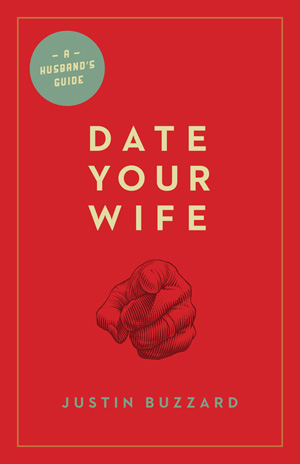
Review of Date Your Wife by Justin Buzzard

Guy woos girl. 

Girl accepts wooing.  Is swept off her feet.

Guy puts ring on girls finger, says I do.

Guy stops wooing and pursuing. 

Guy wonders why wife isn’t who she was when they dated. 

That scenario has sadly played out in many marriages.  Some of these marriages even, regrettably, end in divorce.  God has called men to so much more than just dating in order to snag the girl.  God has called men to date even more passionately and intentionally once he wins her over.  Justin Buzzard has written Date Your Wife to inspire men to date their wives again and to give tips for getting out of this rut.

Buzzard begins his book by encouraging husbands to consider not only the start of marriage in the Garden of Eden but the start of their own marriages.  It’s important to do this, says Buzzards, because what he is asking of men in this book is “to do something we’ve already done, something we’ve already built into the foundation of our marriages—to date our wives.” (22)

The second section of the book is the most hard hitting.  Buzzard teaches men that what is wrong with their marriage is fundamentally them.  Using the story of Adam he notes that he “failed to cultivate his wife—he didn’t cause her to flourish…he failed to guard his wife—he didn’t protect her from danger”.  (42)Men have struggled with doing those two things since.  Men are the problem in their marriage but men do not have what it takes to fix it.  Only the gospel can do that.

It is this life-changing, marriage-altering gospel that Buzzard focuses on in the third section.  The gospel makes everything new—including our wives.  Because of the gospel we are able to have new dreams for our marriages.  After encouraging men to have gospel-motivated dreams for their marriages, the author then gives a few practical tips about how to put a plan in place to fulfill that dream.  The book closes with a chapter on death and an encouragement to date our wives in preparation for this day. 

My Take:

There is much in this book that is commendable.  There are points in the book that hit me like a brick in the face.  But each brick was also soaked in the gospel before whacking me upside my jaw.  I need to be encouraged not to take my wife for granted.  I wish that wasn’t the case but we don’t really drift into dating our wives. 

The action points at the end of each chapter are very helpful as well.  The author gives some great ideas that could be tweaked or implemented as is.  He also gives 100 dating ideas in an appendix at the end.  The fact that the author is young and has three younger boys helps him to write from “in the trenches” and to be realistic in many of his suggestions for dates.  (Although sometimes his suggestions would be more expensive than I could pull off—unless sacrificing the electric bill is protecting my wife). 

I also appreciate Buzzard putting a quick message from 90 year old Bob Mounce.  Tim Challies, has offered a helpful critique of this book.  I will echo some of it in a moment.  One of the things that Challies mentions is that Buzzard has only been married for a little over 7 years.  As he notes, “seven years is not inconsequential, but neither does it carry a great deal of authority.”  I can’t help but wonder if Buzzard foresaw this criticism and is using a 90-year old Mounce to give a little more credibility to his claims.  Buzzard’s having only been married 7 years is not a major problem for me.  (I kind of agree with Aaron Armstrong on that one). 

I did however find two things problematic.  Not quite enough to make me not recommend the book, but enough to make me recommend it with some caution.  The first caution concerns both Justin and Taylor Buzzard discussing how many times per week they have sex.  This includes an email that Taylor sent to another woman.  It just seems unnecessary and was very off-putting.  On more than one occasion they mention a “sex tank” and that the wife needs to make sure to fill her husband’s tank.  While I agree with Paul in 1 Corinthians 7 that spouses ought not to neglect frequent sexual union —I don’t think a number is helpful for anything other than boasting.  Perhaps there are issues of idolatry that need to be dealt with that a “quickie” wouldn’t.  (At one point in the book Taylor refers to quickies as their “Ace in the hole”). 

The other place that I find potentially problematic is Buzzard’s insistence on saying, “If you want to change a marriage, change the man”.  While I do believe that men are to be leaders, that mean are held accountable for cultivating and caring for their wives, and that men can have considerable influence on their wives, I do not believe that women are entirely passive in the process.  I do not think that Buzzard would say that either but it seems implied.  There may be times when a man is loving his wife well—yeah he might be messing up in some areas and not absolutely perfect—but he is certainly not the cause of his wife’s rebellion.  In these instances Buzzard’s council could be very damaging and wounding. 

At the end of the day, though, I think that for the most part husband’s do need to step up and date their wives.  This book did not fall on deaf ears.  I needed this book.  This book, I believe, will be used by God to help my marriage.  So, while I did have a little problem with those two things it’s not enough to make me not recommend the book.

Should You Buy It?

For the ideas alone you should buy it.  I’d encourage many men to read this book and go through some of the action points with other guys.  The practicality of the book is what really sets this book apart from other marriage books. 

Some men will need the hard-hitting examples that Buzzard gives.  All men will need the grace and the reminder that only Christ can stir up our hearts to care for our wives the way that we are called to. 

You can buy this book for under $10 and you should.  It was a much needed book in my life and I believe I will use these action points for years to come. 

Today in Blogworld 6.29.12

20 Quotes from Killing Calvinism

I am really glad to see Greg Dutcher’s book Killing Calvinism getting so much play.  As you can tell from my review I love the book and highly recommend it.  Tony Reinke apparently loves the book as well and has compiled 20 very helpful quotes from the book.  (I’d also encourage you to check out the TweetNotes that I compiled for the book and also to stick around for my forthcoming interview with Greg). 

10 Reasons to Underprogram Your Church

This one is from Jared Wilson’s archives but it’s tweaked a little and worthy of re-reading if you have already had the opportunity to consider these.  I’m with Jared on this one.  Though I think some might leave church to go to those that have more programs I believe it is often to their peril to do so. 

12 Propositions on Sanctification

Tim Challies has compiled twelve propositions concerning sanctification using J.C. Ryle’s classic work Holiness.  If you have never read Holiness it’s a tremendous book that you can purchase here for only .99 on your Kindle. 

Husbands: Don’t Treat your Wife Like a Guy

Good word here to husbands from Erik Raymond.  “One of the most common non-spiritual, basic, counseling I give to a husband is: don’t treat your wife like a guy. Believe it or not, men seem to forget this fact about as often as we leave our dirty socks on the floor. One of the chief areas this is seen is the area of romance. Many men think that they can woo their wives by treating like men.”  The whole thing is worthy of your time. 

Watch Steve Saint’s powerful testimony from his hospital bed:

(HT: JT)