Why Does Paul Quote Psalm 44 in Romans 8?

I’ve preached through Romans 8:31-39 quite a few times in my ministry. And I’ll be honest and say that I’ve always kind of skimmed over verse 36. It’s seemed a bit awkward to me. Why in the world does Paul throw that verse in there?

I’ve understood for awhile that what Paul is doing in quoting that verse is connecting the suffering of Christians with the people of God in the OT. Just as it was their lot to suffer we should know that it is our lot to suffer as well and yet our suffering doesn’t separate us from the love of Christ.

But I didn’t really use verse 36 as a major note in the text. I think that’ll change now. I spent a good deal of time reading through and meditating on Psalm 44 today (that’s where the quotation comes from).

Can you imagine singing Psalm 44 in your church?

It recounts the history of God in dealing with his people. Those in whom the Lord delights he rescues. That’s His record. Until it isn’t. And that’s what has the Psalmist struggling.

They have lost in battle. They are suffering. They are being taunted. They are even being slaughtered. I think they could stomach that if they were being ungodly or idiotic. But they aren’t. They are being faithful to the covenant, and what’s really unsettling. Bad things are happening to good people.

So Psalm 44 is really a lament that is asking God why in the world he is doing the things that he’s doing. It’s a people saying that God isn’t making a lick of sense but they know He’s their only rescue and so their going to hang on—but they are deeply discouraged and filled with questions. We don’t sing like this in our congregations.

And that’s a shame because according to Romans 8 this is still our song. Psalm 44 is still going to happen to you as a Christian. That means you are going to at times feel like God has “sold his people for a trifle”. We’re still going to be a laughing stock to the nations. The sword will still turn on us and we are still going to be afflicted and oppressed when we’ve done nothing wrong and it’ll feel like God is just hiding his face from us. And that’s going to hurt.

“Rise up; come to our help! Redeem us for the sake of your steadfast love!”

That prayer has been answered through God sending His Son as our Rescuer and Redeemer. That’s an already thing. But the use of Psalm 44 in Romans 8 also paints a “not-yet” over that triumph. Psalm 44 is going to happen to you but it isn’t going to separate you from the love of Christ. Why? Because in Christ our slaughter isn’t the end of the story. Because His slaughter wasn’t the end of the story.

So rather than Paul just pulling Psalm 44 out to connect it to the Old Testament, I think it’s actually pretty central to his thought in Romans 8. Creation is groaning. We are suffering. Yet the Lion of the tribe of Judah who himself is a slaughtered Lamb reigns victorious. And because we are united to him, we too shall overcome.

Photo source: here

Read This! 08.13.19

Leader, You Don’t Have to Be Omnicompetent

That’s good, because I’m not.

Bible Study Leaders Should Not Have All the Answers

That’s good, because we don’t.

10 Reasons to Reclaim the Lost Art of Letter Writing

If only my penmanship wasn’t atrocious

4 Reasons to Stop Grumbling

I think we underestimate that last one. In fact I think at times we join in grumbling for the sake of building rapport and deepening relationship. But we’re really harming our witness.

Narratives of Surprising Conversions

With all the “de-conversions” in the news it’s helpful to hear another story as well.

Pastor, Your Sheep Are Not an Accident

Great reminder.

Why Do People Say “Jesus H. Christ”?

I’ve always wondered this.

The Right Kind of Strong

I appreciate this encouragement to ladies, from Mary Kassian.

Ever wonder where that S-shaped symbol came from?

You Don’t Feed Sheep Like Your Llama

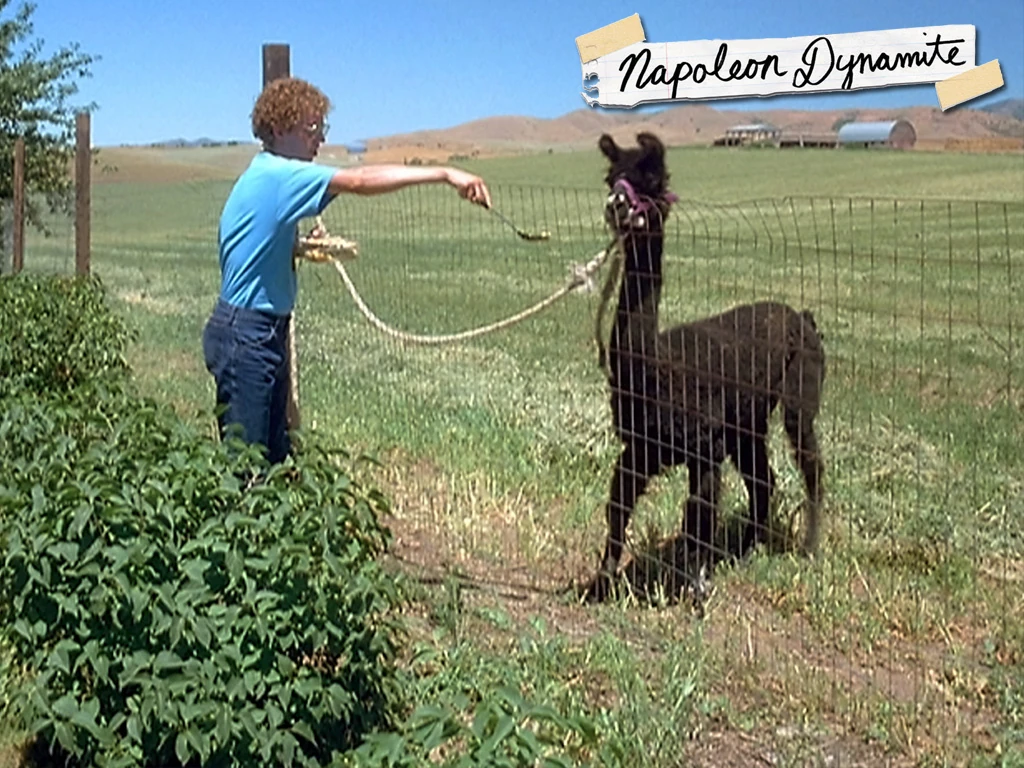
I’m confident that I’ll lose whatever cool points I’ve accumulated when I admit that I still love Napoleon Dynamite and will on occasion quote the classic flick. (Also, I think anyone who refers to something like “cool points” is definitely not cool). I do love the movie, and in particular I love the scene where Napoleon goes out with a dish of ham and yells at his pet llama, Tina, to come eat. “Tina, ham, eat!”

Who doesn’t love a great llama scene?

I thought about that llama the other day when I was discussing expository preaching with some folks. It seems to me that there is a way in which we can equate expository preaching with plopping a spoon fool of ham out onto the grass and telling our llama to come eat. What I mean is that expository preaching is far more than just standing before people and saying, “this is what the text says, come eat.”

Jesus, the Great Shepherd, certainly didn’t teach this way. He sovereignly and unfailingly knew the hearts of men and his preaching corresponded to this knowledge. Consider how he oriented his teaching around what the disciples were “ready for”. We under-shepherds are not infallible in our discernment of our sheep but nevertheless we need to truly know them in order to properly feed them.

I’m happy about the resurgence of biblical theology and sharing how each passage of Scripture fits into the grand narrative. I’m even more ecstatic that a growing segment of pastors are moving away from beginning with felt needs and moving towards beginning and ending with the text. I thank God for the resurgence of expository preaching. And yet I’m convinced that such a movement will be dashed on the rocks of irrelevancy if we aren’t shepherd enough to place our people in that grand narrative of Scripture.

Don’t hear me wrong. The Bible is always relevant. We don’t have to doctor the Scriptures up or add a bunch of gloss and flash in order to make it appealing or palatable. But this truth does not resolve us of our responsibility to labor in understanding not only what the text says but also what the text says to our sheep. Anybody can grab a spoon full of ham, find a field, yell at a llama, and throw ham on the ground. But that’s not shepherding.

Photo source: here

One of the best books I’ve found for helping to bridge that gap is Zack Eswine’s Preaching to a Post-Everything World.

Read This! 08.08.19

Confessions of a People Pleaser

There is a different type of people pleasing that may not be so bad.

Discerning Fear-Based Repentance

It really is the Lord’s kindness which leads us to repentance.

Being a Pastor Isn’t ‘Just a Job’

“But the truth is that good pastors are not able to take the pastor hat off at the end of the day or leave their heart for their flocks in the office when they clock out. It’s just not something you can turn off.”

What is the Aim of Christian Writing?

I’ve been a bit discouraged in my writing lately, this was a helpful reminder.

Faith Without Sight is the Only Kind There Is

“I believe, help my unbelief.”

Where Do Americans Find Their Identity?

Not much of the findings in this study surprises me.

4 Things to Consider When Church Members Resist Change

This is true and needed.

4 Non-Negotiables When Recruiting Young Leaders

Give me a person who is teachable and I’ll take that over someone who is “solid” (that’s code for them having their doctrine all figured out) a million-times to one. 

I don’t know why I like this so much but it cracks me up: