
Halfway Home (YWS Week 25 – Catch Up Week)

richardsibbessmallWelcome to a year of reading Richard Sibbes together! The reading plan for the entire year can be accessed here. I encourage you to stick with us, allow yourself time to read, and soak in the riches of this gifted and prolific Puritan preacher. You will be edified and encouraged.

If you have trouble with how Sibbes used words, check out the Lexicons of Early Modern English for definitions from the period.

Whew! Deep Breath.

For nearly half a year we’ve been reading the “Heavenly Dropper” and his wisdom and beauty. A week to pause and catch up on anything we have not read is welcome, especially to me. I committed to reading and writing on Sibbes for an entire year with you, though I had never read him before. I had to get used to reading 400 year old English just the same as many of you. I’ve found after months of reading him that following his language and arguments has become much easier! Though, summarizing and interacting with him in short blog posts has been heard. I hope you’ve been helped in some small way by these posts.

Now we have a break with no reading. If you’ve fallen far behind, don’t worry. This is not cumulative. If you haven’t read at all or quit, now is a good time to start. I’ve been encouraged and helped by reading these pastoral and caring writings of Richard Sibbes. Though he lived 400 years ago, man has not changed nor his fundamental problem of sin. His writing is thus not out of date and still applicable to us today. Take up and read with us.

We begin the next leg of our journey this coming week. Stay with us.

–

Last week, we read The Matchless Love and Inbeing.

Next week, we read the first part of Bowels Opened.

Winsome Arrows

joan.grandkidTwenty-six years and some odd months ago, I was propped up in a hospital bed with my Bible open on my lap. Just the day before, I had given birth to our youngest child.

Madison.

We had planned her name through three pregnancies. Instead, had come Stephen and Benjamin. But now Madison was here, and I was afraid to give her the name we had set aside just for her. Too edgy for 1988 I thought. So for one short day, she was Elizabeth. The little lamb posted in the hospital nursery confirmed it, but the disappointment in her father’s voice told me it was a terrible mistake.

So there I sat with my Bible on my lap, and the Lord Jesus in his kindness led me to Psalm 127 where I read:

Behold, children are a heritage from the Lord,
    the fruit of the womb a reward.
Like arrows in the hand of a warrior
    are the children of one’s youth.

Of course, there is more… quivers-full and that sort of thing. At the time, with four children six and under, I thought our quiver to be quite full, but this is not a treatise on biblical family planning, so that’s a story for another day.

Madison – “Son – or in her case Daughter – of the Mighty Warrior”. I still have that little Elizabeth lamb (somewhere), but from that day on, our daughter’s name was Madison.

Fast forward twenty-three years. The children were all raised (yes, our quiver had indeed been full), and I was three years out from wrapping up a career as a special education teacher.  Sandwiched between that career’s earlier start and that spring day in 2011, were years spent home schooling our own. I was now a grandma of a precious boy who had been diagnosed with a rare genetic disorder – the implications of which we were yet to know. I was weary of the ever changing world of the public school system and longing for the day when I could focus my energies on educating children – particularly those with special needs – on the foundation of godly principles.

Like arrows in the hand of a warrior
    are the children of one’s youth.

Warriors.

Arrows.

Winsome Arrows.

With that, the seed was planted for Winsome Arrows Educational Services. It would be another three years before I could do anything more than run a very hit-or-miss blog, but once November  2013 came around and I walked out the door of my school for the last time, I began in earnest to establish a consulting business that offers support to special needs learners in the home, school, and church. My desire is to see quality educational options available for all children as they are brought up “in the nurture and admonition of the Lord”. (Ephesians 6:3) I hope to come alongside parents with strategies and encouragement as they seek this for their special needs learners. I want to help educate the staff and volunteers in private schools and churches so they grow in confidence as they open their doors to those with developmental, physical, or behavioral challenges. And I long to be a part of strengthening the arms of those on the front line as they prepare and launch their winsome arrows for flight Godward to make their mark upon the world.

So, please forgive this unabashed self-promotion and accept a warm invitation to meet me at Winsome Arrows. While you’re there, check out the services I offer parents, homeschool cooperatives, private schools, and churches. Stop by my blog or sign up for a free subscription to Winsome Ways (weekly low/no cost teaching tips delivered directly to your inbox) where I am actively seeking contributors to both. If nothing else, shoot me a message on my contacts page as I would love you hear how God is at work in your life.

Most of all, would you pray for me? My own flight’s path has not always been true, and I need those constant course corrections from our Master Archer. May I be a willing arrow in his hands.


11 Steps to Reading and Applying the Scriptures

I’m convinced that every believer in Christ should be able to teach the Bible—in at least some capacity. Not every believer ought to be teaching a class. But every believer ought to be discipling someone—and you can’t faithfully disciple someone unless you are bringing God’s Word to bear on their lives. Therefore, I say that every believer ought to be able to teach the Bible, at least in some capacity.

I’m also convinced that a vast majority of Christians aren’t equipped to faithfully teach the Scriptures. They can likely tell you what the Bible means to them, but we want to aim for something far greater. We want our people to faithfully communicate God’s Word to people—in whatever capacity the Lord has granted them.

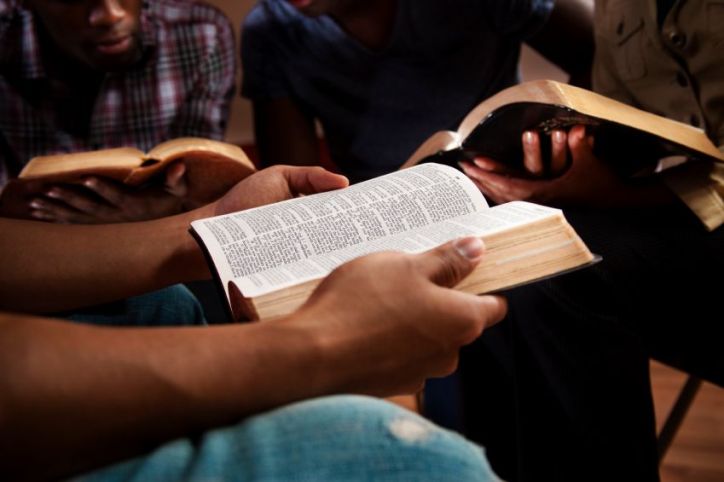
In the local church where the Lord has planted me, I’m working on helping people learn how to read and rightly apply the Scriptures to their own lives. As I’m doing this I’m also attempting to teach them how to teach others. Here are the 11 Steps I’ve developed for them. Feel free to use them in your own study:

11 Steps to Reading and Applying the Scriptures

OBSERVE AND INTERPRET. (The World of Biblical Bob)

Step One. Read Through the Text.

Step Two. Pray.

Step Three. Outline the Text. How does the text flow? (Make mental notes about questions to ask of the text). Keep it simple. Your outline doesn’t need to be fancy—just try to map out what the flow of thought is in the passage.

Step Four. Circle words that are difficult to understand or might have a meaning that you need to consider further. Mark words that seem to repeat. Make notes of anything else that catches your attention.

Step Five. What do you believe the author’s main point is? Just take a stab at it—but be willing to be proven wrong.

Step Six. Consider context. Why does he say this? Why does he say this here?

Step Seven. Try to answer the questions that you looked at in step four. Consult commentaries if necessary.

Step Eight: As clear as you can explain what did this text mean to the original audience. Try to condense it down to one simple sentence.

—

APPLY (Building the Bridge to Modern Marv)

Step Nine. What do we have in common with the original audience?

Step Ten. How does the original message speak to us today?

  • What does it teach?
  • How does it reprove? Where do I fall short? Why do I fall short?
  • Does this text point to a correction that needs to take place? What will I do as a result of this passage?
  • Is there a principle here that I can make a consistent part of my life?
  • How does the gospel inform this passage of Scripture?
  • How does this passage speak to our church?
  • How does this passage speak to our community?What is the missional impact of this text?

Step Eleven. Pray for application to be driven home. (Adoration, Confession, Thanksgiving, Supplication)

—

That’s it. Each week in the men’s Sunday school class I’m teaching we go through these eleven steps using Paul’s letter to the Philippians. We’ve been doing this for a little over a month now and my hope is that some of this is becoming second nature to those participating. 

Today in Blogworld 06.25.14

The Dead White Poet You Need to Know

I’m happy to see that George Herbert is making quite the comeback.

Why Making Decisions Is So Hard

Tim’s last line cut me like a knife.

A Church Reaching Millennials

I appreciated this piece on Capitol Hill Baptist Church.

1 Corinthians 13 Reversed

I like what Jared Wilson did here with 1 Corinthians.

If Jon took Garfield to the vet it might look something like this: