“Man I wish I could do something really great for God! You know… like a mission trip! Or write a book everyone likes, or be a well known pastor or something…”
“Yeah man, that’d be awesome. I’m sure we could really do something for God then rather than this regular old job.”
—————-
Have you had similar thoughts? I have. I’ve thought that and heard others express similar things. The thinking assumes that making an impact for the Kingdom of God relies on platform, prominence, and position. We assume that one must have a platform from which we can proclaim the word of God and tell others of his glory. Prominence, it is reasoned, will help us be efficient at reaching the most amount of people with the gospel. Our position must be one of some significance such as pastor, author, or christian musician as a good way of combining platform and prominence.
There are elements of truth to that. Billy Graham did reach a ton of people with the gospel. Lecrae Moore touches a ton of lives with his prominence as a musician. John Piper has a lot of reach not only through his preaching but through the many books he has written. They have each reached millions with the gospel and their impact is undeniable. However, is that what is necessary to impact the world for Christ?
No. We romanticize things we deem great and shrug our shoulders at everyday holiness. This is a vestige of works based righteousness that flits through our minds. The assumption is that God will be really pleased if we do something massive (on a human scale) for him.
Really?
Do you really think God needs you or I to do anything in order to accomplish what he wills? We’re overestimating our value by 100% if we do. God uses means to accomplish his will, yes. However, he decides the means, not us. He chooses his servants, both great and small, to accomplish the tasks he wants them to do. We’re going by the wrong economy if we measure kingdom impact by worldly numbers.
God used one pagan prostitute, Rahab, to deliver the spies and thus Jericho. She was in the family line of Jesus. She didn’t write a book or make an album. God used the ordinary faithfulness of Christians to enable Paul’s ministry by supporting and encouraging him. Read the end of his letters and his gratitude toward people you otherwise hear nothing about. There are many more examples.
God did not call us to impact the world. He called us to faith and repentance. We were impacted by the gospel shared by someone. Whether the person used was small or great in our eyes, the power was not in them but in the gospel. No man saved you or me. Jesus Christ did. Thank God for his servants, yes, but remember they are fellow servants in the household of God.
So What?
Why am I bothering with this? “We know that” you say. You need to hear it again. I need to hear it again. What the world needs is the gospel. What we can give is the gospel. We share it with our words. We must also show it. No I don’t mean we show the gospel and never preach it. We always preach the gospel. Our deeds must lined up with it.
Do you want to know the best apologetic against adultery in all its forms? Faithful and long lasting Christian marriages full of love that show the glory of God.
Do you want to know the best apologetic against abortion? Faithful and loving Christian parents who raise their children whether they be biologically given or united by adoption. Foster care that shows the value of human life by taking in children who are otherwise unwanted.
Do you want to know the best apologetic against American culture? Faithful and loving Christians who use their wealth in God honoring ways and seek to glorify him in all they do at work, at play, and at home.
Live an ordinary and faithful life, ready to go where God calls you. God called you into his Kingdom and his service. Don’t let our culture of idol worship dictate your feeling of usefulness. Let God dictate how and where you should serve by his Word and the passions he has given to you uniquely.
“Only let each person lead the life that the Lord has assigned to him, and to which God has called him. This is my rule in all the churches. Was anyone at the time of his call already circumcised? Let him not seek to remove the marks of circumcision. Was anyone at the time of his call uncircumcised? Let him not seek circumcision. For neither circumcision counts for anything nor uncircumcision, but keeping the commandments of God. Each one should remain in the condition in which he was called. Were you a bondservant when called? Do not be concerned about it. (But if you can gain your freedom, avail yourself of the opportunity.) For he who was called in the Lord as a bondservant is a freedman of the Lord. Likewise he who was free when called is a bondservant of Christ. You were bought with a price; do not become bondservants of men. So, brothers, in whatever condition each was called, there let him remain with God.” (1 Corinthians 7:17–24, ESV)
Like this:
Like Loading...
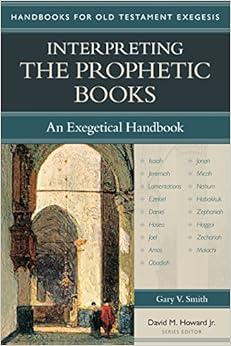 When I finish our current series on the Gospel of Mark, I’ll be looking for the next book to walk through. I doubt the first thing that comes to my mind will be one of the prophets. Though I’ve preached an overview of the Minor Prophets, I’ve never actually preached through one of the major prophets. They are tough to read and that much more difficult to actually preach.