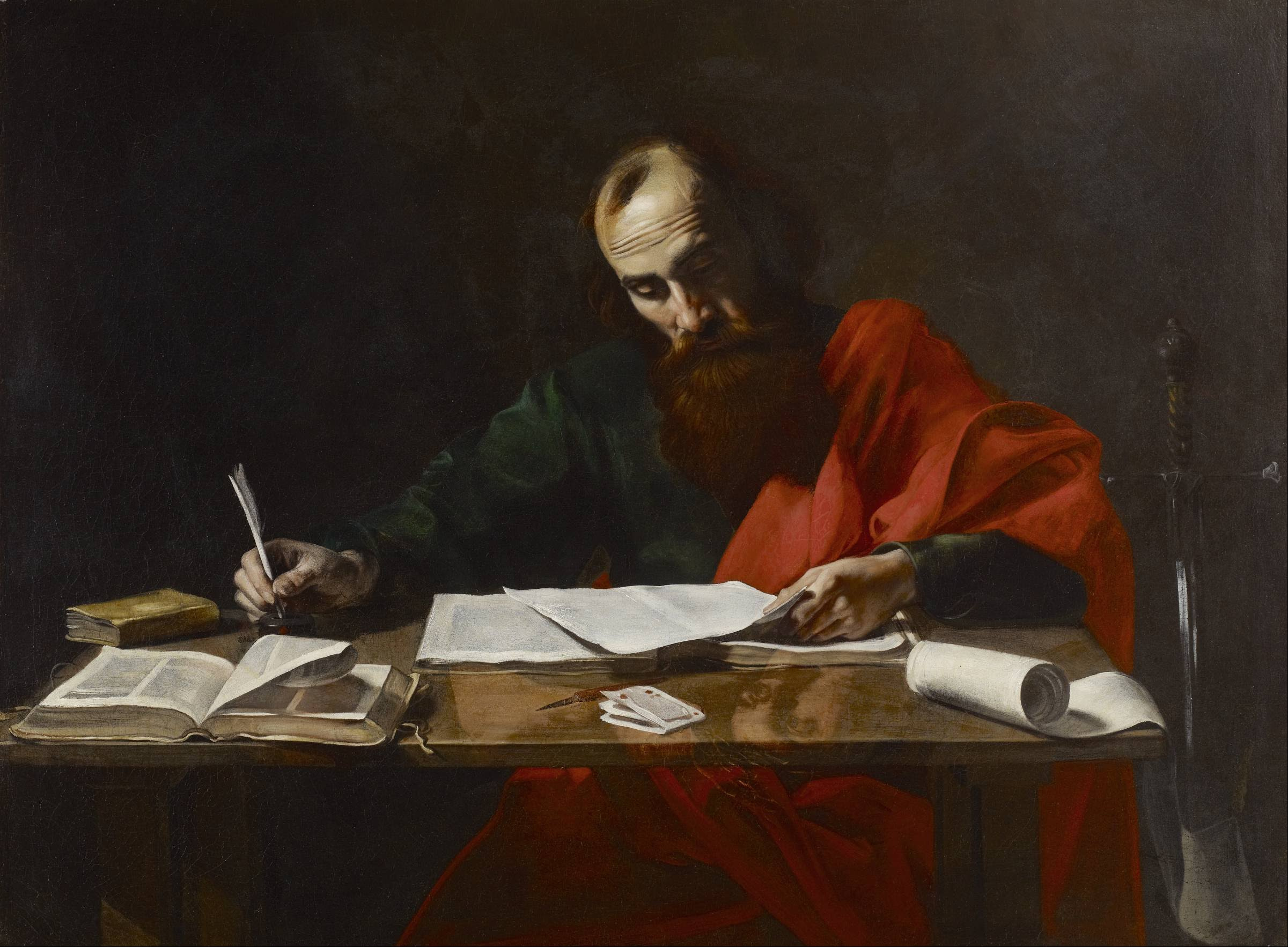
 For many Paul has been a model of singleness—and rightly so. But is it possible that Paul hadn’t always been single?
On Sunday, someone asked me the question of Paul’s singleness and so I thought I’d do a bit of digging. I had read some compelling arguments in the past on this topic but had never really weighed them in my own mind. Here’s what I’ve come up with.
We know by the time of 1 Corinthians that Paul wasn’t married.
He says this much in 1 Corinthians 7:8 when he says, “it is good for them to remain single as I am.” We know with almost certainty that Paul was never married during his missionary journeys until his death. But this does not mean that Paul had never been married.
Some have used 1 Corinthians 9:5 to say that Paul is saying he was leaving a believing wife behind and not making use of a privilege the other apostles are using. But this wouldn’t make much since given his earlier statement in chapter 7. So, what then is the evidence that Paul was at one time married?
Evidence for Paul’s Having Been Married
The most compelling evidence for Paul’s having been married comes from deductions made from Paul’s position as a Pharisee (and possibly a member of the Sanhedrin) and their view on marriage.
Paul stated in Philippians 4:3 that he was a Pharisee who studied under Gamaliel (Acts 22:3). It is quite unlikely that a Pharisee would have been unmarried. Certainly an unmarried man would not have been part of the Jewish Sanhedrin. And some, taking their cues from Acts 26:10, believe Paul was at one point part of the Sanhedrin.
For those looking for actual Scripture which might lead one to believe Paul was previously married, look no further than 1 Corinthians 7:8. Denny Burk, among others, has made a compelling case that Paul’s use of the word agamos puts Paul in the category of a widower.
I’ve also read a couple interesting theories that Paul was actually abandoned by his wife once he became a believer. Thought it would make for a compelling story the evidence on that is scant at best. If Paul was married, the best picture that emerges is that he had lost his wife at a young age—likely prior to conversion—and he chose to never remarry, though he had that right.
But I’m still not totally convinced…
Evidence for Paul Having Never Married
When one looks at church history the evidence is heavily in the favor of Paul having never married. As near as we can tell, the only early Christian writer who mentioned Paul as having been married was Clement of Alexandria. Tertullian, Jerome, and Chrysostom all held that Paul had never married. And when you dig into the comments of Clement, you find that his understanding wasn’t based upon historical tradition but upon a misinterpretation of 1 Corinthians 9.
Furthermore, the clearest reading of Scripture would have us to believe that Paul was never married. This does not necessarily mean that he was never married—but every bit of writing we have of Paul is written while he was an unmarried man. There is nothing in the Scriptures which would force us to see Paul as a widow—only a few pieces of evidence that could open up the door to that possibility.
However, I’m not even totally convinced of these few pieces of evidence. It is quite doubtful that Paul was in the Sanhedrin. When considering the qualifications of what it took to be part of the Sanhedrin it is quite unlikely that Paul would have been in that position at such a young age. Acts 26 does not by necessity teach that he was a member of that group, only that he along with them was in the business of killing Christians.
It is also not an absolute certainty that a Pharisee had to be a married man. Most of the writing that is typically cited for evidence of this viewpoint comes from a later date. While it does seem that the Pharisees would have preferred one to be married (to keep from burning with passion—much like Paul stated) it may not have been an absolute requirement. It is not absolutely decisive that one had to be married to be a Pharisee.
Lastly, agamos does not have to be the male version of “widower”. Though Burk makes a compelling case (an argument also made by Fredric Farrar) it is not definitive. The word just means “not in a marriage”. It can refer to those who are widowed or it can refer to those who have not married. As I read 1 Corinthians it seems more compelling to see this as Paul encompassing both categories—widowers and those who aren’t married (whether through divorce or celibacy). When given that option it seems a better option than the somewhat redundant “male widow” and “female widow”.
Conclusion
At the end of the day it really doesn’t matter much for our exegesis of the Scriptures. Though it might help with perspective or give compelling background, Paul’s words to the divorced, widowed, married, and celibate remains the same regardless of his own history.
For me personally, I believe history and the clearest reading of Scripture would lead us to believe that Paul had never been married. But I also believe those who view him as a divorced man present a compelling argument. They very well could be correct. I just don’t see quite enough evidence for me to lean towards that view instead of the more historical view; namely, that Paul had never married.
What are your thoughts?
Like this:
Like Loading...
 Day 24: That we would know the hope to which we are called