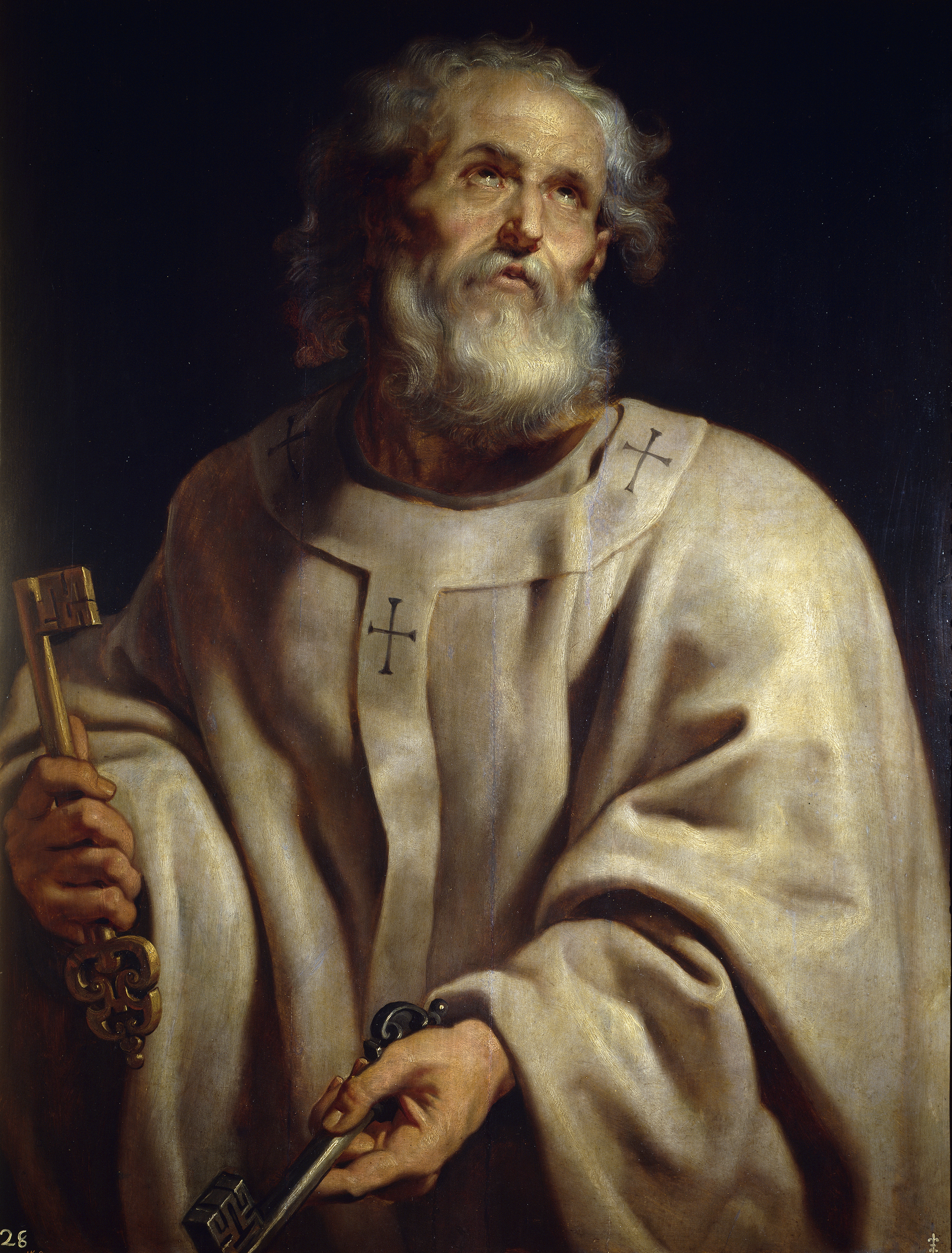
Why I still Believe Peter Wrote 2 Peter

Most scholars today believe Peter did not write 2 Peter. They believe that 2 Peter is pseudepigraphical—which is a fancy way of saying they believe someone else wrote 2 Peter and stuck Peter’s name on it either to honor the apostle or in order to gain a bit more authority. In the first few centuries there were several books floating around with Peter’s name on it. This, according to modern scholars, is what 2 Peter was—a book claiming to be written by Peter but really not.

There are a few main reasons why these scholars do not accept Peter as the author. First, the Greek in 2 Peter is so much different than the Greek of 1 Peter. Second, it looks like Peter did a cut & paste job using Jude. What apostle would do that? Third, the author says things in 2 Peter which seem to date it after Peter’s death. For instance, he refers to Paul’s writing as “Scripture”. Wouldn’t this mean Paul’s writings would have to be compiled? Most believe that didn’t happen until a decent time after Peter’s death. Fourth, he refers to himself as Simeon Peter—which is different than how he refers to himself in 1 Peter. And lastly, if you look at the history of 2 Peter it was even a bit suspect in the early church. Many have had questions about it since conversations about canon even started happening. Given all these reasons isn’t it obvious that Peter didn’t actually write 2 Peter?

I don’t buy it.

I’ll admit up front that I have a presupposition about history. I don’t buy into chronological snobbery. I don’t necessarily believe that we are smarter than the folks who lived 2000 years ago. They weren’t morons. And so when I think about history like this I try to think about it in story form and see if its plausible.

In order for 2 Peter to not be written by Peter, I must believe a few things. First, that someone who is not Peter wrote this letter and fleeced the early church. He did such a good job that even though other books with Peter’s name got thrown out, somehow 2 Peter made the cut. And it did this in a time when all things written with the name Peter on it were highly suspect.

It would be one thing to carry a bomb onto a US plane on September 10, 2001. It’s quite another to do so on September 12, 2001. Likewise, accepting a letter as written by Peter would be a bit easier in a time when they weren’t dealing with Gnostic forgeries. It would have likely been harder during this time for 2 Peter to make the cut than at any other point in history. And they were not ignorant to some of the same arguments we have today. This is why even as early as Origen the hypothesis was put together that the different writing style between 1 Peter and 2 Peter is owing to a secretary.

All of the objects against Peter’s authorship can easily be explained. You have a problem with Peter saying Paul’s writings are Scripture only if you don’t believe the Holy Spirit inspired both. And the problem with Jude is only a problem if you assume Jude came first AND if you assume such a cut and paste job is a problem (see Colossians and Ephesians).

The late attestation of 2 Peter really ought to cause us to believe Peter wrote it rather than deny it. The fact that it was so heavily scrutinized and still passed the test ought to give us pause. Even accepting something like Richard Bauckham’s theory that it was testament genre doesn’t fly. If everyone knew it wasn’t Peter and it was accepted that it was meant to honor the apostle—why didn’t this come up a couple hundred years later when discussing canonicity? Wouldn’t that too have been preserved…at least somewhere?

For me the most plausible argument is that an aged Peter did what was so common in that day; namely, he spoke his message to a secretary who (using his own style) wrote what Peter asked him to write. Simple as that.

A Dirty Manger

Where there are no oxen, the manger is clean, but abundant crops come by the strength of the ox. (Proverbs 14:4 ESV)

I’m convinced that a church must make a decision. Do we want clean carpets and empty pews or do we want dirty carpets and a packed house?

This is what this Proverb is saying. You can keep a manger clean all the time if you don’t have an oxen in it, but having no oxen will mean that you don’t have an abundance of crops. If you want crops you need to deal with the inconvenience of a dirty manger.

Of course, just dirtying up your carpets doesn’t mean that people will beat down the doors of the church. A messy church doesn’t equal a successful church. Getting broken people to come into your church building is really only half the battle. A biblical church will see broken people transformed by the gospel.

But healing takes time.

And its messy.

Superficial healing is a bit more clean. In superficial healing we bring the easily conquered things to the surface and we hide the rest. But real transformation always gets down to the core of the thing. It’s a bloody mess. I’ve shared it this way before:

I’m finding that the deeper the gospel goes in my heart the more entrenched is the sin that it is uprooting. Early on the Lord was dealing with surface stuff. Things like cursing and watching inappropriate things or listening to really vulgar music.

My white-knuckled pew grabbing back then had to do with whether I wanted to follow Christ or keep driving through town blaring Eminem. It feels stupid now. I’d give that up in a heartbeat.

Now the stuff that I’m hanging onto are the things that are in the depths. Identity things. Deeply entrenched patterns of thought and action and character. But it’s no less bloody than giving up Eminem. In fact it’s probably more.

Bonhoeffer once said that when Christ calls a man he bids him to come and die. I’m coming to understand that this calling and coming and dying isn’t just pertaining to initial salvation. The whole thing is a bloody mess.

Being gospel-centered doesn’t just mean that we dance in the fields of favor with the Lord. It means that…a thousand times yes…it means that. But being gospel-centered also means that we are at times necessarily afflicted by the gospel. It is not as if the deeper our understanding of the gospel goes then the easier the bloodshed will be. No, it’s likely that the deeper the gospel goes then the deeper will be the things that the gospel is transforming.

This is why I say that the church must choose between clean carpets and empty pews or dirty carpets and transformed people. If a church wants an abundant crop it will only come through having a messy manger. There is no other way. Gospel transformation isn’t clean. It’s messy. No way around that.

So what do you want a clean manger or abundant crops?

—

Image source: here

I also think you should read this one: How to Use the Bible to Avoid Annoying Christians

Today in Blogworld 01.18.16

From Faith Into Superstition

I’m convinced that what many people call “following Jesus” is really only a little better than superstition. I appreciate the work Michael Kelley does here in exposing the difference.

Stay Messy, My Friends

Jared Wilson is correct, there is a temptation to distance ourselves from messy people. That will be to our detriment.

What I’ve Learned in 20 Years of Ministry

Dr. Moore shares twenty things he has learned in twenty years of ministry.

The History of Christian Music Quiz

I did terrible on this because I wasn’t a believer until Christian music was already in full swing. Perhaps you’ll do better.

Thanks to my friend Steve for this jewel:

Today in Blogworld 1.15.16

How Do I Talk to My Kids About Homosexuality?

Just had to dust this one off a couple days ago, myself.

Three Questions to Ask Before Listening to Any Sermon

I found this helpful as a pastor too.

Hope for the Young Pastor

Good words here from Brandon Smith

14 Games to Play With Toddlers

I don’t know if I can get away with these anymore, but it won’t keep me from trying.

This kid gets it: