Who Are the Scythians?

On Wednesday evenings we are walking through Paul’s letters to the Colossians. This is actually part of our series on how to interpret the Scriptures. The first part of our series was a basic introduction to hermeneutics. Now we are applying those principles as we go through Colossians. Last Wednesday we looked at Colossians 3:5-11. When we came to verse 11 someone asked a question I wasn’t prepared for. Here is the verse:

Here there is not Greek and Jew, circumcised and uncircumcised, barbarian, Scythian, slave, free; but Christ is all, and in all. (Colossians 3:11 ESV)

The question was simple. “Pastor Mike, who were the Scythians”.

I had to confess that I wasn’t totally certain. But looking at the structure of the text I hypothesized that Scythians were a more refined class than the barbarians. I assured them that I was not even close to certain of this but if I had to make a guess it would be that simply because every other relationship was one of contrast.

Boy was I wrong.

Who Were the Scythians?

The Scythians were a terribly violent group of people who lived just north of the Black Sea. They were Iranian Eurasian nomads known for their military prowess. They were some of the first to use horses in warfare. They were absolutely brutal. We have quite a bit of information on the Scythians from Herodotus and he claims they were drunken savages who would actually drink the blood of the first enemy the killed in battle. They would scalp their victims and use the scalp as a napkin. They would even go so far as to skin their victims and display them.

So a good translation might be “savages”. They were the epitome of being uncivilized. The very opposite of what I had suggested in Bible study.

Why the Scythians?

This leads to the next question. Why then did Paul write this way. Why did he use opposites and then all of a sudden mention a more extreme example of a barbarian?

One particularly interesting view, put forth by David M. Goldenberg, is that the barbarians were used of black races and the term Scythians was used to represent white races—both savages but one the black savages the other the white ones. There have been other theories which try to preserve the flow of opposites—but none of them are really satisfactory.

Perhaps we are given a clue in the text itself. As I read through the text again I realized that my mind was supplying a word which wasn’t there. There is no “or” or “and” in between the words slave, free, barbarian, or Scythian. Therefore, what Paul is likely doing is further expounding upon the class of the uncircumcised. As Douglas Moo notes, “Perhaps this indicates a concern, in opposition to a tendency among the false teachers to exclusivity, to stress that the new humanity is inclusive of every nation and every social class”.

All of this to say Paul is saying that even the most brutal savages no longer have their identity found in brutal savagery. Instead their identity is found in Christ. This new kingdom is able to even redeem and rescue those who drink the blood of their enemies. Paul saying this means that some of the Scythians would have come to Christ. Unlike the false teachers the gospel doesn’t simply reach the “enlightened” but the gospel breaks down every barrier and somehow unites the blood-drinker with the refined. Christ unites those who’ve been taken captive alongside those who are slave-masters. It obliterates not only those distinctions but the lifestyle which caused them to have that identity in the first place.
Today in Blogworld 02.16.16

A Church Built From a Shipwreck

This is a beautiful picture.

3 Ways I Share in the Pastor’s Study

An encouragement to wives who don’t get to study the Scriptures as much as their husbands.

Please Keep This Between Us

Lore Ferguson outlines a way we often manipulate one another.

Four Things to Help Overcome Gridlock in Your Marriage

Every couple experiences it. This looks to be a healthy way to work through gridlock.

Stephen Colbert has a way of showing how ridiculous this Donald Trump thing really is:

The Kayfabe of Preaching

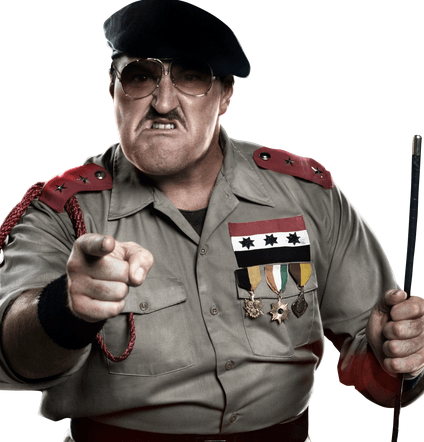
Some of you will know what kayfabe is. And by confessing that you’ll either expose your love for the stage or (and most likely) your knowledge of professional wrestling. You in wrestling when Hulk Hogan pretends to really hate Sgt. Slaughter because he sold out to the Iraqi’s? That’s kayfabe. It’s pretending like staged events are actually true.

When a wrestler “breaks kayfabe” they are pulling back the curtain and letting the fans see a glimpse into what is really real and not what is pretend real. Back when I actually watched wrestling kayfabe was a big deal. Guys would lose their job if they broke character. It was very unprofessional.

Though it kind of sickens me to make this analogy, there is a type of kayfabe to preaching. I’m not meaning that what the preacher is doing isn’t actually real or anything like that. I’m simply saying there are “industry standards” that preachers are supposed to follow. There are tips of the trade we learn in school and in books. Things you aren’t supposed to do and rules you are supposed to follow.

Many preachers will not break kayfabe. I think it is out of a desire—a very noble desire—to protect the sacredness of the pulpit. We preachers want to seem like what we are doing in putting together a sermon is something quite special and not many others could do what we do. Personally, I’m not convinced this is the case. I think given the write training most anyone could put together a decent sermon. But being called to preach and being able to preach a half decent sermon are two different things.

I’m saying all of this to say I’ve intentionally broken kayfabe in preaching and I’ve found great benefit in doing so. I’ve pulled back the curtain and said, “Here is what I a preacher is supposed to do at this point”. Or I’ve said things like, “Here are the goals that you are trying to accomplish when you preach a sermon…” Just little things to take out the stage-acting and help the people see what’s really real and not pretend real in preaching.

I’m convinced that what is really real is far better than to pretend I’m someone I’m not. I understand there is a gravity to preaching. I get that and I want to preserve that. I also understand that a preacher can be so disorganized and “human” that the people don’t benefit at all from his supposedly “Spirit-filled” ramblings. I’m not for that either.

I simply believe we ought to be authentic in the pulpit and out of the pulpit. By this I don’t mean I use the pulpit to give people a glimpse into my very real life. Or that I throw my family under the bus and tell stories which help the people know we are real people to. I’m speaking of something different. I’m talking about preaching in such a way that will probably give me a big fat F in my seminary classes. A way of preaching which doesn’t try to pretend like this jar of clay is something more.

This is how Zack Eswine has said it:

Greatness, even in ministry, cannot escape humanity. Being human does not mar greatness; it informs it and sets its noble boundaries. How have we come to think otherwise? Whatever desire we may crave for ministry, we do so as one whose big toe can itch and whose sockless feet get cold in winter. (The Imperfect Pastor, 36)

Preaching is a sacred thing. A wonderful and glorious thing to be used by God to stand before people and say, “Thus says the Lord”. But let’s not pretend that we won’t need a nap afterwards.

Today in Blogworld 02.15.16

5 Reasons You Should (Probably) Leave Your Attractional Church

Strong words, but I think good.

5 Rookie Pastor Mistakes

I look forward to making all of these…I mean avoiding all of these.

What’s so Special About Singing on Sundays?

People sing all the time. How is what we do on Sunday morning different?

The Hidden Beauty of a Bad Sermon

I’ve preached plenty bad sermons. This was encouraging.

There was a bit of a problem with that T-Rex video on Friday, so here is another: