When The World Has Gone Mad

His belly was growling as he tried to listen. The king’s speech meant everything to him. The night before he’d gathered with his fellow countrymen pleading with the king to end his angry tirade and open up the food bank again. His children were starving. They were desperate. They wanted to get back the homeland they loved so much. They had hoped their world would be great again.

They listened with great anticipation as the king sat upon his throne and delivered a speech. His wealth was evident. His speech was appealing. In fact his oration was so compelling that the people saw in this king that which they’d been longing for. He would be the one to rescue them. He would make their land great again.

This father of four was appalled at what he saw and heard. What he heard was just a bloviating mad man. He could see the emptiness behind his silver tongue and profound wealth and power. What bothered him the most though was what his fellow people started doing. It was unthinkable. Even sensible God-fearing people started talking like this man was a god, and not man.

How could this be? How could the people fall for this man who was so full of himself. How could he be so prideful? How were they so blinded by his royal robes that they couldn’t see through the empty rhetoric?

—

That’s a bit of an imaginative look at Acts 12 and the speech of Herod the Great. In reality, the role of the bloviating mad man could be filled by countless people throughout history.

And when you are on the outside of the hysteria looking in it can be a bit disconcerting. Seeing your fellow country-men flocking to a leader and falling for his/her empty promises is painful to watch. It’s easy in these times to get terribly discouraged and throw up your hands in frustration. You can find yourself wondering if you should just sit quietly in a corner while the world just plummets itself into the hell they’ve requested.

Acts 12 is encouraging, though. It tells us that there is a different story which trumps that of the bloviating mad man.

Herod finished up his speech and took the glory which belonged to. He started to believe his press clippings and wondered if maybe he really was a god. “Immediately an angel of the Lord struck him down…and he was eaten by worms and breathed his last.”

Breathed his last.

Do you know what that means? His tongue is now silent. His spectacular speeches are in the grave with him. He joins the host of other bloviating mad men who thought they spoke as gods but who are now silent. This terrific accomplishment of oratory is now forgotten. And Herod lies in the grave.

Luke does something beautiful in Acts 12:24. Right after saying that Herod “breathed his last” he says, “But the word of God increased and multiplied”.

But.

Why put that “but” there? Because Luke is contrasting the living word of God with the breathless Herod. God’s Word continues on—increasing and multiplying—while Herod now lies in the grave.

This is a great reminder for us when we find ourselves on the outside listening in on a world gone crazy. The tongue of the mad man will only spout as long as God gives it life and breath. It will cease. He will not. His words will continue throughout all of the ages and into eternity.

Treasure the words which will truly last. Don’t fret about the silver tongues which have an expiration date. Speak the words which are eternal.

—

Photo source, from A Mad Mad Mad Mad World: here
Today in Blogworld 03.07.16

How to Give Your Pastor Sermon Feedback (and How Not To)

Sermon feedback can be very helpful if done well.

Put Your Whole Person into Your Sermon Prep

Interesting ideas.

How Can We Be Angry and Not Sin?

This, I believe, has been a very misunderstood topic. I like the way it is handled here by Jon Bloom.

Christology Statement

This is from Ligonier and well worth your time. It’s more than just the introductory page it includes affirmations and denials as well be sure to look around.

They are a little overweight but these baby unicorns are absolutely adorable:

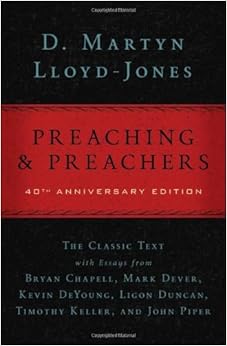
Reading Preaching and Preachers Together: Chapter Three

In Lloyd-Jones third lecture on Preaching and Preachers he further works toward showing that preaching is the primary task of the church. In this lecture he progresses a bit and moves toward a definition of biblical preaching while also dropping a few bread crumbs he will pick up later.

Having said that preaching is the primary task of the church, Lloyd-Jones now considers and objection; namely, cannot all of these things be done by some other method? Why not engage in a dialogue instead of just one man standing before people and talking? (Remember when this argument was gaining traction a few years back?)

In order to prove his points MLJ tells a story of his refusal to debate an unbeliever. He believed it was more a distraction than pertaining to his primary task as a preacher. He goes on to give four reasons why this is so and why he did not engage in this debate. First, because God is not to be discussed or debated. Secondly, the gospel isn’t meant to be entertaining, it’s too solemn of a thing to just merely debate. Third, those who are spiritually discerned won’t get it anyways. Lastly, what man needs is to be humbled not to be debated.

Lloyd-Jones argues that preachers ought to stick to preaching. No need for conversations or any of the new ideas about what will get people to come. True preaching will get people to come.

This begs a question, though. What is true preaching? It is defined as delivering the message of God, a message from God to those people. The Doctor imagines a man standing behind a pulpit and asks the question, “what is he doing there?” This man is delivering God’s message to God’s people. When true preaching happens those who are listening cannot be neutral. This is not a mere conversation.

He closes out the lecture by dropping some bread crumbs for the future. He makes a distinction between the sermon and the act of preaching—a discussion he will pick up later. And he also makes a distinction between evangelistic preaching and edifying preaching. Lloyd-Jones did his evangelistic preaching on Sunday evenings and his edifying (more for the church) messages were on Sunday morning.

Tweet Note for Chapter Three:

At the end of every chapter I like to put together what I call a Tweet Note. A simple 140 character or less summary of the chapter. Here is the Tweet Note for chapter three:

Preaching is giving the Word which God has given to us, it is not a mere conversation.

Quotables:

  • What God does to [the lost] man is not to have a discussion with him but to make him look foolish.
  • You obviously, therefore, do not, and must not, debate or discuss these matters with them on an equal standing. To do so is to deny the initial Christian postulate.
  • [The preacher] is not there merely to talk to them, he is not there to entertain them.
  • Preaching should make such a difference to a man who is listening that he is never the same again.
  • If people can listen to us without becoming anxious about themselves or reflecting on themselves we have not been preaching.

Discussion Questions:

  • MLJ refused to engage in a debate about the Gospel. Do you agree with his stance? Would you have done the debate? Why or why not?
  • MLJ says, “there is no neutral point at which the Christian and the non-Christian can meet, there is no common starting point as it were.” Agree or disagree?
  • How would you define preaching?
  • What do you think of MLJ’s evangelistic services on Sunday evening?
  • Of the tree types of preaching Lloyd-Jones mentions at the end, which kind could be improved in your preaching or in your church?

Today in blogworld 03.04.16

Christ’s Awesomeness Is Gloriously Pride-Deflating

Amen.

Can God’s Love For Us Increase?

This is a well-thought out response.

When Believers Divorce on Unbiblical Grounds

I am so pleased that Jonathan put the word “ordinarily” in here and then explained.

Do Christian Parents Flirt With the Idol of Sports?

This is one of those unchecked idols that needs to be looked at.

This little porcupine will be the cutest thing you see today: