A Tip For Reading Church History

clarisse-meyer-jKU2NneZAbI-unsplashThe year is 2121. That’s not a typo…it’s 100 years from now. During the zombie apocalypse almost all of our Christian books were destroyed. Not because of any malicious intent by our zombie overlords but mostly because they weren’t very good at preserving paperback and they accidentally blew up the internet. The zombie kids of 2121 have only a handful of the millions of Christian resources we have available today.

They have a Joel Osteen book, a few pages from Calvin’s Institutes, some book on anxiety by an obscure author, Book 3 of the Left Behind series, a couple Amish romance novels, a commentary on the Gospel of John, and thankfully a completely intact copy of the Scriptures.

How much confidence would you have if a zombie historian compiled this material to write his What Christians Believed? You would expect our author to miss whole swaths of teaching. It would be skewed towards the information available to him. Because he has such scant material he would by necessity give undue weight to every jot and tittle. A passing thought from Mr. Osteen could become for our zombie writer a key belief.

I’m sharing this ridiculous illustration because I believe we can have a tendency to give undue weight to passing phrases in the writings of the early church. I will give you a rather extreme example to make my point.

In The Apology of Aristides the Philosopher, our pal Aristides calls the Egyptians, “more base and stupid than every people that is on the earth”. We have very little other material from the early 100s. Would it be right for us to conclude that a widely held Christian belief was that Egyptians were stupid? Of course it wouldn’t. We would need more evidence. And it would be equally silly for us to say, “because early Christians believed Egyptians were stupid we should make this part of our Christian practice.”

Likewise, there are passing phrases in many of the early church fathers about how they did church together. I’ll admit, there are things which at times leave me scratching my head. If those who lived closest to Jesus (like Aristides) believed that baptized infants were sinless, does this mean I should embrace that view?

No, our standard is still the Bible. If our zombie historian were tasked with planting a church that is faithful to Christ, he could certainly learn from the material given to him. But at the end of the day he would be bound to the Scriptures. Scripture would be authoritative. He could perhaps cobble together a bit about what Christians believed in 2021—and that should inform his own interpretations. But at the end of the day both he, and us in 2021, must bow a knee to what the Scripture actually says and teaches. 

I’m not attempting to say that we cannot trust history or that what the church has historically believed has no value. Nor am I attempting to argue that there was some sort of unpopular and underground church that held the real Christianity in its hand. Rather, I’m attempting to communicate that we should be cautious when reading history. It ought to inform us but not rule over us. 

Photo source: here

7 Directions for Dealing With Sin

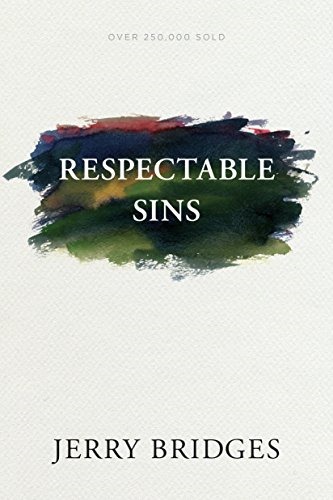
51W3W0BxdMLI’ve had Jerry Bridges’ Respectable Sins sitting unfinished on my book shelf for a couple years now.It’s a helpful book that could be used to help those who have been believers for awhile expose and root out those sins which are often lingering under the surface.

In one chapter Bridges gives seven directions for dealing with sin when it is brought to our attention. I found these helpful. Some of them are word for word, others I’ve tweaked a bit for better memorization.

  1. We should always address our sin in the context of the gospel. We must always start with the truth that in Christ our sin is forgiven and we stand in His righteousness and not our own.
  2. We must learn to rely on the enabling power of the Holy Spirit.
  3. As we depend on the Spirit we must also recognize our responsibility and diligently pursue practice steps to deal with our sin.
  4. We must identify specific areas of acceptable sins. Sin is specific and it’s helpful for us to deal in specificity and not generality.
  5. We should bring to bear specific applicable Scriptures to each of our subtle sins.
  6. Cultivate the practice of prayer over the sins we tolerate.
  7. Involve one or a few other believers with you.

If you’re looking for a helpful book to discuss with a discipleship group this is one which I would highly recommend.

The Pornography of Wonderless Preaching

photo-1618859437290-dc3cda39ea58Can a man carry fire next to his chest and his clothes not be burned? –Proverbs 6:27

I, like many others, have been listening to The Rise and Fall of Mars Hill. It’s an incredibly sobering look, by Mike Cosper, at the ministry of Mark Driscoll at Mars Hill in Seattle. I thought of Proverbs 6:27 as I was listening to one of the more recent podcasts.

At a conference Driscoll was talking about the importance of a plurality of elders. It’d protect from one preacher not being the center, people not following a single man. He talked about the dangers of celebrity. It was as if he was saying that it was holding fire to the chest. It was incredibly insightful. I only wish he had listened to his own advice.

That’s the thing with Solomon. He didn’t listen to his own advice. He held fire to his chest and it cost him his entire empire. How could this happen? Why would Solomon have done this if he knew better? Solomon knew better. So did Driscoll. So, why? I think Bruce Waltke gives a helpful answer:

“If one should ask, ‘If Solomon is the wise author, how could he have died such a fool?’ let it be noted that he constructed his own gibbet on which he impaled himself—that is, he ceased listening to his own instruction. Spiritual success today does not guarantee spiritual success tomorrow”.

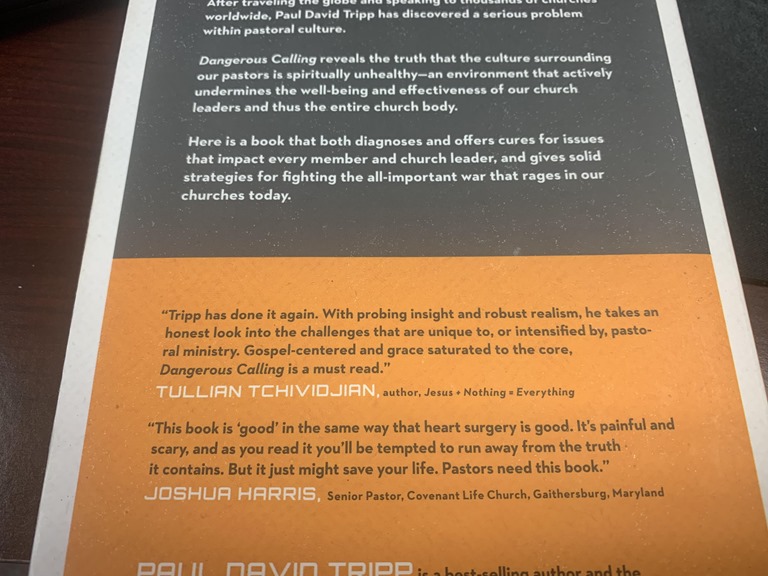
The other day I picked up my copy of Dangerous Calling by Paul Tripp. Look at the back cover:

dangerouscalling

Harris no longer identifies as a Christian and Tchvidjian had his own fall. A dangerous calling indeed. How does this happen? Ironically enough, I think one answer is found in Tripp’s book; namely, we lose our awe.

This means that every sermon should be prepared by a person whose study is marked by awe of God. The sermon must be delivered in awe and have as its purpose to motivate awe in those who hear…Now it’s very hard to preach and shape the ministry of the church this way if familiarity has produced a blindness that effectively robbed you of your awe of God. It is very difficult in ministry to give away what you do not possess yourself. (Tripp, 118-119)

We lose our awe but the machine keeps churning so we have to fake it. We pastors have put together Bible studies and sermons enough times that we can put together words which appear to be passionate and God-wrought but are still empty. And because God’s Word is powerful and because God can speak through a donkey, the posing preacher may even lead a “successful” ministry. He may even be known as a great preacher—but it’s built on oration instead of awe. And this will eventually brutalize his soul. You cannot hold this fire to your chest and not get burned.

You can fake sermons and teaching—but you cannot fake awe. The pastor who is not motivated by awe of God is engaging in a type of pornography every time he prepares a disinterested sermon or Bible study. Consider this definition from the Catechism of the Catholic Church:

Pornography consists in removing real or simulated sexual acts from the intimacy of the partners, in order to display them deliberately to third parties. It offends against chastity because it perverts the conjugal act, the intimate giving of spouses to each other. It does grave injury to the dignity of its participants (actors, vendors, the public), since each one becomes an object of base pleasure and illicit profit for others. It immerses all who are involved in the illusion of a fantasy world. It is a grave offense. Civil authorities should prevent the production and distribution of pornographic materials.

I appreciate Carl Trueman’s commentary on this. The biggest problem, says Trueman, is that “it repudiates any notion that sex has significance beyond the act itself, and therefore it rejects any notion that it is emblematic of the sacred order.” (Trueman, 99) That’s why I say that the preacher is engaging in a type of pornography when he delivers a sermon or Bible-study without awe. He’s pretending like the act itself—getting through that 30 minute talk—is sufficient. But the sermon, the Bible study, the counseling session, etc. has a significance outside of itself.

If your pastor was consuming pornography on a daily basis, how long do you think he could go without a very public collapse? How long before his soul withers and what is done in the dark is brought to the light? I would argue that the same is true for a pastor without awe. Every time he preaches a sermon or leads a Bible study without awe—and gets away with it—he is feeding a monster which will destroy him. How much more will this happen if he not only “gets away with it” but he is platformed, even though his soul has been untethered from awe for quite some time?

What do we do if we find ourselves losing awe? Well, we don’t need a list of things to do. Law never awes. We need the gospel—fresh, anew, and inspiring. Not a gospel to preach, but a gospel to feast upon for ourselves. We have to be willing to not settle for anything less. We cannot let ourselves get away with it.

Awe-less sermonizing is a fire that you cannot hold up to your chest without getting burned. Thankfully, the gospel burns brighter. Hold the precious truths of Jesus up to your chest instead.

Photo source: here

On Divisions and the Kingdom

photo-1537806078416-64d8c0147e1ePerson A: “Bro, you can’t eat meat sacrificed to idols. If you keep doing this then I cannot in good conscience be around you.”

Person B: “Sure, I can. I have freedom in Christ. Idols aren’t real. Check your facts, dude.”

Blah, blah, blah. Big fight. Threatens unity within the church. Paul writes Romans 14 and 1 Corinthians 10 as a response to these types of debates.

Paul to person A: So this not eating food sacrificed to idols thing is more important to you than fellowship with a brother in Christ? In your quest to be ‘pure’ you’re willing to pass judgment on your brother?

Paul to person B: So this freedom to eat what you want thing is more important to you than fellowship with a brother in Christ? In your quest to be ‘free’ you’re willing to bring grief to your brother?

You realize, don’t you, that if food is the driving force in the life of either of these people they are going to continue to argue and will not receive Paul’s words? And do you also see that if Christ and His Kingdom is the driving force in the life of either of these people, they’ll receive Paul’s words gladly and be restored in fellowship?

But if I am still obsessed with food (or whatever the issue of the day) then I’m going to use Romans 14 and 1 Corinthians 10 as a whip against my brother. If I’m a freedom guy then I’ll use it to whip out his being judgmental. If I’m a purity guy then I’ll use it to force my brother into obeying MY conscience instead of his own. But this text isn’t a whip…it’s a mirror. What am I valuing more than the kingdom?

What Romans 14 and 1 Corinthians 10 are teaching us is that as believers in Christ we should do what our conscience allows us to do and we should do it with thankfulness to the glory of God. But I cannot allow my clean conscience to outshine the kingdom. It’s not about food. It’s not about whatever the dividing line is for us today. It’s about the kingdom of God.

The Stuff the Kingdom is Made Of

When Paul tells them that it’s about the kingdom and not about food he has particular things in mind. It’s not just an abstract concept—there are real tangible things within the kingdom.

“For the kingdom of God is not a matter of eating and drinking but of righteousness and peace and joy in the Holy Spirit.” Romans 14:17

So are you growing in righteousness, and peace, and joy? All the things which we are absorbing, all the debates we are throwing ourselves into, all of our stances, all of our focus and attention on the things which divide, all of our talking points….are these bringing about righteousness and peace and joy? Maybe, then, they aren’t the stuff the kingdom is made of.

Would you believe it if I told you that a debate/discussion on these types of things ought to lead to deeper fellowship? If the kingdom of God is the driving factor these conversations will be much different. Person A and person B will enjoy hearing another perspective, they’ll enjoy getting to know the heart of this brother who differs, they’ll probably even both grow in righteousness, peace, and joy. And at the end of the day they’ll rejoice because they don’t have to have the same opinion to love one another and be about the kingdom. It’ll be encouraging to know that something far greater (the kingdom) is the much bigger reality.

Paul isn’t telling these two warring brothers to stop talking about their positions on meat or no-meat. The guy with the weaker conscience needs to hear from his brother. Much like the guy who is free in his conscience needs to be tempered by his weaker brother. They need one another. But this beautiful aspect of the kingdom is decimated when zero-sum thinking takes over. Dialogue ceases. Righteousness, peace, and joy fall by the way-side and victory becomes the god of the day.

Conclusion

A few general principles I’m trying to apply in my own life:

  • Don’t go against my conscience. But also don’t make my conscience the guide for another believer.
  • The greatest force in these texts is “Let no one seek his own good, but the good of his neighbor.” Therefore, I must always be asking how am I best to love my neighbor in this disagreement/dividing point?
  • The issue is usually not the issue but how we go about solving that issue together in righteousness, peace, and joy.
  • The kingdom is what matters. This will lead to righteousness, peace, and joy. Is my life marked by these things? Am I about the kingdom? —

Photo source: here