Today in Blogworld 12.08.16

What is the “Sin Leading to Death”?

I’ve heard this question quite a few times.

How Christianity Flourishes

Amen!

We Cannot Complain About America If We Do Not Listen to Others

This is so good. And I’m thankful Lore gave this book list.

How God Used Facebook to Give Me a Second Chance

Love hearing how God works likes this.

100 Books Every Man Should Read

I found this a fun list.

A few pastors/church leaders talk about their biggest fear in ministry:

When Preaching the Gospel to Yourself Becomes Like Brushing Your Teeth with Your Finger

“Preach the gospel to yourself.”

You’ve likely heard that phrase. You’ve maybe even said it. I know I have, and I’ll continue to say it. I believe the discipline of preaching the gospel to yourself is a tremendous discipline and benefit to the Christian life.

But I do hope that when we say this what we mean is also “preach to yourself of your constant need of repentance” and that we do not mean only “apply the benefits of the gospel to yourself”. Because I’m convinced to do this is about as effective as brushing your teeth with your finger.

You’ve done that haven’t you? Went on a trip, realized you forgot to pack the toothbrush until it’s too late, and rather than get back in the car and go to the gas station or pay an exorbitant amount at the hotel for a new one, you decide to go primitive and brush your teeth with your finger. If you are really good at it…and make sure to wash your finger first…you can do a somewhat decent job. Or at least make yourself think that you’ve done a decent job covering up your stank. But it doesn’t take long for the deficiency of fingerbrush to manifest.

Maybe I’m just terrible at using my finger as a toothbrush. (After all, I’m sure my extremely sensitive gag reflex doesn’t help my cause). For me, the impact of finger brush wears off in about two hours. It cannot withstand the onslaught of my McDonalds breakfast. Usually by 10 am, I realize that it’s as if I had never even brushed my teeth.

Quickly applying the benefits of the gospel to yourself apart from thorough and actual repentance is about the same way. I’ll be honest, at times when I’m preaching the gospel to myself I get so excited about applying the benefits of the gospel to weary and insecure soul that I run through that part about repentance. Much like morning breath, my feelings of guilt make me aware that something needs to be done. I’m desperate to apply the remedy but I don’t actually use the right tool to see real lasting change take place.

To put this bluntly I’m not sure that we are ever given the right in the Bible to apply the benefits of the gospel to ourselves apart from repentance. And I’m also saying there is a difference between us taking truths in the Bible and applying them to ourselves and the Spirit taking truths from Scripture and applying the balm of the Christ’s work to our heart. One is to put a bit of toothpaste on our finger and mechanically shove it in our mouths and hope that does the trick. The other is for the Spirit to actually do thorough cleansing and accurately apply the remedy to our sin-entranced hearts.

Do we have room in our “preach the gospel to yourself” for Micah 7:8-9 where we join with the prophet in “bearing the indignation of the Lord”? Look at Micah 7:8-9 again and notice how the prophet waits for the Lord to plead his cause:

Rejoice not over me, O my enemy; when I fall, I shall rise; when I sit in darkness, the LORD will be a light to me. I will bear the indignation of the LORD because I have sinned against him, until he pleads my cause and executes judgment for me. He will bring me out to the light; I shall look upon his vindication. (Micah 7:8-9 ESV)

Precious truths which come from the character of God cause Micah to have great hope even in the midst of this season of discipline. But he knows that he isn’t sovereign over the matter and that he’d only further confirm his obstinacy if he runs from the rod to apply his own balm. He must let the Lord do the work of putting him through the fire (bearing the indignation) and wait upon the Lord to apply the healing.

Real gospel repentance gets at the very heart of things. It goes all the way down into my desires. It’s not as simple as “I used to do that thing and now I don’t anymore”. Real repentance is more like, “I used to long for that thing and now I don’t”. This is what God is doing with us.

This is why I say I sure hope that when we say “Preach the gospel to yourself” we aren’t neglecting the role of thorough repentance. Otherwise we’ll be guilty of proclaiming “grace, grace” or “peace, peace” but all we’ve really done is tried to cover up our stank with a shoddy fingerbrush.

—

Photo source: here

Today in Blogworld 12.07.16

Making Friends When You’re Shy or Insecure

I can relate to this.

He Didn’t Choose the Lamb

I’d never thought of this.

5 Reasons Preachers Should Listen to Hip Hop

I love hip-hop, so I tend to agree with the benefits.

Why Christian Kids Leave the Faith

While it’s certainly the Lord’s work, I appreciate that Tim put some solutions in here.

5 Christian Clichés That Need to Die

I found Ben Sasse’s vision for America quite compelling:

Hillbilly Family Ministry

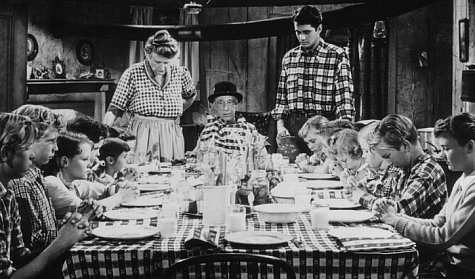
The best-selling Hillbilly Elegy: A Memoir of a Family and Culture in Crisis could just as easily been subtitled How One Crazy Hillbilly Saved Me. Vance acknowledges this much when much of his summary chapter is devoted to the impact that his grandmother had on his life. According to statistics JD Vance should not be living the successful life he is presently living. But some kids, in spite of statistics, make it. One common denominator for these kids who “make it” is that they had a prominent adult in their life outside their nuclear  who shaped them. Mamaw was that influence for JD.

Sadly, though, many children are taken away from these influential adults because of the structure of our social services systems. Vance explains:

Not everyone can rely on the saving grace of a crazy hillbilly. Child services are, for many kids, the last pieces of the safety net; if they fall through, precious little remains to catch them.
Part of the problem is how state laws define the family. For families like mine—and for many black and Hispanic families—grandparents, cousins, aunts, and uncles play an outsize role. Child services often cut them out of the picture, as they did in my case. Some states require occupational licensing for foster parents—just like nurses and doctors—even when the would-be foster parent is a grandmother or another close family members. In other words, our country’s social services weren’t made for hillbilly families, and they often make a bad problem worse. (242-43)

One of the issues that I have with some of the models of family ministry is that they do not , in my opinion, do an adequate job of addressing the outsize role that some folks have in the life of these children. Yes, ideally, we would love parents to be the primary disciple-makers of their kids. But God has also sovereignly placed “saving graces” in the lives of these children. To not acknowledge them is, I believe, “making a bad problem worse”.

A Helpful Model

This is why I really appreciate the work Timothy Paul Jones does in the area of family ministry. One particular model he uses to explain this dynamic is especially helpful. Jones refers to the Family-as-Church dynamic and the Church-as-Family dynamic. The first one rightly acknowledges that parents are the primary disciple makers for their kids and focuses its energy on training these parents to disciple their own kids. The second model majors on “nurturing members within a rich matrix of multi-generational rela­tionships.” In a very real sense the church takes the place of the family.

Can you imagine what happens in hillbilly culture if a church only acknowledges that first dynamic? What you’ll have are tons of kids who slip through the cracks. If our programs/teaching ministries at church focus on—and in a very real sense depend upon—discipleship happening at home then these kids aren’t going to be reached. For some of these students loving men and women at church will need to be that “saving grace” or to play that “oversize” role. And I’d argue that this is still family ministry. It’s not ideal, but rarely is anything ideal here.

But we are also doing these families a massive disservice if we are not working overtime to help them disciple their kids. We should be striving for seeing parents reached with the gospel and taking on the role of discipling their kids. But we also need to spend a good deal of time working to find the surrogate parents who are playing that oversized role in a child’s life and partnering with him/her. It really is a both/and.

Family ministry is different here because families are different here. The sooner we acknowledge this the sooner we will find models that are both faithful to the Scriptures and are applicable in our given context.

—

Photo source: here