Read This! 08.10.17

Banner of Truth Turns 60

I’m very appreciative of this publishing company.

Control Your Sexuality

Strong and needed words from Tim Challies.

The One Place Where All Leadership Principles Fall Apart

“Nothing replaces presence.” This is so true.

5 Ministry Dilemmas Caused by Insecurity

I’ve experienced some of these.

An Open Letter to Steve Gaines

I’m in on this one.

Biblical Counseling Resources

This is a helpful compilation.

Leadership Wisdom From Ignatius of Loyola

I love it when Dr. Jones fines gems in church history like this one.

Reflections on the 50th Anniversary of My Diving Accident

Man, always so encouraged by Joni Eareckson Tada.

Piper answers a question that many ask about whether or not hell is an overreaction to sin:

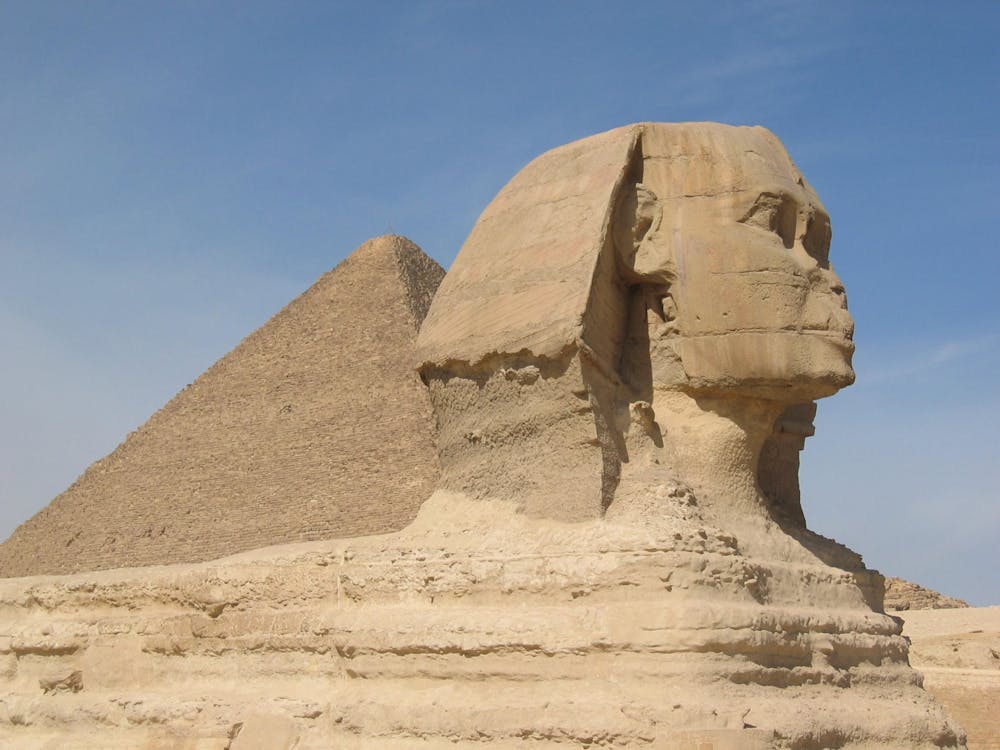
Who Was the Pharaoh During the Exodus?

I’m starting a new series on Exodus this Sunday. At one point while studying the Exodus story I found myself getting a bit bogged down in Egyptian history. There are so many historical things that it would be helpful to reconcile and really pinpoint the narrative. At one point in my study I thought to myself, “Lord, it would have been so much easier here had you just named the Pharaoh who forgot all about Joseph.”

I listed out at least eight different options for who this king of Egypt was. It’s helpful for placing the story. Is it Thutmose II? Is it Ramesses II? Some of these would help us to understand a bit more about the policies this ruler of Egypt enacted. If this is a guy who is following up shortly after the Hyksos dynasty, then fear and suspicion of foreigners like the Israelites is a bit understandable. Though some of these eight possibilities are more plausible than others, at the end of the day we really don’t know.

But notice something about Exodus 1:15. We know the name of the two midwives who feared God and disobeyed the most powerful man in the world. Shifra and Puah go into the biblical record but the Pharaoh doesn’t.

The reason the powerful pharaoh isn’t named isn’t because the biblical author didn’t want to be fact checked. It’s because he is telling a different story. Yes, a true historical story, but one which has far more reaching implications than a mere statement of historical fact. He’s telling the story of the powerful God who is more powerful than any Egyptian ruler. And in this story insignificant midwives get lead roles and the guy one would think should be top-billed is a nothing but an unnamed foil to the main character–Yahweh.

So as we are studying biblical history and reading through the Exodus we shouldn’t bemoan the fact that the Pharaoh is nameless. We should celebrate because it’s soaked in the gospel’s story. God takes the the foolish things of the world to shame the wise. He takes the weak things, like Hebrew midwives, to shame the powerful.

Here’s my answer to the title question. I don’t know. And that’s the point.

—

Photo source: here

Read This! 08.08.17

6 Keys to Fact Checking Your Own Sermon

And yes you ought to do this.

The Top Ten Surprises New Pastors Have

Having been an associate for so long, some of these weren’t surprises to me as a first time lead pastor. Others I can relate to.

Seven Dangers in the Last Few Years of Your Ministry

Here are a few points on the other end of the ministry spectrum.

The Forces Ripping Families Apart

I tend to agree.

Church, Slow Down the Video Crew

This is helpful. I had never thought about this.

When Husbands Die Young

I have a few friends who are going through this trial.

12 Spurgeon Quotes for When Parenting Feels Hard

And when doesn’t it?

Our Cultural Waterloo

Trueman’s statement that “taste was truth” really stuck in my mind.

This is what happens to “Let it Go” if it goes through Google Translate:

Blinders or Breadcrumbs?

I suppose we should celebrate the fact that “fake news” is all the rage these days. I say this because saying that something is “fake” implies that there might be something that is authentic. And I suppose arguing from a premise that there actually is such a thing as truth is a step in the right direction.

I want to celebrate that we care about truth again. But I’m not sure that I can, because I don’t actually believe we do celebrate truth. We live in a world of partial truths and half truths. The truth that we care about is not truth as it stands but truth as it benefits us. We don’t care what “is” actually is.

In Proverbs 8 we read that within the words of wisdom there is “nothing is twisted or crooked”. But not us. We like to tell things slant. I borrow that line from an Emily Dickenson poem, but I’m not using it the way she did.

Tell all the truth but tell it slant —

Success in Circuit lies

Too bright for our infirm Delight

The Truth’s superb surprise

As Lightning to the Children eased

With explanation kind

The Truth must dazzle gradually

Or every man be blind —

What Dickinson means is that in order for people to grasp the truth it needs to come at them in doses. You have to come at folks from a different angle rather than head on. We are confused creatures with oft twisted minds and in order to get a hearing we have to tell the truth a little slant. She’s really saying something similar to what Jesus said when he told the disciples that though there was much more he’d like to say to them they aren’t quite ready for it.

There’s a difference between the Proverbs 8 perversion of truth (the perversion that is so prevalent in our day) and the poetic device which Dickenson, and I’d argue Jesus, employed. Knowing that difference is absolutely key in writing and in ministry. I think there can be a real temptation for us to tell just enough truth to fool ourselves into thinking we are being faithful and creative, but in reality we are telling it slant the wrong way.

It’s the difference between bread crumbs and blinders. One way of telling the truth slant is meant to leave little bread crumbs so that if somebody wants to follow them all the way up to the full truth they can get there. But the other way of telling it slant is the way of blinders on a horse. Where you only want your audience to focus on a certain slice of the truth but keep them blind to the others. This is the way often employed in politics, social media, and click-bait articles. They tell half truths.

We don’t “tell it slant” to benefit ourselves or our party. We “tell it slant” to benefit our readers and their relationship with truth. That’s the big difference. Am I trying to creatively tell the truth so that it helps my reader grasp the truth or am I trying to keep them from seeing a certain point. Dickinson was adamant that we must “tell the whole truth”. That is the key.

Christians in our culture need to pick up what Dickinson is saying here. We must learn how to effectively “tell it slant”. A biblical example of this is the prophet Nathan confronting King David in his adultery. Much like the Christian in our culture today, he could not bluntly go up to the king and tell him that he was an adulterer. He had to do it in the form of a story. He had to “tell it slant”. That’s a model for us in cultural engagement.

So, yes, we must tell it slant but not the way of the politicians. Tell it slant in the way of the prophet, the way of Jesus. Who told truth in parts, but parts which were organically connected to the whole truth. Truth in breadcrumbs and not “truth” with blinders.